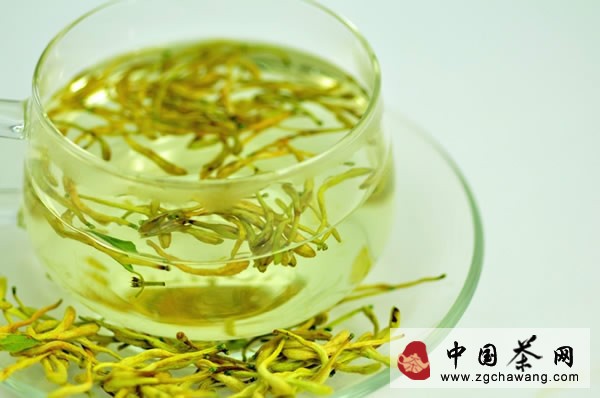
When people think of honeysuckle tea, they often associate it with clearing heat, detoxifying, and dispelling wind-heat. Indeed, honeysuckle is a medicinal herb with a sweet, cold nature and a fragrant aroma. Its sweetness and cold properties clear heat without harming the stomach, while its fragrance helps to expel pathogens. Below is a detailed introduction to honeysuckle tea.
Fragrant honeysuckle is an ancient medicinal plant in China, honored as the "little miracle of the pharmacy." It contains various essential trace elements and chemical components for the human body, along with multiple active enzymes beneficial to health. It offers excellent effects such as anti-aging, cancer prevention, and promoting fitness and lightness. It is also said to have beauty benefits: it can regulate female endocrine systems and reduce sallow complexion and spots.
How to make honeysuckle tea at home? After picking and sun-drying the honeysuckle flowers, the brewing and drinking method is as follows: steep one teaspoon of dried honeysuckle tea in a cup of boiling water, cover for about ten minutes, and then drink. You may add rock sugar or honey to taste. Honeysuckle can also be brewed with mint, platycodon root, bamboo leaves, or licorice for a pleasant flavor.
The brewing method for honeysuckle tea should preserve its aroma and highlight the characteristics of the tea leaves. For particularly tender tea leaves, such as Jasmine Maofeng, Jasmine Yinhao, or Jasmine Dongfeng tea—premium teas with artistic appeal—it is best to use a transparent glass cup. Place the cup on a tea tray, add two to three grams of honeysuckle tea, and pour water initially boiled and cooled to about 90°C. Cover the cup immediately to prevent the aroma from escaping. Holding the tea tray up to the light, observe through the glass as the tea leaves dance, float, sink, slowly unfurl, return to their original shape, and release their color and essence. "A small world in a cup, with the sentiment of mountains, rivers, flowers, and trees"—this visual appreciation is an artistic experience known as "visual tasting."
For brewing medium-grade honeysuckle tea, where appreciating the tea leaves' form is less emphasized, use a pure white porcelain lidded cup. After pouring 100°C boiling water, cover the cup for five minutes, then smell the aroma and taste the tea. This type of honeysuckle tea has a fragrant aroma and a mellow, genuine flavor. It remains flavorful through three infusions and is durable for multiple brews. For lower-grade honeysuckle tea or tea dust (called "gaomo" in northern China), a white porcelain teapot is generally used. Because the teapot holds more water and retains heat better than a cup, it helps fully extract the tea's flavor. Depending on the teapot size, number of drinkers, and taste preference, add an appropriate amount of tea leaves to the pot, pour in 100°C freshly boiled water, cover, wait five minutes, and then serve into cups. This method of brewing together and serving separately is convenient and hygienic. It also fosters a harmonious atmosphere when family members gather or friends sit together to enjoy tea and chat.
After learning how to make honeysuckle tea at home, note that individuals with weak spleen and stomach conditions or those with clear, non-suppurative sores due to qi deficiency should avoid it.