Tea production in Lu'an has a long history. Historical records indicate that Lu'an tea began in the Tang Dynasty, gained fame during the Ming and Qing Dynasties, and was once offered as tribute to the imperial court. The Ming Dynasty text "Cha Jian" by Wen You states: "The finest Lu'an tea is most effective for medicinal use." After the founding of the People's Republic, it was rated as a national high-quality famous tea three times and exported to places like Hong Kong. According to the recollections of Zhou Enlai's guard, Qiao Jinwang, during the Premier's serious illness, he once suddenly expressed a desire to drink Lu'an Guapian tea. Staff from the General Office went through great difficulty to fulfill his wish. After drinking the tea, Premier Zhou explained that during the early days of the War of Resistance Against Japan, New Fourth Army Commander Ye Ting had given him a large canister of Lu'an Guapian tea. Drinking this tea, he said, felt like seeing General Ye Ting again. This shows the significance of Lu'an Guapian in both their hearts.
Guapian tea is a famous variety among green teas, but due to production constraints, many tea enthusiasts have "only heard its name, never seen its form." Green teas can be categorized by shape into seven types: first, flat and straight, like West Lake Longjing; second, bud-downy, like Biluochun; third, bud-bract or bud-tip shaped, like Huangshan Maofeng and Xinyang Maojian; fourth, round pearl-shaped, like Pingshui Pearl Tea; fifth, eyebrow-strip shaped, like Tun Green; sixth, needle-shaped, like Nanjing Yuhua Tea; and the seventh is slice-shaped, represented by Lu'an Guapian.
As the name suggests, Lu'an Guapian is produced in Lu'an County, Anhui Province, and has a melon-seed-like, slice-shaped appearance. Actually, this statement is not entirely accurate. The true production areas are Lu'an, Jinzhai, and Huoshan counties in Anhui. The tea from the Flower Bat Cave on Qiyun Mountain in Jinzhai County is of the highest quality, hence it is also called "Qiyun Famous Slice." The name "Lu'an Guapian" persists mainly because Jinzhai and Huoshan historically belonged to Lu'an Prefecture. This region is located in the western Anhui Dabie Mountains, characterized by high mountains, dense forests, pervasive clouds and mist, high air humidity, and ample annual rainfall, providing an excellent natural environment for tea production. More uniquely, around the Bat Cave, thousands of bats gather year-round, and their phosphorus-rich droppings benefit tea plant growth.
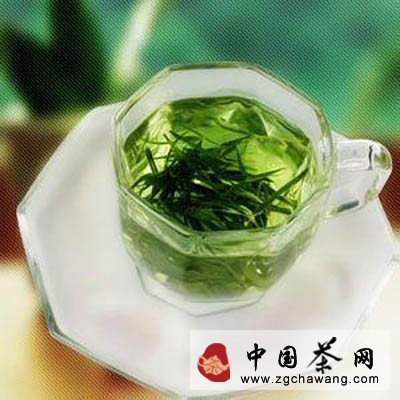
The finished Lu'an Guapian has leaves with edges curled backward, resembling melon seeds. The liquor is emerald green and bright, with a refreshingly high aroma and a sweet, fresh, mellow taste. It is also said to have benefits such as clearing the heart and improving eyesight, refreshing the mind and relieving fatigue, and opening the orifices to dispel wind. Such excellent quality stems from the unique natural conditions and also relies on a meticulous and elaborate picking and processing method. Guapian is generally picked between Grain Rain and the beginning of Summer, about half a month later than other high-grade teas. During leaf separation, the first to third or fourth leaves and the bud on a plucked shoot are manually separated one by one. The first leaf makes "Ti Pian" (Raised Slice), the second leaf makes "Guapian" (Melon Seed Slice), the third or fourth leaf makes "Mei Pian" (Plum Slice), and the bud makes "Yin Zhen" (Silver Needle). They are stir-fried immediately after separation. After stir-frying, the slices are roasted. Each batch roasted is only 2-3 liang (approx. 100-150g). They are first subjected to "pulling over a low fire," then "pulling over a strong fire," until a white frost appears on the leaf surface and the color is evenly emerald green. They are then sealed and stored while hot. It is indeed as described in Mei Yaochen's "Ode to Tea" from the Song Dynasty: "At this time, women abandon silkworm weaving, men abandon farming, resting not at night, pausing not by day."