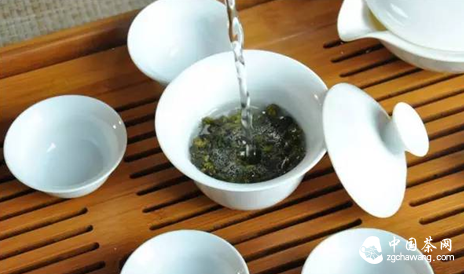
The foam produced when brewing tea! Substances in tea leaves that have foaming properties include tea saponin, proteins, solid powders, charcoal dust, etc. Among these, tea saponin, also known as tea saponin, is the substance that causes tea to foam. It accumulates and increases as the fresh leaves grow. Some factories now specialize in extracting it to make emulsifiers, detergents, foaming agents, etc.
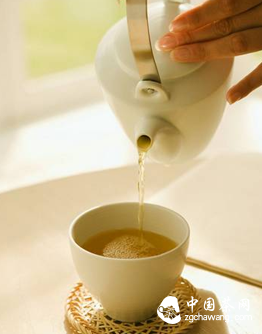
The foam caused by tea saponin is harmless to the human body. In ancient times, this tea foam was even regarded as an essence. Du Yu of the Wei and Jin dynasties wrote in a poem: "The foam forms a brilliant float, radiant like accumulated snow, splendid like spring blossoms," describing precisely this phenomenon.
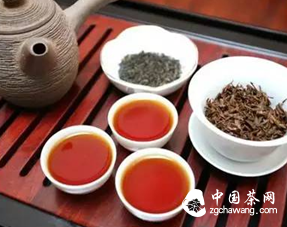
Teas made from varieties with many fine hairs (hao) are prone to foam when brewed. Lingyun Baihao is one such variety with many fine hairs. It is relatively tender, and the tea leaves themselves are high in content like tea polyphenols. If the rolling process during tea making is too heavy, these contents stick to the surface of the leaves and foam appears as soon as water is poured. It is understood that besides Lingyun Baihao, varieties like Fuding Dabai and Fuding Daha also have many fine hairs. Usually, the finished tea made from them is covered with fine hairs, which can be identified by their appearance.
Additionally, some more broken teas, like broken black tea (red碎茶), or teas containing more碎末, will also form foam when brewed. The foam black tea found in many cafes and coffee shops is made from tea bags of broken black tea.
Foam is Unrelated to Tea Quality
Whether tea soup has foam or not is not directly related to the quality of the tea. Some high-end ancient tree Pu-erh teas are found to have foam in the soup, which comes from the many fine hairs on the tea leaves; some teas may also produce foam due to insufficient fermentation工艺. Therefore, one should maintain a normal attitude towards foam in tea, boldly drink it, and then evaluate the tea.
Although tea saponin has strong foaming ability, its content in tea leaves is very low. It does not affect the color, aroma, taste, or other quality aspects of the tea. Therefore, the amount of foam cannot be used to judge the quality of the tea.
Black Tea Tends to Have More and Persistent Foam
Although every type of tea may produce foam, black tea has the greatest potential for foam, and it is more difficult to消除. This is related to the manufacturing process of black tea.
The first step in making black tea is to wither the tea leaves, followed by rolling, fermentation. If during the tea-making process, withering is insufficient, and the leaves still contain a lot of moisture before being rolled for a relatively long time, then the first brew of this tea is very likely to produce a large amount of persistent foam.