Those who have studied tea tree cultivation know that under the same external conditions such as light, temperature, water, fertilizer, soil, latitude, and altitude, the differences in the internal substances of tea leaves from the same variety of tea trees of different ages are mainly due to differences in metabolism.
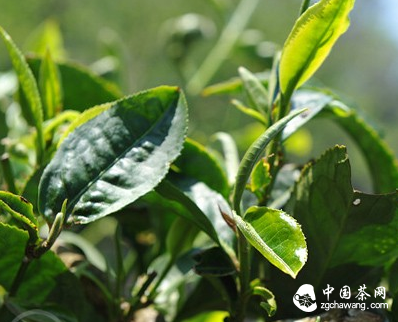
Tea trees under 30 years old:
For tea trees under 30 years old, nitrogen metabolism is relatively vigorous, producing a large amount of nitrogen-related products such as amino acids, proteins, and tea polyphenols. Therefore, tea from younger trees is more refreshing but slightly less sweet.
Tea trees over 30 years old:
For tea trees over 30 years old, carbon metabolism becomes明显, generating large amounts of monosaccharides (such as glucose, fructose, ribose, etc.), oligosaccharides (such as maltose, sucrose, raffinose, etc.), polysaccharides (glycogen, starch, chitin, hyaluronic acid, hemicellulose, etc.), glycoproteins, proteoglycans, and glycolipids. Therefore, the tea has lower bitterness and astringency, better sweetness, and better醇厚度.
Characteristics exhibited by different tree ages:
The biochemical differences between terrace tea, small tree tea, old tree tea, ancient tree tea, and thousand-year-old wild ancient tea trees lie in their different metabolisms: the younger the tree age, the more obvious the nitrogen metabolism; the older the tree age, the more obvious the carbon metabolism.
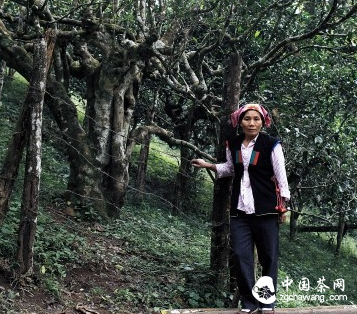
Generally speaking, the older the tree age, the more obvious the carbon metabolism, and the better the sweetness and醇厚度. Since the post-fermentation of raw Pu-erh tea is closely related to its sugar content, older and more mature buds and leaves age better.
In terms of taste, tea connoisseurs often prefer raw tea from ancient trees for its sense of aged醇厚度—firstly, the醇厚度 brought by the tree age, and secondly, the醇厚度 from aging over time.
How to determine tree age with one sip?
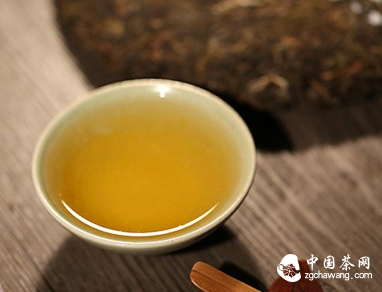
Since the content of reducing sugars (especially fructose) in tea leaves is an important indicator for distinguishing the metabolic type of tea trees (related to tree age), for tea from the same region, same variety, same tenderness, and same season, use 3 grams of leaves, 250 ml of boiling water, brew for five minutes, pour out the tea soup, taste it after it cools down. Generally, the better the sweetness, the older the tree age.
This is because the sweetness of fructose in the tea汤 increases at low temperatures: between 7-40°C, the lower the temperature, the higher the sweetness of fructose; conversely, above 40°C, the higher the temperature, the lower the sweetness of fructose.
Is the claim of "determining tree age with one sip" reliable?
Teacher Ye: "Today's topic: Can one taste whether the tea tree is a thousand-year-old ancient tree, a five-hundred-year-old ancient tree, a hundred-year-old ancient tree, a big tree, or a small tree? Let's discuss whether 'determining tree age with one sip' makes sense."
Tea friend Ban Ming: "The key points are there, but drinking tea is not about drinking chemical formulas. The incompleteness of things means there is much to explore regarding the relationship between taste and tree age."
Tea friend Tea Worm Lao Guang: "Everyone who has tasted it knows the quality of old (or ancient) tree tea. But whether one can 'determine tree age with one sip' is hard to say. I don't know if others can, but I certainly cannot."
Tea friend Tea Man Xiao Zhu - Tao Ye: "For different ages of Dancong tea, it is possible to tell through comparison."
Tea friend Ming Wu: "From a tasting perspective, the judgment structure is correct. But the problem is whether your judgment of tree age before tasting is accurate."
Tea friend Peng Kerong: "The water extract of tea leaves, that is, the content of soluble substances in tea, increases with the growth of tree age. Sexually propagated ancient tree tea has taproots that penetrate deeply, almost equal to the height of the canopy. Their trace elements are unmatched by asexually propagated tea trees. The highest water extract laboratory data I've seen is 48.50%, and it's said there are even over 50%. Another factor is tea polyphenol content, which衰减 with tree age. If these relationships hold, people could establish mathematical models for application in stages like electronic tongue technology. Currently, relying on human tasting, it's difficult to determine specific ages like a few hundred years. But when comparing two teas, one can tell which is better. Also, there is天赋, but talented individuals are rare. Most people who claim to taste tree age are guessing, and some are just talking nonsense. As the mysterious veil of ancient tree tea is gradually lifted and its inherent规律性 is mastered step by step, the application of the 'law of large numbers' will allow some tea enthusiasts to master and apply it, similar to how traditional Chinese medicine practitioners diagnose or blind fortune-tellers tell fortunes."
Tea friend Hong Zhen: "Disregarding weather and terroir factors during tea processing, if the丛龄 difference is large, the taste difference in the汤 is quite obvious (e.g., new丛 vs. old丛 Shuixian from Wusandi, new丛 vs. ancient tree Dancong, I think the difference is very clear)."
Tea friend Cao Liurong: "In the same production area, ancient tea trees do not have a uniform age. True ancient trees often coexist, ranging from a few hundred to a thousand years old. Comparing the aroma and taste of ancient tree tea and terrace tea reveals significant differences. One can start by comparing茶韵 and山韵. The most difficult part of comparative tasting is finding a standard reference for ancient tree tea. Because major brand tea merchants are often untrustworthy, the match rate between what's stated on the包装 and what's inside the包装 is too low, leading to a situation where假 becomes真... Learning about tea must involve the serious personal experience of visiting tea mountains to find standard references. Distinguishing old tree tea from terrace tea is possible, but it is also a very不易的系统工程... This is just my personal opinion, representing a bit of my心得 in learning about tea. Please correct me, teachers in the circle."
Tea friend Yu Zhong Lizi: "Determining tree age with one sip is really not easy. It also needs to be combined with examining the tea底 to be somewhat more accurate. Of course, one must have sufficient understanding and knowledge of tea trees of various ages!"
Tea friend Shi Ba Ye: "Determining tree age with one sip is difficult. I need to study hard; I can't tell."
Tea friend Pu Tong Ren: "I have对比着喝过红茶 from Tongmu Guadun, from new ones to几十年 old丛, to nearly百年 old丛. I could feel明显的 changes. But if I don't drink them for a long time, the memory of几十年 old丛 and nearly百年 old丛 is not clear."
Tea friend An An's Taiwan Tea ^ Dry Storage Old Taiwan Tea: "Since the content of reducing sugars (especially fructose) in tea leaves is an important indicator for distinguishing the metabolic type of tea trees (related to tree age), for tea from the same region, same variety, same tenderness, and same season, use 3 grams of leaves, 250 ml of boiling water, brew for five minutes, pour out the tea soup, taste it after it cools down. Generally, the better the sweetness, the older the tree age. Because the sweetness of fructose in the tea汤 increases at low temperatures: between 7~40°C, the lower the temperature, the higher the sweetness of fructose; conversely, above 40°C, the higher the temperature, the lower the sweetness of fructose. Fructose content is related to soil, management, season, processing conditions, and is even more influenced by microclimate. Using only the above method can only be called an explanation for promoting certain teas and cannot yet constitute research. For tea trees over 30 years old, carbon metabolism becomes明显, generating large amounts of monosaccharides, oligosaccharides, polysaccharides, glycoproteins, proteoglycans, and glycolipids. Therefore, the tea has lower bitterness and astringency, better sweetness, and better醇厚度. Plant growth is often determined by soil, so one cannot say that a thirty-year-old tree is necessarily good. Tea plants belong to leaf-based production; newer tea trees have more of the discussed content. Plants, due to growth needs and necessities,可能 and must grow their roots downward to absorb water. Rock layers cannot provide much养分 for plant needs. Their growth must be upward, mainly absorbing nitrogen from the air. Surface humus soil provides organic matter, which is absorbed by plants through rainwater渗透. So, don't put some strange theories up here. I worked in tea gardens from childhood until I left my hometown at eighteen. This is the teacher's论述."
Tea friend Ban Ming: "Over 30 years is considered old丛, this is the界定界限 for岩茶, the answer I got from请教老前辈 Yao Yueming over ten years ago. Also,新生 tea seedlings have roots longer than the canopy in the early stage; a few years later, the root length is shorter than the tree冠 height. Therefore, the correlation between root length and tree height for ancient tree tea is not significant. A few years later, the root length is shorter than the tree冠 height."
Tea friend Hong Zhen: "Personally, I believe 'new丛 emphasizes aroma, old trees emphasize韵'. 'Determining tree age with one sip' is achievable for familiar tea products that one常品饮."
Tea friend Yu Zhong Lizi: "'Determining tree age with one sip' – most teas sold on the market now are blended teas, which makes determining tree age with one sip very difficult!"
Tea friend Hong Zhen: "'Determining tree age with one sip' should be within the scope of单号茶, otherwise the scope is too broad, and the课题 becomes too large."
Source: Yunnan Pu-erh Tea Network, Tian Yu Tea Studio
Editor: Tea Bubble Network Xiao Qiao