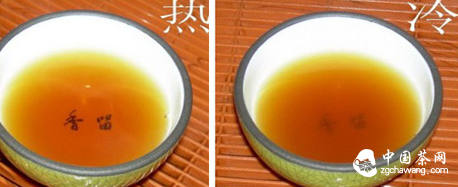
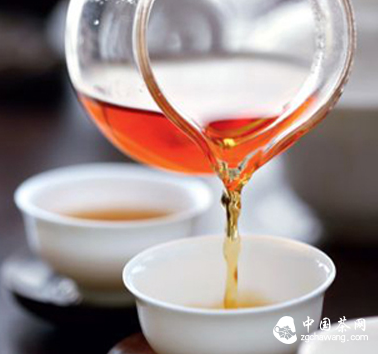
I wonder if everyone has encountered such a situation: when brewing black tea, if you don't drink it while it's hot and wait until the tea soup cools down, you'll find that the originally clear and translucent tea soup becomes somewhat cloudy. At this point, you probably think that the quality of this tea must not be very good. Is this really the case? What is this 'turbid substance'? How is it produced? Tea friends who want to know the answer, please continue reading!
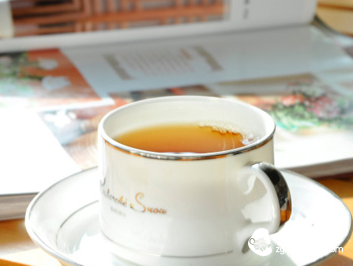
The Three-Step Reason for 'Cold After Turbidity' in Black Tea
The 'turbid substance' that appears after black tea cools down is professionally termed 'cold after turbidity,' also known as 'tea cream,' which is a unique characteristic of black tea. The reason for the appearance of 'cold after turbidity' is that the tea polyphenols in tea leaves (mainly existing in the form of catechins) are converted into theaflavins during the fermentation and oxidation process, and some are converted into thearubigins.
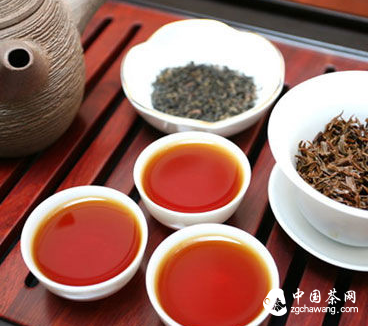
When brewing tea, the solubility of theaflavins is affected by water temperature. When the tea soup temperature is relatively high, theaflavins exist in a free state, dissolved in hot water, making the tea soup appear clear and translucent. However, as the tea soup temperature gradually decreases and cools, the theaflavins then form a complex by 'clustering together,' resulting in the 'cold after turbidity' phenomenon.
In addition to theaflavins, caffeine is also one of the reasons for the formation of 'cold after turbidity.' However, caffeine is not the main factor; the primary cause of 'cold after turbidity' is still the content of theaflavins. The higher the theaflavin content in a tea, the more likely it is to exhibit cold after turbidity.
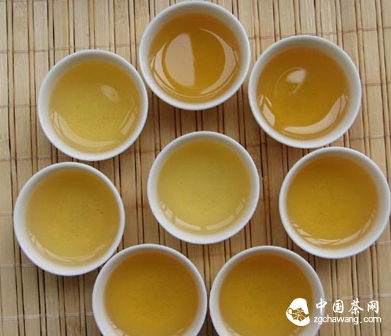
Cold After Turbidity is an Important Indicator of Excellent Black Tea Quality
At the beginning of the article, we mentioned that many tea friends might think a black tea is of poor quality because of the 'cold after turbidity' phenomenon. In fact, quite the opposite, the 'cold after turbidity' in black tea is a sign of high-quality black tea. Experienced tea friends know that theaflavins are a key marker component of black tea. Therefore, the appearance of 'cold after turbidity' in black tea does not indicate poor quality; instead, it proves that the tea is of good quality.
Today's knowledge about black tea 'cold after turbidity' ends here. I believe many tea friends are now懊恼 (regretting) having wasted so much good tea before. But it's not too late to know now! Who hasn't gone from being a tea novice to a资深大师 (senior master)? Moreover, the journey of learning about tea is long, so learn and apply as you go!