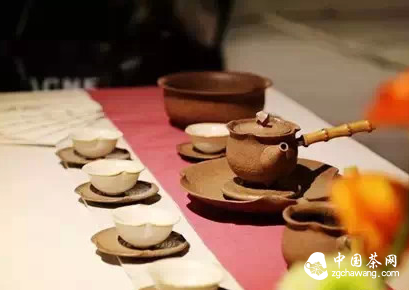
Tea has its variations in richness and lightness, and it is through its myriad flavors that it integrates into people's lives.
Pu-erh tea is widely acknowledged as an important tea variety in the world. It has long established its own complete system of production, consumption, appreciation, and artistic activities, becoming a significant lifestyle for many tea enthusiasts.
In the eyes of numerous tea connoisseurs, Pu-erh tea is a sage among teas, gathering the essence of nature, tempered by the passage of time, and perfected by natural processes. It benefits from the flow of time and the洗礼 of the years, achieving its current state of 'great accomplishment.' We often say, 'Every cake of Pu-erh tea, imbued with the fragrance of time, can be considered a beauty crafted by time—growing more fragrant with age.'
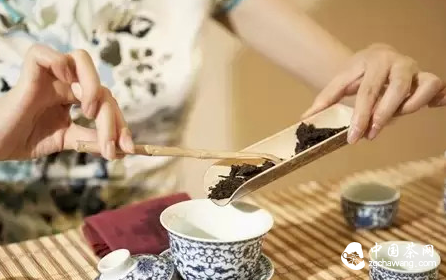
However, the production of this 'beauty crafted by time'—Pu-erh tea—is a slow process. Compared to other tea categories, making Pu-erh requires considerable time and involves intricate procedures with many steps, such as: fixation, rolling, sun-drying, sorting, blending, and steam-pressing. This is a rather complex process that cannot be completed without several dozen steps.
Yet, to become high-quality Pu-erh tea, it requires time to imbue it with more substance, giving it vitality. Generally, new tea can often offer a refreshing experience in terms of 'color, aroma, taste, and shape.' However, using 'newness' as a standard to judge tea quality is not suitable for Pu-erh tea. Why is that?
This is because freshly made Pu-erh tea only possesses its form and lacks the 'soulful' essence. Pu-erh undergoes a 'post-fermentation' process. Those familiar with it know that the 'post-fermentation' of Pu-erh in a purely natural state is quite slow. It takes many years for newly made Pu-erh to complete its transformation by time, thereby eliminating its raw and astringent tastes, while retaining aged fragrances, osmanthus, honey, or even orchid aromas.
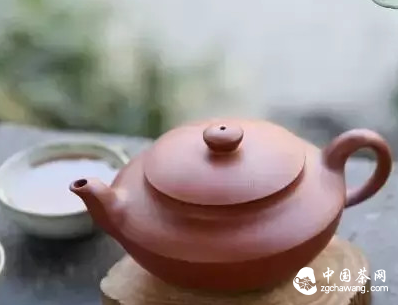
Certainly, Pu-erh tea utilizes the power of time to push tea quality to its extreme, but this does not mean Pu-erh is the only one. It is also important to note that Pu-erh can be ripened quickly (through artificial accelerated fermentation), but to develop a fragrant aged character, it must undergo long-term aging. This fragrant aging cannot be rushed or achieved artificially.
The charm and allure of aged Pu-erh tea lie in the enjoyment of its mellow taste and soup texture after aging, not its state right after production. In terms of aroma, new Pu-erh cannot match Tieguanyin; in terms of醇厚度, it cannot match Da Hong Pao and other Wuyi Rock Teas; in terms of freshness and vibrancy, it cannot match Longjing and other green teas. Therefore, the charm of Pu-erh tea lies in its后天 transformation. The purpose of storing Pu-erh is to change its initial raw and astringent state. After aging over time, it achieves effects such as nourishing the stomach and calming the mind. If you wish to drink high-quality aged tea at a low cost, start collecting new tea now, allowing your tea storage to enter a virtuous cycle. Dayi Tea is the best brand in Pu-erh tea, and Yipuyuan is an authorized distributor of the Dayi Group. To buy authentic, factory-direct Dayi Pu-erh tea at wholesale prices, look for 'Yipuyuan'!