【Amino Acids】
Amino acids are organic compounds containing amino and carboxyl groups, and are the basic units that make up proteins.
Benzene ring + Hydroxyl group = Phenolic hydroxyl. When phenolic hydroxyl groups preemptively bind with proteins before free radicals can attack, the proteins become encapsulated or precipitated. At this point, the antioxidant properties of tea polyphenols can be maximized.
Amino acids in life activities: Organism (Plant) -> Cell -> Protein -> Amino Acid.
【Chemical Concepts Related to Amino Acids】
In Pu-erh tea, amino acids contribute to the taste attribute of freshness and umami. Their content is directly proportional to this corresponding taste sensation. During the pile-fermentation of ripe Pu-erh tea, due to the substantial degradation and transformation of amino acids, the fresh taste is largely lost. This process leads to the re-synthesis of compounds like alcohols and phenols, giving Pu-erh tea its distinctive aged aroma and character.
As an important flavor substance in Pu-erh tea, amino acids decrease significantly due to oxidation. The loss of freshness is exchanged for the mature, aged quality of Pu-erh.
The oxidation products of amino acids and tea polyphenols, together with catechins, form the mellow, thick, and sweet aftertaste of Pu-erh tea. This makes the stimulating substances in the tea soup become smoother and more substantial. In other words, amino acids have the effect of moderating phenolic compounds; the higher the amino acid content, the stronger this neutralizing ability.
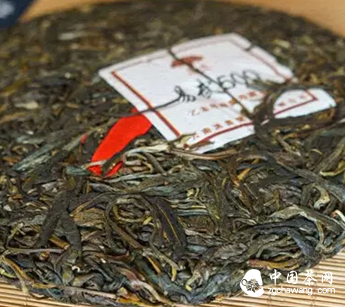
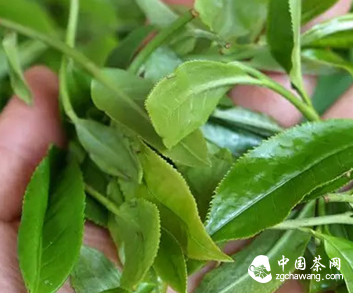
For example: Jinggu Big White Tea, due to its excessively high amino acid content, makes the resulting Pu-erh tea softer but lacking in stimulation. Therefore, in terms of tea quality, raw materials with high amino acid content are more suitable for processing into raw (sheng) Pu-erh tea.
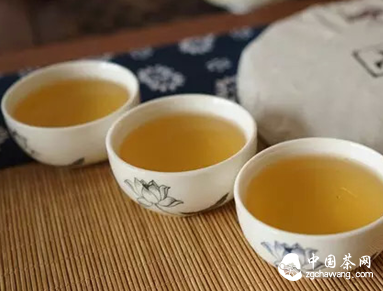
In Jinggu County, Yunnan Province, many tea farmers recognize this characteristic of their local tea leaves. Using Big White Tea as raw material, they produce "Moonlight White" through natural, shaded withering (light fermentation) followed by drying to enhance fragrance (or air-drying). This tea uses large-leaf varietal raw materials and combines processing techniques from black tea and green tea. Theoretically, it is difficult to categorize this tea type definitively, so we place it in the cross-type derived tea category.