【How to Better Brew a Cup of Tieguanyin】
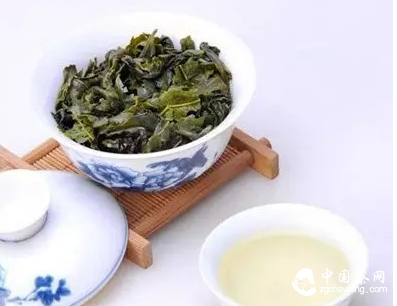
1. The filter should not be too dense. Not using one can result in a more fragrant aroma and better taste. 2. Lightly fermented Tieguanyin is sensitive to long steeping times; 1-minute or 3-minute steeps are specialized tea evaluation methods. 3. Rinsing the tea is for moistening and awakening the leaves; just let them slightly unfurl. 4. 'Spring water, autumn fragrance' – spring tea has better flavor, while autumn tea has a higher aroma. 5. For one serving of tea, the third and fourth infusions of light fragrance Tieguanyin are the essence. 6. At least the first four infusions should not leave residual tea liquid in the cup, as it can make the brew bitter and astringent.
【Understanding and Comparing Multiple Types of Tieguanyin】
1. Comparison of Light Fragrance, Strong Fragrance, and Aged Tieguanyin:
2. The three types: Zhengchao, Xiaoqing, and Tuosuan:
Zhengchao: Appearance: Zhengchao dry tea appears dark black, with a dull and less vibrant color, giving a visually poorer impression. The tea soup is generally yellowish. The brewed leaves (ye di) usually have an earthy yellow-green hue. 2. Xiaoqing: Dry tea generally appears dark green (wu lü), with commonly high color vibrancy, giving a good visual impression. Xiaoqing tea soup is greenish-yellow. Xiaoqing brewed leaves are generally between dark green and earthy yellow-green. 3. Tuosuan: Dry tea mostly appears bluish-green, with generally high color vibrancy. The visual difference from Xiaoqing tea is not very significant, making it difficult to distinguish by appearance. The brewed leaves are mostly dark green.
【The Lid Aroma of Tieguanyin】
1. Types of Lid Aroma: First, the 'Huangkou Xiang' often mentioned by people in southern Fujian, which I have never fully understood. Second, the elegant type of orchid fragrance, which is rich, subtle, and elegant, reminiscent of orchids. Third, the light milky fragrance type. 2. The Intensity of the Lid Aroma: Good Tieguanyin is not characterized by an extremely high, piercing fragrance. It is more often elegant, rich, and lasting like orchids. 3. The Persistence of the Lid Aroma: Good tea can maintain a consistent lid aroma from the first to the last infusion.
【Why Do Most Tieguanyin Teas You See No Longer Have 'Green Leaves with Red Edges'?】
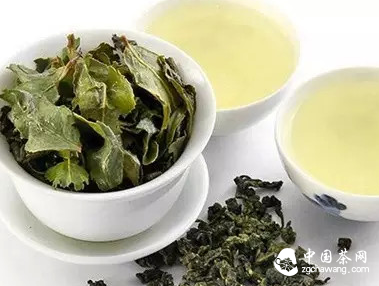
They mostly used to have green leaves with red edges. Now, lightly fermented Tieguanyin is popular. Tea drinkers, especially new enthusiasts, pursue a pleasing tea soup color and a clear, fragrant aroma. Factory production, coupled with the addition of a 'de-edging' process to cater to the market, prevents the Tieguanyin soup from appearing 'reddish'. Therefore, the brewed leaves of most Tieguanyin on the market have ragged, incomplete edges, naturally lacking the red镶边 (red镶边).
【Ice Tea Tieguanyin】
After the 'kill-green' (sha qing) process of Tieguanyin maocha (rough tea), the tea leaves possess an intoxicating honey-orchid fragrance. 'Ice Tea' precisely targets this characteristic of Tieguanyin at this stage, altering the traditional production process by omitting the subsequent high-temperature baking工序. Because there is no high-temperature baking, the moisture content in the tea leaves is relatively high. Therefore, this tea must be stored in a freezer at around minus twelve degrees Celsius. During storage, frost attaches to it, hence the name 'Ice Tea'.
【Half-Leaf Tieguanyin】
Anxi launched its first shared Tieguanyin product in 2009. The difference from traditional Tieguanyin工艺 lies in adding a 'trimming' (cai qing) step after pan-firing (kill-green) and before rolling and shaping (bao rou). It selects pure leaf tea material from high mountains and uses special tools to remove the central stem from the tea leaves, preserving the original leaf components without damage. The finished product is small and exquisite, with a dark green color, golden tea soup, and a slightly sour taste. It is said to surpass whole-leaf Tieguanyin in refreshing smoothness.
【Identifying Tieguanyin from the Three Main Production Areas: Xiping, Xianghua, and Gande】
(1) Xiping Tea: Strong soup, distinct 'yun' (韵, charm), relatively subtle fragrance.
(2) Xianghua Tea: Pure flavor, mellow soup, strong sweet aftertaste.
(3) Gande Tea: Strong fragrance, light soup, slightly sour.