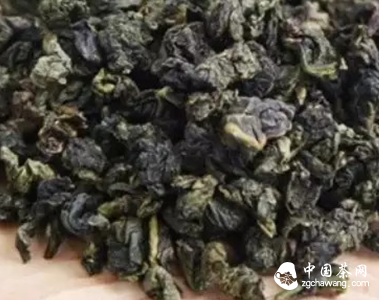
Tieguanyin is famously known for its iron-like quality and unique 'sand-green' color, crowned as exceptional. Traditional Tieguanyin leaves have a 'dragonfly head, spiral body, and frog legs' shape.
【The Broad Versatility of Tieguanyin】
It can be lightly fermented, approaching the freshness of green tea; moderately fermented, using traditional and charcoal-roasting techniques to find warmth similar to Wuyi Rock Tea; or aged through post-fermentation, developing a lasting, weathered aged aroma akin to aged Pu-erh after suitable storage.
Tieguanyin production is strict and meticulous. It is harvested in four seasons annually:
From Grain Rain to Start of Summer (mid-late April – early May) is spring tea;
From Summer Solstice to Slight Heat (mid-late June – early July) is summer tea;
From Start of Autumn to End of Heat (early August – late August) is late-summer tea;
From Autumn Equinox to Cold Dew (late September – early October) is autumn tea.
【Four Key Characteristics of Tieguanyin】
1. Pure 'Hongxin' (Red Heart) Guanyin tea buds are 'red-tipped and peach-tailed';
2. Tieguanyin leaves have a noticeably raised surface with a smooth, glaze-like texture, and the leaf edges curl backwards. Varieties like Benshan, Huangjingui, and Maoxie lack this feature;
3. Tieguanyin leaves exhibit a symmetrical structure up, down, left, and right;
4. Regarding aroma, Benshan often carries a tangerine peel note, while Tieguanyin does not; in terms of liquor quality, other varieties' tea soup lacks the richness of Tieguanyin.
【Spring Water, Autumn Fragrance of Tieguanyin】
This means spring tea has a long-lasting, subtle, and elegant liquor. Autumn tea has a high, far-reaching aroma and a bold, expressive liquor. Both have their distinct merits, like plum blossoms and white snow. Interestingly, most people prefer the rich aroma of autumn tea, while professional tea drinkers favor the delicate liquor of spring tea. As the time for 'autumn fragrance' arrives again, it's suggested that while sampling fresh autumn tea in small amounts, one should savor more spring tea, and drink more of this year's autumn tea when next spring comes.
【Basic Production Process of Tieguanyin】
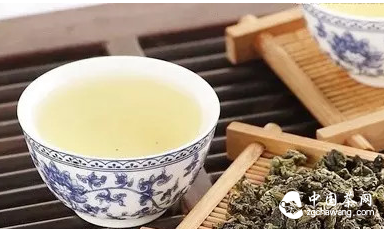
Tieguanyin production is extremely refined, with the saying 'easy to drink, hard to make'. It includes three parts: harvesting, primary processing, and refining. Harvesting requires mastering the timing, standards, and techniques. Primary processing requires proficiency in ten steps: sun-withering, indoor-withering, shaking/tumbling, pan-firing, rolling, initial baking, wrap-rolling, re-baking, re-wrap-rolling, and final drying. Refining involves six steps: sifting, sorting, blending, roasting, cooling, and packaging.
【How to Distinguish Tieguanyin, Huangjingui, Benshan, and Maoxie?】
After seeing this image, you might have a basic understanding of how to distinguish Tieguanyin, Huangjingui, Benshan, and Maoxie.
Tieguanyin is well-proportioned, Huangjingui is slender, Benshan has a large 'head', and Maoxie is short and stout.
【What is Traditional Tieguanyin?】
Traditional Tieguanyin involves heavy sun-withering and light, multiple rounds of shaking/tumbling to promote even water loss and maintain leaf integrity. The kill-green (pan-firing) is done the next morning.
【The Basic Eight Steps of Serving Tea】
Brewing can be divided into eight steps:
1. Crane Bathing (washing the cups)
2. Entering the Palace (adding tea leaves)
3. High Pour from the Pot (pouring water)
4. Breeze Brushing the Face (skimming foam)
5. Magistrate Patrols the City (pouring tea)
6. General Orders His Troops (distributing last drops)
7. Appreciating the Liquor Color (observing the tea)
8. Sipping the Sweet Dew (drinking the tea)
【Anxi Brewing Method for Tieguanyin】
This method emphasizes aroma, sweetness, and purity. The tea liquor is judged over nine infusions, with every three infusions as a stage.
First stage: smell whether the aroma is high.
Second stage: taste whether the flavor is mellow.
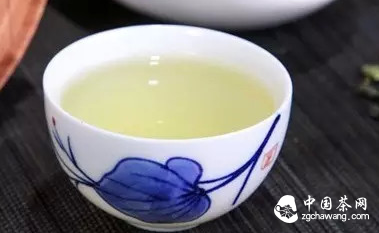
Third stage: observe the changes in liquor color.
Hence the rhyme: Infusions one-two-three, aroma high to see; four-five-six, sweetness starts to mix; seven-eight-nine, pure tea is fine.