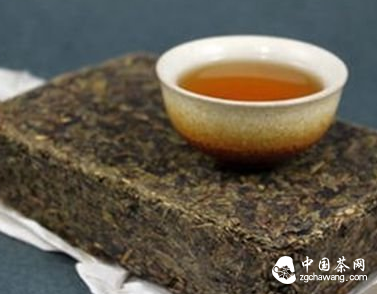
Jingyang Fu Brick Tea
Jingyang Fu Brick Tea is a specialty tea from Jingyang County, Shaanxi Province. It is hailed as the "Mysterious Tea of China's Ancient Silk Road." Jingyang Fu Brick Tea has a compact body, dark brown and oily sheen, abundant golden flowers, a rich fungal aroma, orange-red translucent liquor, and a mellow, lingering taste.
I. Characteristics of Jingyang Fu Brick Tea
Jingyang Fu Brick Tea belongs to the black tea category; within reprocessed teas, which include scented tea, tightly pressed tea, and extracted tea, it falls under the tightly pressed tea class. Among over a thousand tea varieties in China, only Jingyang Fu Brick Tea cultivates a beneficial mold known as "golden flower fungus," scientifically named "Eurotium cristatum." This is the unique feature of Jingyang Fu Brick Tea, forming its distinctive character.
"Since ancient times, no tea has been grown north of the Qinling Mountains, only brick tea from Jingyang, Xianyang." Jingyang Fu Brick Tea has a history of nearly a thousand years, flourishing during the Song Dynasty and thriving in the Ming, Qing, and Republic of China periods. For centuries, alongside grain, milk, and meat, it has been a daily necessity for ethnic minorities in Northwest China.
II. Benefits of Jingyang Fu Brick Tea
1. Supplementing Dietary Nutrition
Fu Brick Tea is rich in nutrients, containing vitamins, minerals, protein, amino acids, tea polysaccharides, and other substances. For residents in Northwest China whose diet is primarily meat and cheese with limited vegetables and fruits, long-term consumption can supplement these nutrients, earning it the title "Tea of Life."
2. Aiding Digestion and Stomach Health
The caffeine, vitamins, amino acids, etc., in Fu Brick Tea aid human digestion and regulate metabolism, making it particularly suitable for the elderly.
3. Tea Polysaccharides Lowering Blood Sugar
Tea polysaccharides have a sweet, pure taste. Aged dark teas that become sweeter with prolonged brewing are related to their tea polysaccharide content. Tea polysaccharides effectively lower blood sugar through antioxidant effects and enhancing glucokinase activity. Substances like adrenaline, thyroxine, and glucagon can raise blood sugar and accelerate liver glycogen decomposition, while only insulin can lower it. Therefore, the blood sugar-lowering effect of tea polysaccharides is associated with protecting and stimulating insulin cell secretion.
4. Lowering Blood Pressure
The unique amino acids and theanine in Fu Brick Tea can inhibit blood pressure elevation by activating dopaminergic neurons. Tea pigments have significant anti-aging effects on blood, promote fibrinolysis, prevent platelet adhesion and aggregation, and inhibit arterial smooth muscle cell proliferation.
5. Anti-Coagulation and Anti-Thrombotic Effects of Tea Polysaccharides
Tea polysaccharides exhibit significant anti-coagulant effects both in vivo and in vitro, reduce platelet count, and prolong coagulation time, thereby affecting thrombosis. Additionally, tea polysaccharides can enhance fibrinolytic activity. Thus, tea polysaccharides act on all stages of thrombus formation. They also possess various biological functions such as radiation protection, anti-tumor, anti-viral, blood pressure-lowering, hypoxia resistance, and increasing coronary blood flow. Furthermore, the tea polysaccharides and polyphenols in Fu Tea have anti-radiation effects, beneficial for those who watch TV or use computers for extended periods.
III. Brewing Methods for Jingyang Fu Brick Tea
1. Boiling Method:
Use a glass kettle set, filter, fair cup, and tasting cups. First, warm the cups and pot with boiling water. Add the prepared Fu Brick Tea to the pot—generally at a tea-to-water ratio of 1:20 (adjustable based on tea quality and personal preference). Rinse the tea with boiling water, then add cold spring water and bring to a boil. Strain the tea liquor into the fair cup using a filter, then pour into tasting cups for drinking. During boiling, the fungal floral aroma of Fu Tea fills the room, offering visual and olfactory pleasure.
2. Infusion Method:
This refers to direct brewing. You can use a飘逸杯 (easy pot), porcelain three-piece cup, purple clay pot, glass pot, or porcelain pot. Brewing steps include boiling water (to 100°C), warming the cup and pot, adding tea (ratio 1:25–30), rinsing the tea, brewing for 1–2 minutes (adjustable based on tea age and personal taste), and filtering. Then pour into tasting cups to appreciate the unique fungal floral aroma, observe the orange-yellow bright liquor, and savor the mellow, sweet, and refreshing taste.
3. Blended Drinking Method:
Add other complementary ingredients to the tea cup. Using boiled tea liquor, add supplements like sugar, butter, milk, or salt according to personal taste preferences to enhance the flavor. This method is commonly used by ethnic minorities in border regions.
4. Thermos Steeping Method:
Use a regular thermos flask for brewing. First, rinse the thermos with boiling water to raise its temperature, which helps extract the tea's color, aroma, and flavor. Add Jingyang Fu Brick Tea at a 1:20 ratio, then fill with boiling water, steep for about 30 minutes, and it's ready to drink.