For people today, drinking tea has become a part of daily life, and an important one at that. Among the many types of tea, green tea is a particularly popular beverage, yet many are not very familiar with it. Below, the editor will introduce knowledge about green tea, including brewing methods, varieties, and the benefits and effects of green tea.
Green Tea
Actually, no matter what tea you drink, the brewing method must be correct to achieve the purpose of drinking tea and play a health-preserving role. This is, of course, also true for green tea. Below, the editor will explain in detail the knowledge of brewing and drinking green tea!
Brewing Tips
Brew green tea using two methods: First, the "top pouring" method, which is suitable for high-grade, tightly rolled famous green teas. This involves first pouring hot water at 75–85°C into the cup. Second, the "bottom pouring" method, where tea leaves are placed first, then 85°C hot water is poured directly over them. This is suitable for ordinary green tea.
Brewing green tea correctly results in better taste and is healthier. Brewing tea requires some attention, especially to water temperature.
General Green Tea Brewing Method and Precautions
When brewing green tea, control the water temperature to around 80°C–90°C. If brewing green tea powder, use warm water at 40°C–60°C. The ratio is 2 grams of green tea powder to 450 ml of plain water.
Do not drink the first infusion of tea; after adding hot water, swirl it briefly and pour it out.
Green tea powder should not be brewed too strong, as it may affect gastric secretion. It is best not to drink it on an empty stomach.
Drinking Guide
Porcelain Cup Brewing
Using a porcelain cup is suitable for brewing medium to high-grade green teas, such as first or second-grade roasted green tea, pearl green tea, baked green tea, sun-dried green tea, etc. The focus is on enjoyment, tasting, or quenching thirst. Generally, first observe the color, aroma, and shape of the tea leaves, then brew in the cup. You can use the "middle pouring" or "bottom pouring" method with freshly boiled water at 95–100°C. Cover the cup to prevent aroma loss and maintain water temperature, helping the tea leaves unfurl and sink faster. After 3–5 minutes, remove the lid, smell the tea aroma, taste the tea, and adjust the strength as desired. Drink until the third infusion. This method is convenient for serving guests or drinking tea during office hours.
For cup brewing, the ratio of tea to water depends on personal preference. Generally, 3 grams of tea per 200 ml of water is moderate. Those who prefer stronger tea can add more leaves; those who prefer lighter tea can add less.
Teapot Brewing
This method is generally not suitable for delicate, famous green teas, as the large volume of water cools slowly and can "stew" the leaves, causing them to lose their fresh aroma. Teapot brewing is suitable for medium to low-grade green teas, which contain more fiber, are耐冲泡 (耐泡,耐冲泡 means "withstand multiple infusions"), and have a stronger taste. When brewing, first clean the teapot, add green tea leaves, then pour freshly boiled water at 100°C to fill the pot. After 3–5 minutes, pour into cups for drinking. When serving many people, the teapot method is better, as the focus is not on appreciating the tea's subtleties but on quenching thirst, chatting over tea, or having snacks while enjoying tea together. Serving tea to guests is a common courtesy among all ethnic groups in China, and the cup method is generally more formal for this purpose. The teapot method is relatively casual. In some regions, to express hospitality, sugar is added to the green tea for a sweet drink, symbolizing sweetness.
Glass Cup Brewing
Brewing green tea in a glass cup is suitable for enjoying delicate, famous green teas, allowing full appreciation of the tea's appearance and quality.
Before brewing, first appreciate the dry tea's color, aroma, and shape. Take an amount of tea for one cup and place it on odorless white paper to observe its form. Famous teas come in various shapes—strip, flat, spiral, needle-like, etc. Appreciate the tea processing craftsmanship, observe the tea color—emerald green, dark green, yellowish-green, or downy... Then smell the dry tea aroma—creamy, chestnut-like, pan-roasted, or an indescribable fresh tea fragrance... Fully experience the natural regional charm of various famous teas; this is called "tea appreciation." Then proceed to brewing.
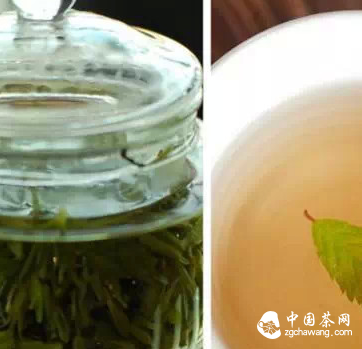
Using a transparent glass cup to brew delicate famous green tea allows observation of the tea leaves slowly unfurling, moving, and transforming in the water—a process called the "green tea dance." The specific brewing operation can vary depending on the tightness of the tea leaves. Two brewing methods can be used: First, for tightly rolled, heavy famous teas like Longjing green tea, Biluochun green tea, Duyun Maojian green tea, Mengding Ganlu green tea, Lushan Yunwu green tea, Fujian Lianxin green tea, Lingyun Baihao green tea, Yongxi Huoqing green tea, Gaoqiao Yinfeng green tea, Cangshan Xuelü green tea, etc., use the "top pouring for green tea" method. That is, after cleaning the cup, first pour 85–90°C hot water into the cup, then add the green tea leaves. Usually, no lid is needed; the tea leaves will automatically sink slowly—some straight down, some meandering slowly, some floating up and down before settling at the bottom.
The dry tea absorbs water, gradually unfurling to show the original color of one bud and one leaf, two leaves, single bud, or single leaf. Buds resemble spears or swords; leaves resemble flags. Steam rises from the tea surface carrying the tea aroma, like clouds and mist. Smell the tea aroma while hot for a refreshing experience. Observe the tea soup color—yellow-green and clear, milky white with a hint of green, or light green with a yellowish tint... Holding the cup against the light, you can see fine hairs floating and moving in the soup, sparkling like stars. Delicate, downy green teas will have more hairs in the soup, a characteristic of tender green tea. This process is called "wet appreciation."
When the tea soup cools to a drinkable temperature, taste it. Take small sips, swallow slowly, letting the tea soup fully contact the taste buds on the tongue to appreciate the charm of the famous green tea. Use both tongue and nose to perceive the aroma of the tender tea from the soup, feeling refreshed. This is the first infusion, focusing on tasting the fresh flavor and aroma of the tea. When about one-third of the tea soup remains in the cup (it's not advisable to finish the first infusion completely), add more hot water for the second infusion. For robust famous green teas, the second infusion is strong and rich, leaving a sweet aftertaste, lingering fragrance, and a feeling of physical and mental comfort. By the third infusion, the tea flavor is generally weak, and further water additions will make it bland.
When brewing delicate famous green teas, using an opaque white porcelain cup is also possible, but you cannot see the full transformation of the tea in the cup and cannot fully appreciate the tea's charm in the soup, which is a drawback.
Benefits and Effects of Green Tea
The reason green tea is so popular is not only its taste but also its many benefits and effects. So, what are the benefits and effects of green tea? Below, the editor will explain in detail!
Anti-Aging
Helps delay aging. Tea polyphenols have strong antioxidant and physiological activity and are scavengers of free radicals in the human body. Research shows that 1 mg of tea polyphenols清除 (清除 means "eliminates/scavenges") harmful excess free radicals in the human body with an efficacy equivalent to 9 μg of superoxide dismutase, much higher than other similar substances. Tea polyphenols block lipid peroxidation and清除 active enzymes. According to Japanese researcher Okuda Takuo's test results, the anti-aging effect of tea polyphenols is 18 times stronger than that of vitamin E.
Disease Prevention
Helps inhibit cardiovascular diseases. Tea polyphenols play an important role in human fat metabolism. High levels of cholesterol, triglycerides, etc., fat deposition on blood vessel walls, and proliferation of vascular smooth muscle cells form atherosclerotic plaques and other cardiovascular diseases. Tea polyphenols, especially catechins ECG and EGC in tea polyphenols and their oxidation products like theaflavins, help inhibit such plaque增生 (增生 means "proliferation/growth"), reduce fibrinogen which increases blood coagulation viscosity, and clarify coagulation, thereby inhibiting atherosclerosis.
Anti-Cancer
Helps prevent and fight cancer. Tea polyphenols can block the synthesis of various carcinogens like nitrosamines in the body and have the ability to directly kill cancer cells and enhance immune function. According to relevant data, tea polyphenols in tea are beneficial for preventing and辅助治疗 (辅助治疗 means "assisting in the treatment of") various cancers like gastric and intestinal cancer.
Radiation Protection
Helps prevent and treat radiation damage. Tea polyphenols and their oxidation products can absorb radioactive substances like strontium-90 and cobalt-60. According to clinical trials by relevant medical departments, for mild radiation sickness caused during radiotherapy for cancer patients, treatment with tea extract has an effective rate of over 90%; for leukopenia, the effective rate of tea extract treatment is 81.7%; it is even more effective for leukopenia caused by radiation.
Antiviral and Antibacterial
Helps inhibit and resist viruses and bacteria. Tea polyphenols have strong收敛作用 (收敛作用 means "astringent effects"),明显抑制 (明显抑制 means "significantly inhibit") and kill pathogens and viruses, and have obvious effects on reducing inflammation and diarrhea. Many medical institutions in China use tea preparations to treat acute and chronic dysentery, amoebic dysentery, and influenza, with a cure rate of about 90%.
Skincare
Helps with skincare. Tea polyphenols are water-soluble; using them to wash the face can remove facial oil, tighten pores, and have disinfecting, sterilizing, anti-aging effects on skin, reducing damage from UV radiation in sunlight.
Refreshing and Invigorating
Helps refresh and invigorate the mind. The caffeine in tea can stimulate the central nervous system, enhance excitation in the cerebral cortex, helping to refresh the mind and clear thoughts. It also has some effect in alleviating migraines.
Diuretic and Fatigue Relief
Helps with diuresis and fatigue relief. Caffeine in tea can stimulate the kidneys,促使 (促使 means "prompting") rapid excretion of urine, increasing the kidney's filtration rate and reducing the retention time of harmful substances. Caffeine can also排除 (排除 means "eliminate") excess lactic acid in urine, helping the body eliminate fatigue quickly.
Relieve Fatigue
Green tea contains potent antioxidants and vitamin C, which not only清除 free radicals in the body but also stimulate the secretion of hormones that combat stress. The small amount of caffeine in green tea can stimulate the central nervous system and refresh the mind. For this reason, it is recommended to drink green tea in the morning to avoid affecting sleep.
Dental and Eye Health
Helps protect teeth and improve eyesight. Tea contains a relatively high amount of fluoride—10 mg to 15 mg per 100 grams of dry tea, with 80% being water-soluble. If a person drinks 10 grams of tea daily, they can absorb 1 mg to 1.5 mg of water-soluble fluoride. Moreover, tea is an alkaline beverage that can inhibit the loss of calcium in the body, which is beneficial for preventing cavities, protecting teeth, and strengthening teeth. An experiment with elementary school students using "tea rinse after drinking" showed an 80% reduction in cavity rate. Among cataract patients, 28.6% had a tea-drinking habit; 71.4% did not. This is because components like vitamin C in tea can reduce lens opacity. Regular tea drinking positively reduces eye diseases and protects eyesight.
Lipid Reduction
Helps reduce lipids and aid digestion. The "Compendium of Materia Medica" from the Tang Dynasty records that tea has the effect of "making people lean after long-term consumption." Ethnic minorities in China's border regions have the saying, "Not a day without tea." Because tea has significant effects on aiding digestion and reducing fat, in today's fashionable terms, it helps with "weight loss." This is because caffeine in tea can increase gastric secretion, aiding digestion.
Conclusion: Green tea has become one of the most popular teas in recent years. Its benefits and effects are a major reason for its popularity. It can improve skincare and reduce lipids, making it particularly favored by women. It also refreshes the mind, fights viruses and bacteria, etc., making it very suitable for health preservation. Moreover, it has many varieties; you might want to try one!