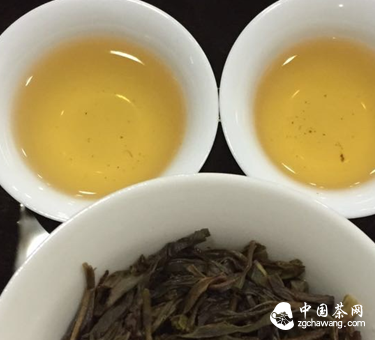
Magnolia Fragrance Dancong tea is a clonal variety. It is a small arbor type, with medium-sized leaves, and is a mid-season cultivar. It is diploid. It is one of the precious floral-honey fragrance types among Phoenix Dancong teas. Origin and Distribution: Originally produced in the Phoenix tea area of Chao'an County, Guangdong Province, the mother tree is over 200 years old. The current planting area in the Phoenix tea region is nearly 70 hectares. Small quantities have been introduced to tea areas in Luoding and Yingde, Guangdong.
Characteristics: The plant is tall with a relatively upright posture, a distinct main trunk, and medium branching density. Leaves are slightly upward-slanting. The leaf shape is long elliptical, green in color, glossy, with a slightly folded leaf blade, a slightly raised leaf surface, a tapered leaf tip, a flat leaf margin, sparse and shallow serrations, and a relatively soft texture. Buds and leaves are yellow-green with little fuzz. The weight of 100 one-bud-three-leaves is 130.0g.
Properties: Bud and leaf growth vigor is relatively strong. The one-bud-three-leaves stage occurs in late April. Yield is medium, reaching over 100kg per 667m². Well-suited for making Oolong tea. The finished tea has a dark, glossy appearance, a pure and rich magnolia flower fragrance, a strong, mellow, and fresh taste, a clear and bright liquor color, and the aroma persists through over a dozen infusions. Adaptability and cutting propagation ability are relatively strong. Full bloom period is in early November, with many flowers but few seeds.
Suitable Planting Regions: The most suitable area is in Guangdong's large and medium-leaf tea regions at altitudes of 400–500 meters or above. Cultivation Guidelines: Double-row single-plant or single-row double-plant strip planting is recommended, with about 3000 plants per 667m². Use staged pruning for timely shaping. In the early production period, focus on nurturing, combining harvesting with nurturing to promote branching.