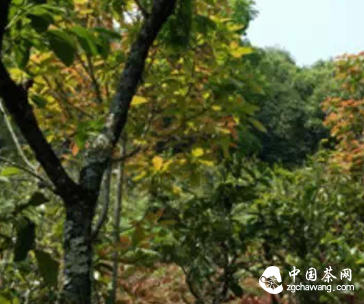
Ancient tree tea refers to arboreal tea trees that have survived for over a hundred years. Rare ancient tree communities are found in Yunnan's Xishuangbanna tea region, Lincang tea region, and Pu'er tea region. According to the standards of some so-called 'hardcore' tea enthusiasts, only tea trees over 300 years old can be called 'ancient trees.'
Ancient tree tea communities exist only in the ancient six great tea mountains, led by the ancient town of Yiwu in Mengla County, Xishuangbanna, Yunnan, and the new six great tea mountains in Menghai County, resulting in very scarce yields. Ancient tree tea must be pure material tea. If terrace tea or other non-ancient tree tea leaves are blended during the tea cake pressing process, it is no longer ancient tree tea; such teas are collectively called blended teas. Exquisitely processed pure ancient tree tea, like red wine, improves in taste, color, and nutritional value with age. Therefore, ancient tree tea has high storage and appreciation value, whereas terrace tea or blended tea has relatively smaller potential for value increase through storage.
Pu'er tea is increasingly favored by tea enthusiasts, social elites, and the general public, gradually becoming an important part of daily life. So, what are the characteristics of Pu'er ancient tree tea?
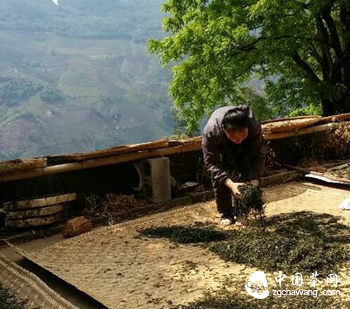
1. Taste: Ancient tree tea offers a rich and complex taste, evoking a sense of the vast wilderness and high mountains. The tea soup has high density, thickness, and smooth penetrating power. In contrast, terrace tea often tastes thin and sometimes杂乱, with a penetration that rarely satisfies the base of the tongue. Some may feel bold upon entry, but the bitterness and astringency are stronger than in ancient tea.
2. Appearance: The leaves of ancient tree tea are relatively more robust than those of terrace tea, with a distinct leathery texture on the surface, clear veins, irregular serrated edges, and few hairs on the back. Terrace tea, being cultivated, has thinner leaves, wavy edges, regular serration, and more hairs on the back.
3. Aroma: Ancient tree tea has a deep, rich aroma that lingers for a long time.
4. Brewed Leaves: After brewing, ancient tree tea leaves unfurl well, appearing plump, elastic, and flexible. Terrace tea leaves do not unfurl as easily, feeling thin, small, brittle, and hard.
5. Potential: Since ancient tree tea leaves come from large trees with deep roots that absorb abundant nutrients from the soil, they contain more substances with transformative value, offering higher potential. Terrace tea comes from shallow-rooted bushes, containing scarce substances that can transform over time, thus having limited transformative potential.
6. Aftertaste: Ancient tree tea has a mellow and thick taste upon entry. The sweetness derived from its bitterness and astringency makes the mouth produce saliva, and its pleasant aftertaste lingers in the mouth and throat. The energy release in aged tea is slower, and the sensation of 'tea energy' manifests gradually, resulting in a high comfort index for the drinker. In contrast, the thickness and lingering taste of terrace tea are brief, with less noticeable saliva production and a short aftertaste. Aged terrace tea contains relatively less energy, releases it quickly, and offers a lower level of drinking comfort.