The term 'layered sensation' is now commonly used by many 'masters' who drink Pu-erh tea to describe blended teas, but upon further inquiry, even the masters themselves often cannot clearly explain what it actually means. Due to its high frequency of use, the term is now applied beyond just blended teas. So, what exactly does the 'layered sensation' of Pu-erh tea mean?
Layered sensation, a term originating from the sculptural technique of relief carving. In relief sculpture, the technique requires not only a three-dimensional effect but also the expression of perspective relationships such as primary and secondary elements, distance, size, and front-to-back. During the carving process, it involves not only distortion and compression but must also conform to visual logic, which is the layered sensation of relief.
It was later extended to other fields: such as photography and tea. However, with this extension, the concept of layered sensation shifted from the initial visual sense to the oral sensation of tea.
Explaining layered sensation visually is easy; just by showing a few pictures, you can understand what it means at a glance.
Example image:
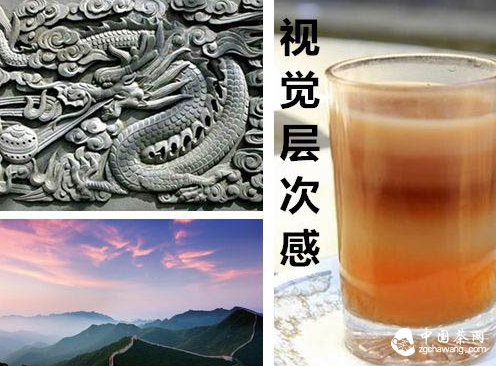
So, returning to the mouthfeel of Pu-erh tea soup, what does layered sensation mean? If we apply the visual parameters of 'distance, size, front and back,' it would refer to the changes in the tea soup sensation from the beginning to the end of drinking. Clearly, applying the parameters of visual layered sensation is unreliable for several reasons:
1. Brewing Method
If you are drinking compressed tea, following a 10-second rinse (washing the tea) and a 7-second infusion, the first few brews will almost always carry a watery taste. This means the tea's flavors have not fully released, and the taste (bitterness, astringency, aroma, salivation, and returning sweetness) will naturally differ from later brews. Even the final brews may have a watery taste, but it is different from the watery taste of the initial ones.
2. Drinking Method
I recall discussing tea drinking methods in previous articles. Drinking cup after cup continuously versus waiting for the tea's taste to fully dissipate in the mouth before the next sip yields different experiences. Moreover, the temperature of the tea soup also alters the oral sensation.
3. Descriptive Method
After drinking tea, trying to write (or speak) about your physical sensations is very challenging. Take the aroma of Pu-erh tea, for example. For those who have never tasted sugarcane, rock sugar, or longan, there are no professional terms in tea description for such scents. Using other aromas to describe tea does not help more people understand the specific situation; instead, it leads to confusion.
Just like the 'layered sensation' discussed today—a visual descriptive term forcibly applied to taste description. This misplaced terminology often plunges people into endless complexity, resulting in a perpetual enigma that no one can clearly articulate. If you want to see the layered sensation of tea, use a wide-mouthed rice bowl, add tea leaves, pour in boiling water, let it sit for a while, and you can naturally see the layers in the tea soup. Some senior tea makers say the more layers in the soup, the better the tea. However, in my view, this is one-sided and not entirely credible. This is because the soup color is related to tea processing techniques, including sun-dried green tea processing and blending techniques. Pu-erh tea changes with age, but if a Pu-erh tea product exhibits several distinct tastes when its flavors are fully released, then such a blended Pu-erh can only be considered a failed blend. Whether it's blended tea or single-origin tea, what is pursued is a unique and singular tea taste.