According to old Beijingers, past lifestyle habits included several staples: wearing clothes from Ruifuxiang, stepping into cloth shoes from Neiliansheng, drinking tea from Zhang Yiyuan, eating roast duck from Quanjude, enjoying goods from Rongbaozhai, and watching Peking opera at Guangdelou. When it comes to tea, the first thing that comes to mind is jasmine tea. Although Beijing does not produce tea, its residents have a deep love for it.
Elders say that the first thing in the morning was to brew a pot of strong tea—rich jasmine tea—to start the day. Whether in the harsh cold of winter, the sweltering heat of summer, or during the gentle seasons of spring and autumn, returning home and brewing a pot of authentic, robust jasmine tea would wash away the fatigue of the day with just one sip. Among the seven daily necessities—firewood, rice, oil, salt, sauce, vinegar, and tea—tea, though listed last, was the first thing for old Beijingers each day, which is quite interesting.
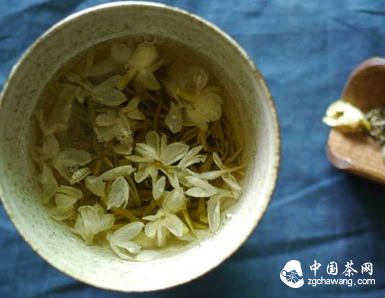
Jasmine is originally from India and Pakistan and was introduced to China via Persia. The emergence and production of scented tea began in the Southern Song Dynasty, with a history of nearly a thousand years. Among all scented teas, jasmine tea is the most popular and can be considered the crown of floral teas. The Song Dynasty poet Jiang Kui praised jasmine in his poem "Jasmine": "If I were to compile a history of flowers in the future, I would rank it as the number one fragrance in the world." As the imperial capital, Beijing naturally became the primary consumption area and cultural center for jasmine tea. During the tea-scenting process, too many flowers can overpower the tea's essence with excessive fragrance, while too few may not impart enough aroma, failing to achieve perfection. This means the flowers used for scenting should not be fully bloomed; they should be added to the tea just as they begin to open. The quantity must be just right—neither too much nor too little—to achieve the effect of "the tea absorbing the floral fragrance to enhance its flavor," with a 3:1 ratio being ideal.
High-quality jasmine tea is characterized by tightly rolled, even, and neat dry leaves with a dark brown and oily appearance. When brewed, it releases a fresh, lasting aroma, with a clear yellowish-green liquor, tender, even, and soft brewed leaves, and a rich, fresh, and mellow taste. So, how can one distinguish the quality of jasmine tea?
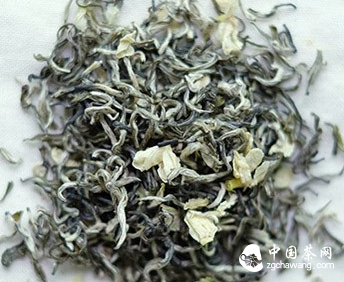
Observe Its Appearance. When selecting jasmine tea, the most intuitive method is visual inspection. Generally, premium jasmine tea uses tea leaves of better tenderness, with young buds being the best. Taking Fujian jasmine tea as an example: long, plump strands with abundant white tips and no mature leaves are top-grade. Next are teas with one bud and one leaf, one bud and two leaves, or a high proportion of young buds with visible tips. As the grade decreases, the proportion of buds reduces, and mature leaves become more dominant, and so on. Lower-grade teas consist mostly of mature leaves, with few or no young buds at all.
Smell Its Aroma. Examining the appearance alone is not enough, as jasmine tea is not just about good-looking leaves. A crucial aspect—and the main reason tea drinkers love it—is the jasmine fragrance. Good jasmine tea should emit a strong yet not overpowering aroma that is long-lasting, fresh, and pleasant, with no odd smells whatsoever.
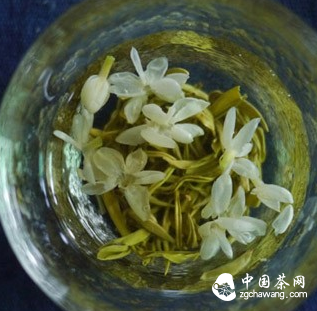
Taste Its Liquor. If conditions allow when purchasing, sit down and sample the tea. Brewing allows the quality of jasmine tea to be fully displayed, as its primary purpose as a commodity is for drinking. Only by observing the liquor color, smelling the aroma, and tasting the flavor can one truly judge its quality. The best jasmine tea will have a rich fragrance, a smooth and mellow taste, without bitterness or astringency, and no off-flavors.