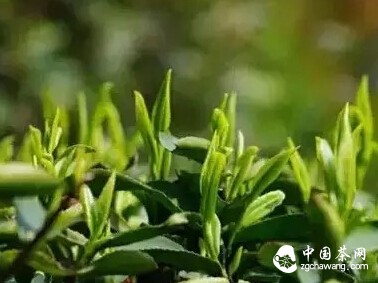
As temperatures warm in spring, tea trees begin their annual growth and health maintenance. After a winter dormancy, the nutrients in tea trees accumulate to a peak. With ample spring rainfall and suitable temperatures, the tea buds in spring are plump, tender, covered in fine hairs, emerald green in color, and have soft leaves. Therefore, the processed tea leaves are rich in internal substances and can withstand multiple infusions.
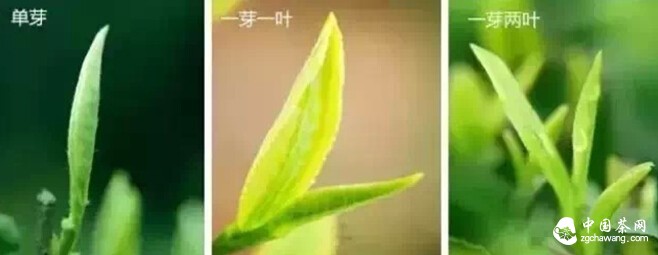
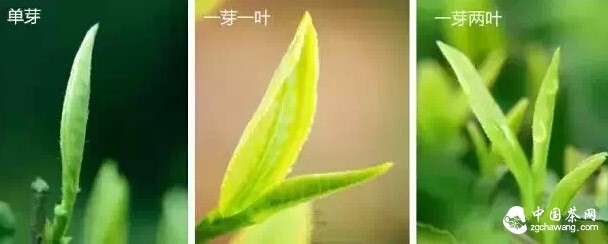
In understanding spring tea, many believe that single-bud tea is the best for early spring. However, the market offers single-bud, one-bud-one-leaf, and one-bud-two-leaf spring teas, leaving us spoiled for choice. It's time to reveal the truth—which "leaf position" is best for spring tea harvesting?
The tender shoots that sprout after tea buds unfold are called new shoots. Based on the number of unfolded leaves, they can be categorized as one-bud-one-leaf shoots, one-bud-two-leaf shoots, etc. The harvested tea leaves become raw materials for making one-bud-one-leaf or one-bud-two-leaf tea, while single-bud tea refers to the raw material harvested directly after the new shoots sprout.
Some believe that single-bud tea is the best for early spring. However, this is not entirely accurate. Although single-bud tea has a fine, smooth texture without particles, a high and penetrating aroma, a balanced bitterness and sweetness, and a lingering aftertaste—making it a dream for many tea enthusiasts—it is not fully developed. It is merely fresh, and for Pu'er tea, which relies heavily on aging and transformation, it falls short.
Typically, one bud with one leaf is considered premium, while one bud with two leaves is the optimal choice. The tenderness is just right: the bud is rich in amino acids and various vitamins, which contribute to the tea's freshness and aroma. The two leaves are abundant in tea polyphenols and alkaline substances, giving the tea a rich, mellow flavor, a refreshing taste, and a high, aromatic fragrance.
Thus, based on the above indicators, using one-bud-two-leaf new shoots as raw material yields the best overall quality.
From a market perspective, single-bud and one-bud-one-leaf new shoots are highly favored for their appealing appearance and are the primary raw materials for producing high-quality premium teas. Comparing the two, one-bud-one-leaf tea significantly increases water-soluble extracts, making it superior as a tea raw material. Therefore, using one-bud-one-leaf new shoots as raw material for high-quality premium teas not only doubles the yield compared to single-bud tea but also improves quality and reduces costs.
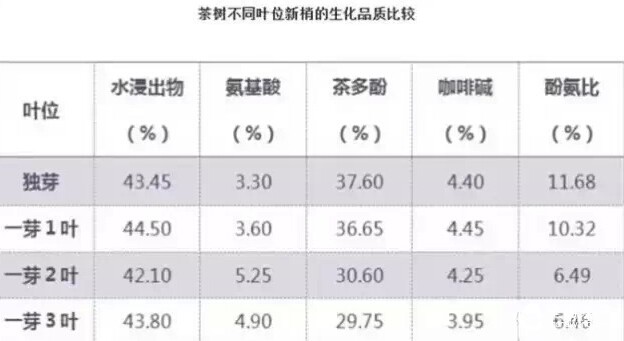
In recent years, some tea enthusiasts have excessively追捧 single-bud tea. However, overall, while single-bud tea has an elegant appearance and higher levels of polyphenols and caffeine, its comprehensive nutritional and drinking value is actually inferior to one-bud-one-leaf or one-bud-two-leaf tea. Moreover, harvesting single buds is more labor-intensive and time-consuming, and tea farmers are generally reluctant to pick them because they are more delicate. Processing also requires extra care, as they are prone to scorching if the heat is too high or insufficiently杀青 if too low. The rolling pressure must also be moderate to avoid breaking the buds. Therefore, tea enthusiasts can appreciate and experience the quality of single-bud tea, but there is no need to blindly pursue it.
All this is to tell everyone: Spring tea should be one bud with one leaf or one bud with two leaves for the best quality. Don't overly追求 "freshness" by chasing single buds and lose the true essence of spring tea!