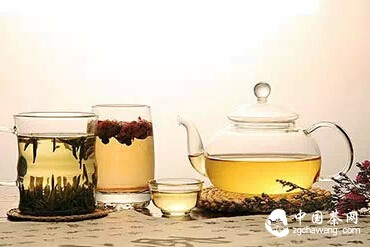
From the perspective of tea ceremony, each time a tea is brewed, regardless of the type (including green tea), one should first observe the state of the dry tea leaves to determine if awakening is needed and how to awaken the tea to bring it to its optimal state for brewing.
Awakening tea with water is not for rinsing. Any tea with good freshness does not require awakening. The older the tea, the more it needs awakening. Even green tea, yellow tea, and white tea may need awakening and can be awakened using water methods.
Awakening Tea: The process of reviving沉睡 or sealed tea leaves by exposing them to air and moisture, allowing them to absorb the essence of nature and humanity, thereby rejuvenating the tea's inherent qualities for brewing and drinking. This process is called "awakening tea." The methods for awakening different types of tea vary. For brewing dark tea, oolong tea, and black tea, the method involves taking them out of storage, placing them in the brewing vessel, and using 100°C boiling water to awaken them. For more tender teas like green tea, white tea, and yellow tea, the awakening method involves taking them out of冷藏 storage (never use 100°C boiling water for green, white, or yellow tea), placing them in a pre-warmed brewing vessel, and then using about 85°C hot water to awaken them. The degree of awakening mastery plays a decisive role in the performance of the tea's intrinsic quality throughout the brewing process and directly affects subsequent infusions.
Awakening method for Dark Tea (post-fermented tea): Old tea that has just been unpacked from bamboo baskets or bamboo husks often tastes dull with dispersed aroma, making it difficult to展现 the deep and full charm of aged tea. To enjoy a well-brewed cup of aged tea, "awakening" before brewing is an important step. Awakening tea involves changing its storage method to唤醒 the tea quality and凝聚 the tea aroma. Even tea aged only seven or eight years can quickly提升 its quality to a higher level through the following awakening steps:
First, separate the tea: Use hands or a tea knife to break the tea into small pieces weighing a few grams. The term "separate" is used rather than "break," "拆," or "解" because very old tea cakes are often already very loose; gently shaking or separating by hand will cause the leaves to散落. For tea only one or two decades old, which is still relatively compact, a tea knife is often needed. For tea cakes or bricks, inserting the knife from the side can easily剖 the tea into two pieces, then break by hand into small pieces suitable for one infusion. Tuocha tea is usually compressed tighter; insert the knife from the edge or side. When separating, avoid breaking the tea too finely. Overly fine tea can easily clog the pot spout and affect the stability of the tea soup's taste and concentration during brewing due to too rapid release of tea juices.
Next is通风透气: Spread out the separated tea leaves in a clean, shaded place to allow air circulation for several days,吹散 any old or miscellaneous odors stored in the tea. This stage is when tea is most susceptible to picking up foreign odors, so ensure the environment is odor-free and protected from direct sunlight or prolonged灯光照射. Covering the tea with a sheet of white paper can effectively避免 these issues. The通风 time depends on the tea's condition. For clean tea, two to three days may suffice; for stored tea, it can be extended to one or two weeks to散发 storage odors.
Finally, store the aired tea in a purple clay jar (or ceramic jar). Purple clay has good insulation, light-blocking, and some breathability, helping to调节 and maintain相对 stable temperature and humidity inside the jar. Storing tea in such an environment allows the tea quality and aroma to quickly凝聚. When choosing a purple clay jar, it's best to use an old jar with high烧结度 and no异味. New purple clay jars contain earth and fire气, which can cause the tea to deteriorate and develop杂味. A simple treatment for new jars is to rinse, scald, and soak them with boiling water, changing the water once or twice daily for several days, then air-drying thoroughly before storing tea. Jars must be completely dried after soaking; otherwise, residual moisture inside can cause the tea to become damp and moldy. To ensure the jar is dry, place a handful of raw tea inside, cover it, and let it sit for a day; if the tea does not吸潮变软, it's ready. Placing some clean bamboo charcoal in the jar helps吸附杂味 and提升 the tea's quality. Bamboo charcoal should also be boiled thoroughly and dried.