Many regions have humid climates, and tea enthusiasts often encounter tea leaves that have molded due to improper storage, among other reasons. Tea lovers are troubled when some of their stored tea becomes moldy. After asking friends, some say it doesn't matter, some say it can be drunk after treatment, and others even say mold is a good thing. Can moldy tea leaves actually be drunk? What is the deal with the "Golden Flower" in dark tea?
Moldy Tea: Significant Hazards
Tea, like other foods, has a shelf life. The shelf life for most teas is around 18 months. If tea is stored for too long, it is prone to mold. Tea mold generally refers to tea leaves growing white hairs, emitting a moldy smell when smelled. Severely moldy tea will rot and clump, growing green hairs. Pu-erh tea may also develop black mold.
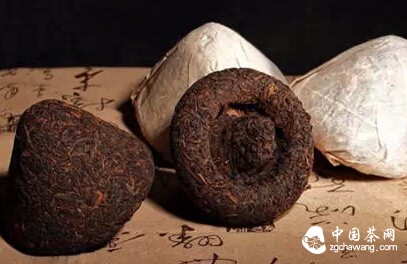
However, it should be distinguished that some premium varieties such as Biluochun, Maofeng, Yunwu tea, Dianhong, Tuocha, Pu-erh, etc., have white downy hairs on the leaves. This is because the tea leaves are tender, not because they have grown white hairs from mold.
Chen Zongmao, Academician of the Chinese Academy of Engineering and researcher at the Tea Research Institute of the Chinese Academy of Agricultural Sciences, stated that tea molds because it is contaminated by Penicillium and Aspergillus, which can produce toxins like aflatoxin (classified as a Group 1 carcinogen by the WHO's International Agency for Research on Cancer, an extremely toxic substance). Aflatoxin is heat-resistant and cannot be eliminated through high-temperature frying or cooking. Its danger lies in damaging human and animal liver tissue, which in severe cases can lead to liver cancer or even death. Therefore, drinking moldy tea may lightly cause food poisoning symptoms like dizziness, blurred vision, and diarrhea, or heavily may trigger lesions in vital organs such as the liver and kidneys. Animal experiments indicate that moldy and spoiled tea may also be carcinogenic! Whether it's green tea, black tea, oolong tea, or Pu-erh, once moldy, it should not be drunk.
However, although teas have relative shelf lives, even past the expiration date, some unmoldy teas can still be drunk, but the original flavor of the tea itself will be affected. Especially non-fermented green tea, once stored for a long time, its fresh fragrance is replaced by a "stale taste." Fully fermented and semi-fermented teas like black tea and oolong tea can be stored for a longer time. But over time, the tea flavor is also inevitably replaced by a "stale taste."
Therefore, experts suggest that overly aged tea or damp, moldy tea not only affects the drinking experience but may also harm your health. It is best not to drink it. The ancient saying "aged wine, new tea" also reflects this principle.
The "Golden Flower" in Dark Tea
These "Molds" Are Not True Mold
Regarding the issue of tea mold, what most confuses and concerns tea enthusiasts is undoubtedly mold-related phenomena in dark teas, including Pu-erh, especially the "Golden Flower" in Anhua dark tea and the "white frost" on aged Pu-erh tea. In fact, "Golden Flower" and "white frost" are also caused by fungi, but they are beneficial fungi, different from the harmful mold in the common concept. Of course, once black mold appears, and the tea tastes "numbing, throat-catching, throat-prickling," then the tea is truly moldy.
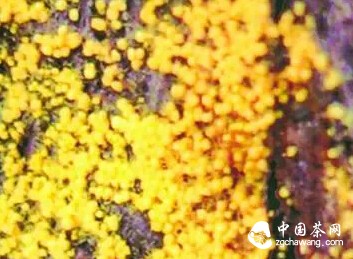
"Golden Flower" is a key process in the production of Fu brick tea (a type of dark tea) that forms its unique quality. By controlling certain technical parameters, the growth and reproduction of the probiotic fungus Eurotium cristatum are promoted, producing golden closed fruiting bodies, commonly known as "Golden Flower." Professor Chen Chuan from Anhui Agricultural University referred to the Golden Flower as "Aspergillus xue" in his book. Now, through research by Hunan Agricultural University, the modern Golden Flower is identified as Eurotium cristatum. The more "Golden Flower" in Fu brick tea, the better the quality, as the saying goes, "Good tea grows Golden Flower, blooming flower indicates good tea quality."
The color of the "Golden Flower" in Fu brick tea from different eras constantly changes: newly baked Fu brick tea has a large number of golden-yellow particles growing inside the brick, resembling "Milan." As the storage years extend, the Golden Flower gradually shrinks and turns white. Some very old Fu brick tea may no longer show visible Golden Flower, only faintly visible white spots. Therefore, new tea has lush "Golden Flower," while some old tea has less or even no visible "Golden Flower."
Additionally, some Pu-erh tea monographs mention that the micro-frost-like "white mold" is praised as the "noble mold" in Pu-erh tea. After a period of drying and frost-removal treatment, the tea's taste becomes mellower, and its smoothness and sweetness significantly enhance.
How to Distinguish "Golden Flower" from "White Frost"
Moldy Pu-erh tea is usually processed through wet storage to simulate an aged appearance. Worryingly, some unscrupulous merchants and processors use toxic Aspergillus flavus to impersonate "Golden Flower" and describe white mold as "white frost" to deceive consumers and seek excessive profits. So, how to distinguish between mold, "Golden Flower," and "white frost"?
Aspergillus flavus also appears as yellow flaky distributions. Through artificial means, it can also be made to look like "Golden Flower," making it difficult for ordinary people to tell. The best method is to observe the appearance. Mold is filamentous and distributed in patches, appearing yellow, usually distributed in one corner of the cake. Mold can cover an area of 4 to 6 cm and be about 0.5 to 1 cm high within 14 to 21 days. The tea body itself becomes moldy and sticky, with unclear boundaries between leaves, and the tea color is deep black. Tea that has molded and then been stored dry has shriveled, irregularly shaped mold bodies, appearing brown. In contrast, Golden Flower is usually inside the tea cake or brick, appearing as dotted particles, golden yellow. When distributed on the tea surface, there might occasionally be dozens of Golden Flowers together, but the flower bodies are clear, and the boundaries between them are distinct. The difference is obvious after brewing the two types of tea. Moldy tea has a soup color that is charcoal black or brownish-black and turbid, with an extremely strong moldy, pungent smell. After 4-5 infusions, the soup color becomes very light but remains turbid. Tea with Golden Flower has a more pleasant taste, with a smooth and mellow mouthfeel, a unique sweetness from the Golden Flower, a bright red tea color, clear soup that doesn't become muddy, and can withstand dozens of infusions without the flavor diminishing or the color fading.