When drinking tea, people often discuss whether a tea is good or bad. Sometimes, the quality of a tea is not the most important factor; what matters more is the spiritual and cultural atmosphere that tea creates in people's lives. It serves as a guiding light, allowing one to seek experiences in the inner world through movement and stillness. However, even with tea as a medium, a delightful flavor is beneficial. It not only guides people gradually into a sublime state but also, in the hands of a tea connoisseur, can elevate one's understanding of the inner world: savoring tea to comprehend life, enlightening one's existence. Furthermore, the same tea can evoke different feelings based on individual experiences. The common ground might be the tea's distinct personality. As people have different preferences and evaluation standards, tea can only be said to have different styles. Just as there are no absolutely good or bad people, there is no absolutely good or bad tea. Below, I introduce several teas I frequently brew in Wuyishan:
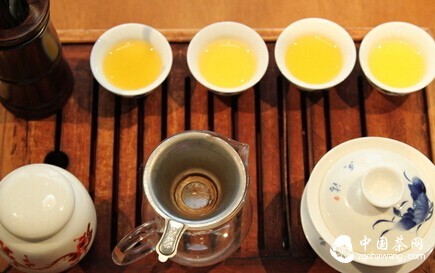
1. Old Bush Shui Xian: The dry leaves appear large and robust, tightly curled. The dry aroma reveals a distinct mossy note interwoven with a sharp roasted bean fragrance. From the 1st to the 3rd infusion, the mossy character is pronounced, with a fresh, slightly pungent moss flavor, cool and sweet. From the 4th to the 9th infusion, the tea soup feels even more refreshingly sweet, smooth, and lively, dominated first by orchid fragrance, gradually transitioning to a rice leaf aroma. From the 10th to the 20th infusion, the orchid or sweet floral fragrance gradually shifts to cooked and fresh rice leaf scents. At this stage, appropriate extension of the brewing time is needed. Even when the liquor color lightens, there remains a strong sensation of drinking thick rice soup, as the ancients said: 'When the water color is light but the flavor remains, it is called 'thick'.' During the brewing process, the tea soup color changes from golden yellow to deep golden yellow (infusions 4-9), then back to golden yellow (10-15), and finally light yellow (after 15 infusions). The liquor mixed in a glass cup resembles golden yellow jelly or glossy solidified oil. The soup feels sweet, smooth, and lubricating upon entry, with a cool, sweet aftertaste. Drinking it refreshes the spirit, as if cleansing the body and mind.
2. Rou Gui: The dry leaves appear robust and tightly knotted (different from the generally fine, tight strands of typical Rou Gui). The dry aroma carries a rich longan fragrance. Compared to Old Bush Shui Xian when brewed, it has a darker soup color, a more robust flavor, and also exhibits a noticeable mossy or woody quality. Some say this Rou Gui initially resembles Shui Xian because the tea soup is sweet, smooth, and has a mossy/woody feel. Only after the 3rd or 5th infusion does it start to feel more like Rou Gui. After 10 infusions, it shows a converging trend with Shui Xian. In essence, this is a Rou Gui with the thickness of an old bush Shui Xian, mainly characterized by enduring sweetness, strong infusions, pronounced Rou Gui characteristics, and full-bodied tea flavor. Those who appreciate Rou Gui will enjoy this tea's deep, reserved quality—different from typical Rou Gui—and its profound, heartfelt expression emanating from within. Gazing at the bright, vivid soup color in the cup, sensing the aroma and taste, leaves one with a feeling of having experienced the vicissitudes of life.
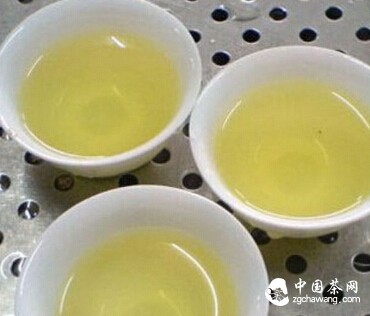
3. Da Hong Pao: The dry leaves appear robust and tightly knotted. The dry aroma reveals pronounced milky and rice fragrances. Compared to the previous two teas, Da Hong Pao possesses greater freshness, vibrancy, and vitality. Its aroma, flavor, and charm are more variable, giving a lively, energetic sensation. At this point, even if the first two teas evoke a sense of having weathered life's沧桑 (vicissitudes), they still maintain an underlying, consistent 'flavor beyond flavor.' Da Hong Pao, however, is unpredictable in its transformations. Its fragrance and taste are complex and delightful. The tea soup is also more spatial—bright, crisp, softly velvety, sweet, and tensile... It seems like a middle-aged person, yet radiant, dazzlingly bright, or full of vitality, making it impossible to guess its precise age. Da Hong Pao possesses an alternative sense of沧桑 (vicissitudes).
Summary: All three teas can be infused up to 20 times without showing separation of tea and water (becoming watery). You cannot definitively say which is better or worse, as each has its own characteristics and appeals to different people. For me, these three teas resemble three dimensions of personality beauty: Shui Xian represents inner beauty, Rou Gui represents external beauty, and Da Hong Pao is like a part of oneself that is not fully understood or unpredictable—a blend of personalities creating variables through changes in time and space, a beauty of random transformation?