For tea lovers who enjoy tea leaves, drinking "Pre-Qingming tea" is about tasting the freshness. But who can clearly say whether all "Pre-Qingming tea" is the best?
Due to China's vast climate differences between north and south and its wide tea-producing regions, the country's tea areas are divided into four zones: the Southwest Tea Region (including Guizhou, Yunnan, Sichuan, and southeastern Tibet), the South China Tea Region (including Guangdong, Guangxi, Fujian, Taiwan, Hainan, etc.), the Jiangnan Tea Region (including Zhejiang, Hunan, Jiangxi, southern Anhui, southern Jiangsu, southern Hubei, etc.), and the Jiangbei Tea Region (including Henan, Shaanxi, Gansu, Shandong, northern Anhui, northern Jiangsu, northern Hubei, etc.). Among these, the Jiangnan Tea Region is the main tea-producing area in China, accounting for about two-thirds of the national annual output.
Most areas of the Southwest and South China Tea Regions are located in southern China, where temperatures rise early in spring. Tea picking often begins during the traditional Chinese Spring Festival, and by Qingming, picking has been ongoing for nearly two months. In contrast, in the Jiangbei Tea Region, most tea areas have not truly started harvesting by Qingming. In the Jiangnan Tea Region, early-sprouting varieties often begin to bud around "Jingzhe" (Awakening of Insects) and "Chunfen" (Spring Equinox), and can be picked before "Qingming" (Tomb-Sweeping Day). Thus, only tea picked and produced in the Jiangnan Tea Region before Qingming can be called "Pre-Qingming tea."
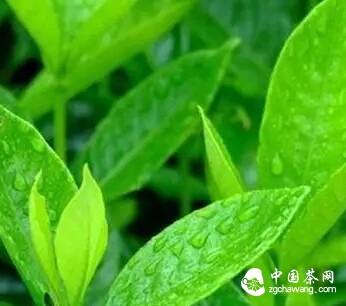
After a long winter, the nutrients in tea plants are fully accumulated. Coupled with low spring temperatures, the growth rate of tea plants is slow, resulting in a high number of buds, dense and plump buds, good tenderness, and thick leaves.
Generally, there are no pest issues during the spring tea period, so pesticides are not needed, making the tea free from pollution. Therefore, spring tea, especially early spring tea, is often the highest quality green tea of the year. Thus, many premium famous green teas, such as West Lake Longjing, Dongting Biluochun, Huangshan Maofeng, Lushan Yunwu, etc., are harvested in the early spring, with Pre-Qingming tea being the pinnacle among premium teas.
Additionally, tea leaves during this period are rich in content, with high water extract and chlorophyll levels, especially chlorophyll A, resulting in a vibrant green color when made into green tea. When brewed, they resemble orchid blossoms or bamboo leaves, offering excellent visual appeal. Moreover, the amino acid content is higher compared to post-rain tea, and the levels of volatile components contributing to fresh or roasted chestnut aromas are elevated, while the content of bitter-tasting tea polyphenols is relatively lower, giving the tea a high aroma and mellow taste.
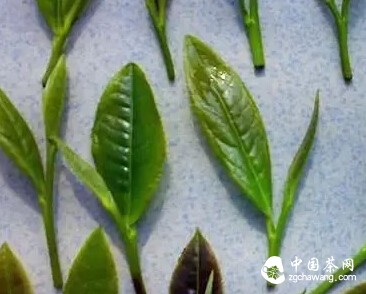
In recent years, there has been a preference among buyers for the earliest and tenderest tea, even seeking tea made solely from single buds. However, this is not necessarily true. High-quality tea is not always better the more tender it is. Tea made from tiny, young single buds may look beautiful, but in terms of richness of content, it is inferior to tea made from one bud with one or two leaves. For example, the premium grade of the historically significant Longjing tea uses one bud with one or two leaves as raw material, never single buds.
The societal reverence for "Pre-Qingming tea" is more about its abstract concept than practical value, and its aesthetic significance outweighs its drinking value. The vanity of tea drinkers plays a significant role in this. Because "Pre-Qingming tea" is scarce and precious, being able to drink it often symbolizes status and taste.
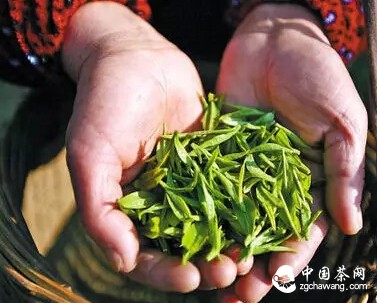
In fact, due to influences from climate, variety, and cultivation management conditions, the tea harvesting time varies each year. Generally, harvesting progresses from south to north, with a difference of 3-4 months. Moreover, even within the same tea region or the same tea garden, differences in altitude, water, and fertilizer management can lead to harvesting times varying by 5-20 days. Therefore, the quality of tea cannot be judged solely by the picking season. In warmer tea gardens, harvesting may have occurred 2-3 times before Qingming, while in higher altitude or more northern areas, no harvesting may have taken place even after Qingming. Judging tea quality solely by picking time would be absurd!
Furthermore, although "Pre-Rain tea" is not as tender as "Pre-Qingming tea," due to higher temperatures during this period, bud and leaf growth is relatively faster, and accumulated compounds are richer. Therefore, "Pre-Rain tea" often has a fresh, strong taste and good infusion resistance. Tea picked during this period is neither too early nor too late, capturing the essence of the season and the spirit of the timing, making it excellent tea.
"Pre-Qingming tea" is early and tender, pleasing to the eye; "Pre-Rain tea" is delicious and flavorful. It merely depends on what consumers are seeking.