The traditional charcoal baking method for Wuyi tea is used both for baking wet tea strips after rolling, commonly called "water-removing bake," and for baking dry tea, known as "fire-supplementing," "fire-absorption," or "stewing fire." The "water-removing bake" requires high firepower, almost close to an open flame, to quickly remove moisture from the tea strips, which are then spread out to cool to prevent souring and reddening. The next day, female workers sort out the stems, and the tea is baked dry before being packed. After the spring tea season ends, it is transported to tea factories for refining processes such as sieving, winnowing, re-sorting, and "fire-supplementing," "fire-absorption," or "stewing fire."
In summary, the traditional charcoal baking method is used in both rough tea and refined tea production. Tea made with hand-rolling and charcoal baking exhibits a dragonfly-head and snail-tail shape, an oily and lustrous surface, and premium varieties show "three-section colors" of red, yellow, and green. It offers a mellow taste, pure aroma, distinct caramel notes, a soft and bright leaf base with red edges or spots.
With the increasing production of rock tea and advancements in technology, the traditional "charcoal baking method," while still widely used, has undergone significant changes. The main evolutions are as follows:
1. Function has changed. Today, "charcoal baking" is mainly used for "fire-absorption" and "stewing fire" of dry tea, rarely for "water-removing bake" (baking wet tea strips). This is due to increased tea production, scarcity of charcoal, and rising prices—charcoal prices are over ten times higher than in the 1970s.
2. Baking pit size has changed. Previously, baking pits were typically 40 cm in diameter and 20 cm deep. Today, they are often 50 cm in diameter and 25 cm deep, with the largest reaching 55 cm in diameter and 35 cm deep. Modern pits hold about 30 kg of charcoal, with extra-large pits holding up to 40 kg. Some tea farmers estimate that larger pits save 20-30% of charcoal.
Reasons for larger pits: First, modern charcoal baking is primarily for "fire-absorption" and "stewing fire." Second, it extends the baking duration. Previously, pits needed to be lit and prepared daily (or every 4-5 days in tea factories). Now, one firing can last 7-8 days or even over ten days, reducing charcoal and labor costs and minimizing exposure to high heat and dust during pit preparation.
3. Baking basket size has changed. Baking baskets, cylindrical bamboo tools with a waist for holding a baking sieve, were traditionally about 62 cm high and 38 cm in diameter. Modern baskets are about 63 cm high and 45 cm in diameter, with the increased width adapting to larger pits.
4. Baking sieve shape has changed. Baking sieves, bamboo tools placed in the basket waist to hold tea, were traditionally flat with fine holes (2-3 mm squares) and a 3 cm high rim. Today, many use domed sieves. Traditional sieve users say flat, fine sieves minimize breakage but hold less tea (about 3 kg), requiring a central "depression" to prevent scorching. Domed sieve users argue they are sturdier, require no depression, and hold more tea (about 4 kg). Both have merits.
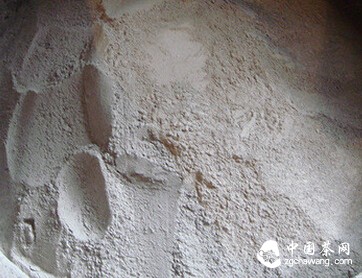
5. Pit preparation method has changed. Traditionally, after lighting charcoal in the pit, it was crushed into fine particles with a baking shovel, piled into a cone, filled with charcoal dust, and covered completely with fine ash. For refining tea, the ash fully covered the charcoal ("dark bake"), with no visible sparks except for "water-removing bake."
Today, "bright bake" is more common. Charcoal is broken into coarse particles with a shovel or hoe, piled into a cone, filled with dust, and covered with thick ash.
Combining old and new masters' views: "Dark bake" offers even heat but cools quickly and is labor-intensive. "Bright bake" saves labor, lasts longer, but has less even heat, requiring more care when adjusting ash.
6. Baking duration has changed. Previously, refining tea required a "moisture-removing" phase with low heat and slightly open windows, taking about half the total time. Today, many use drying machines first to remove moisture, then charcoal for "fire-absorption" or "stewing fire." This reduces time by nearly half, saving charcoal, time, and labor.
Rock tea typically undergoes two baking sessions, spaced at least 10-15 days apart. Each session lasts 6-10 hours or more, depending on the tea and customer requirements. "Low fire slow stewing" and "long fire absorption" allow heat to penetrate the tea, ensuring consistent flavor, color, and infusion, and preventing moisture regain and spoilage during storage.
7. Tea-turning method has changed. Traditionally, the basket was removed, and tea was turned by hand. Today, many use spiral bamboo sieves, which are coarser. Tea is often poured into a soft bamboo basket, shaken by lifting its corners, then returned to the baking basket. This avoids hand-turning and reduces breakage. Some use an extra basket, flipping tea directly from one to another, requiring skill to avoid spills and uneven spreading.
Turning intervals depend on the tea, baking stage (shorter for the first turn to monitor heat and adjust ash), and temperature (shorter for high heat, longer for low heat).
8. Temperature measurement has changed. Traditionally, the back of the hand was placed against the basket's lower part to gauge heat: tolerable for low heat, quickly hot for medium, unbearable for high. This varied by person. Some now use thermometers or infrared thermometers, but placement is tricky, so most still rely on hand-feeling. Final judgment comes from tasting the brewed tea.
9. Dry tea color has changed. Hand-rolled tea had a dragonfly-head, snail-tail shape. After full charcoal baking, it showed an oily, brown-green luster, with premium teas displaying three-section colors. Machine-rolled tea is more eyebrow-shaped, and after machine drying and higher fire absorption, colors are often oily brown or even black.
Based on the above, the author believes:
1. The Wuyi Rock Tea charcoal baking method is a key traditional craft, listed as a "National Intangible Cultural Heritage." It produces tea with a mellow taste, pure aroma, unique character, durability, storage stability, and stomach-warming properties. This distinctive technique should be preserved.
2. With increased production, scarce charcoal resources, and rising costs, the method must evolve. Improving and adapting charcoal baking meets modern needs, saving precious forest resources and labor. Rough estimates suggest that using larger pits and machine pre-drying saves at least 20% in energy costs and 10% in labor compared to smaller pits and full charcoal baking.
3. Scientific research on charcoal baking is needed. Historically, its benefits were attributed to long baking times, natural charcoal, and bamboo tools (non-metallic). However, the specific elements or compounds in charcoal that affect tea flavor remain unknown. The author consulted tea expert Guo Yaling from Fujian Agriculture and Forestry University, who noted that this question lacks conclusive answers in China and requires repeated experiments. Those with interest and resources are encouraged to research this area.