Putting aside the so-called proposition of ancient tree tea taste, at least in the continuous process of tasting, you can always distinguish which tea is more durable, less bitter and astringent, and has a thicker texture!
Under the same tea region and same year conditions, there is definitely a difference between Yiwu terrace tea and ancient tree tea in terms of durability, throat feel, and physical comfort! Of course, some tea friends say just choose the tea you like to drink, regardless of whether it's terrace or ancient tree?
Yes, theoretically that's correct, but one day when you taste a better tea, that feeling is irreversible. Pursuing more beautiful taste enjoyment is an innate human instinct. Therefore, please cultivate your ability to appreciate good tea more. That requires drinking more, trying more, and comparing more. Drink more, drink for a long time, and you will have the ability to distinguish which tea product is superior!
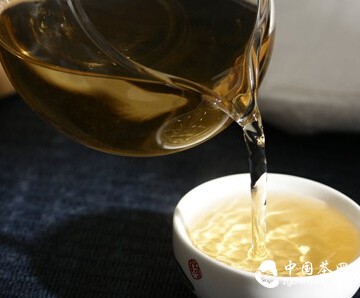
【Ancient Tree Tea and Terrace Tea】
Ancient tree tea usually refers to arboreal tea trees with longer tree ages, sparsely planted, with tree ages over a hundred years; while terrace tea is divided into densely planted small arboreal (small tree) tea and plantation terrace tea.
The former are of a scale that is not very large, basically maintaining the original ecological environment, requiring no fertilization or pesticides, with tree ages around several decades; while plantation terrace tea involves tea bases of thousands of acres, artificially planted, fertilized, and treated with pesticides, produced in batches according to the season.
Among the raw materials of Pu-erh tea, there indeed exist different qualities and grades. For tea trees, in the same tea region, using ancient tree material is certainly better than using material from shorter-aged trees or terrace tea. However, ancient tree tea is not absolutely all good material; excellent variety spring terrace tea can also be better than it (for example, Zhangjia Sandui terrace tea from Bulang Mountain). How to distinguish and understand good material Pu-erh, besides hoping for conscientious manufacturers, mainly relies on cultivating one's own tasting ability to freely find good tea.
【Enhancing Pu-erh Tea Tasting Ability】
The word "delicious" still has levels. Some teas taste good, are reasonably priced, and can be used as daily drinker tea; some teas have a relatively high comprehensive rating and are suitable for collection; as for even more delicious teas, sometimes the feeling is beyond description in words, perhaps the price is higher, but you will be convinced! But no matter what, when you have certain experience and ability, believe this topic is no longer necessary for discussion. And when tea friends themselves improve their tasting and identification abilities, teas that are mixed and matched and tea merchants with ulterior motives will have no chance to muddy the waters. This is the blessing for us tea lovers.
It's normal for beginners to not clearly understand the taste of terrace tea and ancient tree tea, let alone ancient tree tea mixed with terrace tea, and the currently popular old material newly pressed processed tea. Before a taste foundation is established, it's really difficult to start buying tea for collection. Even if bought, it's just tuition tea (you will understand yourself after how many years). Because the particularity of Pu-erh tea is that the higher the taste requirement becomes as you drink more, generally poorer quality teas transformed over time will definitely no longer be your cup of tea at a higher level.
Hoping for control at the tea source is of course a good method, but I think it's too difficult for consumers to wait for this day. If you don't understand, you will buy expensive, buy unjustly. If you understand, as soon as a sip of tea soup enters your throat, you can judge the tea's potential for later transformation. This is where the skill lies. Drinking tea is an enjoyment. Appreciating and collecting good tea from tasting is absolutely a pleasure. Good tea is drunk out, not stored out. Bad tea will never become good tea no matter how long it's stored. Personally, I believe practicing tasting skill is the only way to collect quality Pu-erh good tea.
Three elements for appreciating Pu-erh tea: First, understand the broad taste of the four major tea sources (Yiwu tea, Menghai tea, Simao tea, Lincang tea); second, taste representative teas with distinct characteristics within tea regions (ancient tree, small tree, terrace tea); third, categorize taste and characteristics and appropriately collect tea products you prefer (experience the transformed taste, such as Taoya Pu-erh tea).
Three don'ts for appreciating Pu-erh tea: First, trust your own taste, compare terrace tea and ancient tree tea by drinking, don't be a participant who follows the trend in collecting tea. Second, tea speaks for itself, don't superstitiously believe in ancient tree legends, stories,华丽 packaging, big brands, and manufacturers. Third, when starting to drink raw tea, don't just taste mountain tea and village tea, as that will make you lose your taste direction.