According to traditional Chinese concepts, the four seasons, the four periods of the day, day and night all have distinctions of Yin and Yang. Spring and summer have abundant Yang energy, autumn and winter have abundant Yin energy; daytime has abundant Yang energy, nighttime has abundant Yin energy. The 12 two-hour periods of a day, like the four seasons, undergo a continuous cycle of Yin and Yang transformation, circulating endlessly.
Humans, living between heaven and earth, need to pay attention to the balance of Yin and Yang. When Yang energy is excessive, it causes heat, and the diet needs to intake more Yin-natured things to balance the body's Yin and Yang. When Yin energy is excessive, it causes cold, and then there is a need to intake more Yang-natured things, also to balance the body's Yin and Yang, seeking to achieve a balancing effect. This is also the principle behind 'taking warm supplements in autumn and winter.'
Tea, in its nature, is cold, Yin. Through processing methods such as high-temperature stir-frying, fermentation, roasting, aging, etc., the nature of tea can gradually be changed. The Yin substances within the tea's contents are gradually oxidizing and transforming, and the tea's nature tends toward a balance of Yin and Yang, becoming mild in nature. It is no longer purely Yin.
Under normal circumstances, the drier the tea leaves and the more tender green the color of the brewed leaves, the stronger the Yin nature; the more reddish-brown or blackish the color, the weaker the Yin nature.
To put it more simply, tea leaves can be roughly classified as follows:
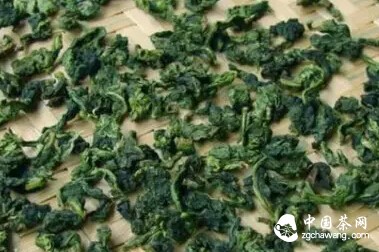
Teas with a relatively strong Yin nature and a cold/cool tea nature include: White tea with a shorter aging time (within 3 years), Green tea (sun-dried, oven-dried), Pu-erh raw tea with a shorter aging time (within 8 years), Dark tea with a shorter aging time (within 8 years, excluding ripe Pu-erh), Tieguanyin (light oxidation/fresh, fragrant type), dehumidified Dancong (fragrant type), and other tea varieties.
Without exception, the characteristics of these types of tea are: tender green dry leaves, light yellow to greenish tea soup, clear and uplifting aroma, and a relatively high fresh and tender taste. Green tea and fragrant Tieguanyin usually need to be stored fresh in the refrigerator. The aging times mentioned above are for reference only.
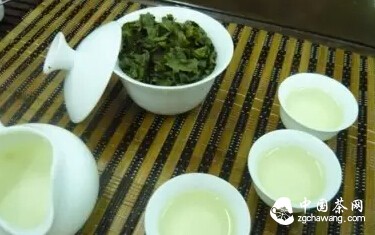
Teas with a weaker Yin nature, but where Yin is still stronger than Yang, include: Green tea (pan-fired, steamed), Yellow tea, Black tea (light fermentation), Oolong tea (Dancong, strong aroma Tieguanyin, rock tea, Taiwanese high mountain tea, with lighter roasting), White tea with moderate aging (around 5 years), Pu-erh raw tea with moderate aging (around 10 years), Dark tea with moderate aging (around 10 years, excluding ripe Pu-erh), lightly fermented ripe Pu-erh, etc.
The characteristics of these teas are as follows: the dry leaves are darker in color, tending towards brownish-yellow; roasted teas like Oolong often appear dark grayish-green with a reddish tinge, while black tea tends towards golden yellow. The tea soup brewed from these teas overall tends from golden yellow to orange-yellow. The aroma is relatively richer, the taste freshness is slightly lower, somewhat stronger and thicker, and the sweetness of the tea soup is greater.
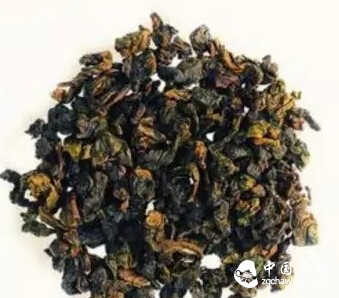
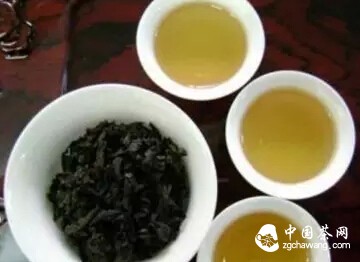
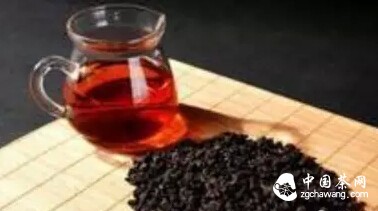
Some teas with deeper processing have the weakest Yin attributes, a mild tea nature, tending towards a balance of Yin and Yang. Such teas roughly include: Black tea (deep fermentation), Oolong tea (Dancong, charcoal-roasted Tieguanyin, rock tea, Taiwanese Oolong, etc., deep fermentation, heavy roasting), White tea with longer aging (over 8 years), Pu-erh raw tea with longer aging (over 20 years), Dark tea with longer aging (over 20 years, excluding ripe Pu-erh), deeply fermented ripe Pu-erh, etc.
The characteristics of these teas are usually very dark dry leaves, tending towards reddish-brown and black. The tea soup brewed from these teas overall tends from red to brown. The aroma is relatively deep and low, the taste is mellow and thick, and the sweetness of the tea soup is high.
The above describes the Yin-Yang attributes of tea. What about the four seasons of the year and the 12 two-hour periods of a day?
According to the lunar calendar solar terms, after the Spring Equinox, the days are longer and the nights shorter; the sun crosses the equator and moves north, and Yang energy gradually increases; after the Autumn Equinox, the sun crosses the equator and moves south. The sun is the source of Yang energy. China is located north of the equator, so after the Spring Equinox, Yang energy grows daily, reaching its peak during the three periods of intense summer heat. After the Autumn Equinox, Yang energy declines daily, and Yin energy gradually grows, reaching its peak during the three periods of intense winter cold.
Within a day, as the earth rotates, at noon the sun shines directly, Yang energy is at its peak; at midnight the moonlight shines directly, the moon is the source of Yin energy, and Yin energy is at its peak at midnight.
The human body also has Yin and Yang. Roughly speaking, people who are usually gentle and fear cold have a constitution leaning towards cold, belonging to Yin. People who are usually strong and irritable have a constitution leaning towards heat, belonging to Yang.
After roughly understanding the Yin-Yang attributes of the human body, the four seasons, and the nature of tea, it naturally becomes clear what kind of tea is suitable for whom and when to drink.
Examples are as follows: For a person with a balanced physique, where Yin and Yang are relatively balanced, during the noon period of summer, that is, from 11 am to 1 pm, when the season is also Yang and the time period is also Yang, it is the time of peak Yang energy. If one wants to drink tea for health preservation, to achieve better health and wellness effects, then it is suitable to choose teas with a stronger Yin nature. Such as: relatively new white tea, green tea, fragrant Tieguanyin, relatively new raw Pu-erh, etc...
If during the hotter seasons of spring and autumn, during the Si period (9 am to 11 am) or the Shen period (3 pm to 5 pm), when the climate and time period belong to a slightly Yang, but weaker Yang phase, a person with a relatively balanced body Yin and Yang can choose teas with a weaker Yin nature, such as: pan-fired green tea, Oolong tea, black tea with dry leaves leaning towards golden yellow, white tea, raw Pu-erh, and dark tea that have been aged for some time.