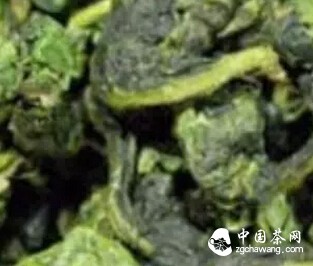
When it comes to Southern Fujian Oolong tea, Anxi Tieguanyin immediately comes to mind. In fact, Anxi produces more than just Tieguanyin. Besides Tieguanyin, there are also 'Se Zhong' tea and Daye Oolong. As early as the 1950s, to facilitate identification, classification, and grading, national commodity inspection departments categorized Anxi Oolong tea into Tieguanyin, Se Zhong tea, and Oolong.
So, what is Se Zhong tea? Essentially, Se Zhong tea is a sub-category within the broader Oolong tea classification. It includes all varieties except Tieguanyin and Oolong. The most famous among these are the four major varieties: Benshan, Meizhan, Maoxie, and Huangdan.
Staple Cultivar – Benshan
Benshan tea, also known as Yuanzhong tea, was discovered as early as 1870 and later widely planted in areas like Xiping and Lutian. It was recognized as a national fine cultivar at the 1984 National Tea Cultivar Appraisal Conference and is one of the four staple fine cultivars in Anxi. Although Benshan is a 'close relative' of Tieguanyin, its growth vigor and adaptability are better. High-quality Benshan closely resembles Tieguanyin and can be difficult to distinguish.
Blossoms Like Wintersweet – Meizhan
Because its flowers resemble wintersweet blossoms, it is named 'Meizhan,' which also implies 'Meizhan dominates all flowers.' Its bud and leaf fertility and tenderness retention are relatively strong, with the one-bud-three-leaves stage being particularly vigorous around mid-April. Most uniquely, it can be processed into various tea types suitable to different regions. When processed into green tea or black tea, it possesses a distinctive orchid aroma and a mellow taste. It is also an excellent raw material for making Zhengshan Xiaozhong and Bailin Gongfu black teas.
Strong Vitality – Maoxie
Maoxie originates from Daqiulun, Fumei Village, Daping Township, Anxi County. Due to its high yield and good quality, Maoxie is widely planted in areas like Daping and Huqiu. It has a mellow taste with a Tieguanyin-like fragrance, a clear and high aroma with a slight jasmine floral note; the tea liquor is slightly greenish and smooth on the palate. It is well-suited for making Oolong tea and is considered a premium product among Se Zhong teas. Like Meizhan, it can also be made into black tea and green tea, with the pekoe apparent, resulting in an attractive dry leaf appearance and fairly good quality.
Early and Unique – Huangdan
Anxi Huangdan, with a color like 'gold' and a remarkable fragrance resembling 'osmanthus,' is also known as Huangjingui (Golden Osmanthus). It is famous for the saying 'one whiff of its aroma identifies Huangdan.' Huangdan has a very distinctive quality, mainly embodied in its 'early harvest and two unique features.' 'Early' refers to its early sprouting, early processing, and early market availability. Huangdan is generally processed in mid-April, more than ten days earlier than most varieties and nearly 20 days earlier than Tieguanyin. The 'two unique features' mainly refer to its external appearance being 'golden, even, and fine' and its internal quality being 'fragrant, remarkable, and fresh.'
These four major Se Zhong teas are each distinctive with their own characteristics. Besides these four, there are others like Qilan and Foshou. Nowadays, much of the Tieguanyin on the market is blended tea, and blended Tieguanyin often uses Se Zhong teas as blending components, such as blending Benshan with Tieguanyin or directly blending Benshan with Meizhan.