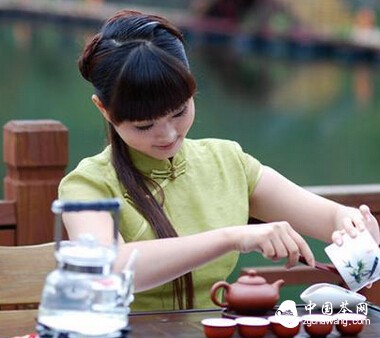
When brewing tea, it is customary to discard the first infusion, known as "rinsing tea" or "soaking tea." Originally a spiritual practice symbolizing the washing away of worldly dust, rinsing tea today serves more functional purposes. Some tea enthusiasts explain that this is to remove impurities from the tea leaves, such as tea dust or dirt. Some even consider those who do not rinse tea as "unhygienic" or "lacking knowledge of tea art." However, if not done properly, rinsing tea can inadvertently wash away the essence of the tea.
The Purpose of Rinsing Tea
According to scholarly research, the term "rinsing tea" originated in the Northern Song Dynasty, initially referring to the tea production process and later extending to the drinking process. Some explain that it is meant to wash away impurities like tea dust or dirt from the leaves. In reality, after fresh leaves are picked from tea plants, they undergo primary and refining processes, including multiple steps such as oxidation, pan-firing, rolling, baking, and sorting. These steps not only determine the tea's grade but also ensure it meets hygiene standards. Any occasional impurities, such as tea dust or dirt, are quickly removed when boiling water is poured and discarded.
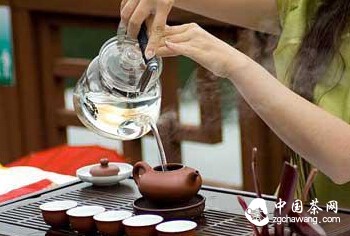
The first infusion primarily serves to soak the tea, facilitating the unfolding of the leaves and the extraction of tea liquor, allowing the drinker to quickly perceive the tea's aroma and flavor. It is not merely about washing away unhygienic substances. This can be considered one of the ancient contributions to enriching the art of tea drinking. In this sense, "rinsing tea" is also referred to as "awakening tea," "warming tea," or "moistening tea." Even today, in the popular practice of kung fu tea, hot water is used to rinse the tea leaves and warm the teapot and cups before drinking, enhancing the tea's fragrance. This follows the ancient tradition of "rinsing tea."
Additionally, tea leaves have strong hygroscopicity, aging tendencies, and odor-absorbing properties, containing many "hydrophilic" substances. During storage, they easily absorb moisture and odors. Rinsing with hot water helps remove dampness and coldness from the tea leaves.
In ancient times, before brewing tea, "first, high-quality spring water was used to wash the brewing utensils, ensuring freshness and cleanliness, followed by hot water to rinse the tea leaves." The water for rinsing tea should "not be too boiling, as it would wash away the tea's flavor." During rinsing, bamboo chopsticks were used to hold the tea leaves and "repeatedly wash them to remove dust, yellow leaves, and old stems, ensuring cleanliness." After rinsing, the leaves were picked up by hand, placed in a cup or teapot, and covered. "After a short while, when opened, the color is green, and the fragrance is intense." At this point, boiled water could be poured for brewing and drinking.
In those days, specialized tools for rinsing tea were mostly made of pottery, shaped like bowls and fired from sandy clay, with two layers. The upper layer had small holes at the bottom, allowing sand and dirt to flow out during rinsing.
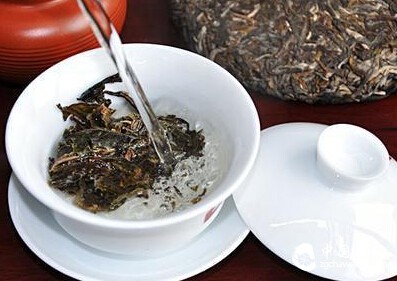
For teas like green tea, black tea, and white tea, rinsing is optional and depends on personal judgment. For wild tea or tea processed on rainy days, rinsing is generally unnecessary. It is important to note the following points when rinsing tea:
First, the amount of water used for rinsing should not be excessive. Generally, use just enough water to barely cover the dry tea leaves. Too much water may cause over-soaking and lead to the loss of many nutrients from the tea.
Second, the rinsing time should not exceed three seconds. The first infusion contains many beneficial components, such as tea polyphenols, amino acids, and ether extracts, which are not only good for health but also essential for the tea's flavor. According to experiments, the tea's aroma and beneficial components begin to infuse within three seconds of the first infusion. Discarding the tea water after three seconds may result in significant loss of these components. Therefore, controlling the rinsing time is crucial to preserving both the tea's aroma and nutrients.
Third, pay attention to water temperature when rinsing. Some teas, like high-quality green tea or white tea such as Silver Needle, are made from early spring buds. Using boiling water to rinse them may destroy beneficial components like theanine and vitamins, while also causing the aromatic substances to evaporate, affecting the quality of subsequent infusions. Therefore, it is generally recommended to use hot water below 80°C for rinsing such teas. For teas like oolong tea or certain dark teas, which are made from more mature leaves, boiling water can be used for rinsing.
The ritual of rinsing tea has existed since ancient times. Over time, its purpose and methods have evolved, but what remains unchanged is the essence of Chinese tea culture, the profound depth of Chinese culinary traditions, and the vast heritage of China's 5,000-year-old culture.