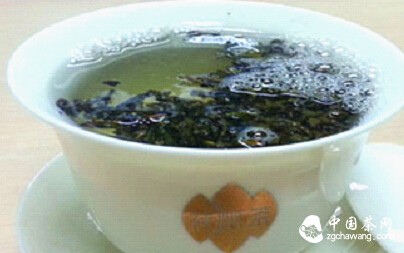
When brewing tea, a layer of "foam" often floats on the surface of the tea soup, and it is more abundant during the first two or three brews. What is this "foam"? Some tea enthusiasts consider it "impurities" and always skim it off with the lid, while others believe it is pesticide residue or remnants of impurities in the tea leaves, indicating poor tea quality. However, in reality, the foam in tea soup is mainly produced by a substance called tea saponin. Scientific research shows that tea saponin has antibacterial, anti-inflammatory, analgesic, and other effects, making it not only harmless but beneficial to the human body.
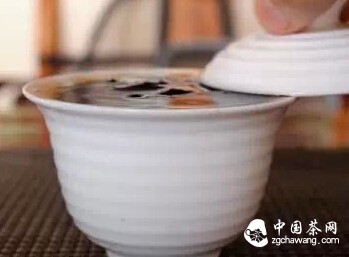
As early as ancient times, people noticed the foam that appears when brewing tea and regarded this "white foam" as an essence. In the poem "Ode to Tea" by Du Yu of the Jin Dynasty, it is written: "At the moment of first brewing, foam sinks and splendor floats. Bright as accumulated snow, radiant like spring blossoms." This describes how, after the initial brewing of tea, the fine, light froth rises to the surface, shining as brilliantly as dazzling snow and as splendidly as flourishing spring flowers.
Modern scientific research further proves that this "white foam" is primarily produced by a substance called tea saponin. Tea saponin, also known as saponin or glycoside, earns its name because its aqueous solution can produce persistent, soap-like foam when shaken. Saponins are widely found in over 90 families and 500 genera of plants in nature, including common oil crops like soybeans and oil-tea camellia, as well as precious medicinal herbs like ginseng, Codonopsis pilosula, Paris polyphylla, licorice, Adenophora, and anemone. Additionally, some marine organisms, such as starfish, can secrete saponin-like substances.
Tea saponin is distributed in the roots, stems, leaves, and seeds of tea plants, but its molecular structure varies, leading to differences in physical properties. In terms of content, tea seeds have the highest saponin concentration, though the proportion of tea saponin in seeds differs among various tea plant varieties.
Regarding the utilization of tea saponin, ancient laborers in China很早 knew how to soak tea seed cakes in water for washing clothes and hair. The "Compendium of Materia Medica," published in 1590, records that "tea seeds, when pounded, can wash clothes and remove grease," referring precisely to the function of tea saponin in tea seed cake. Since its first isolation and discovery by Japanese researcher Aoyama Jiro in 1931, tea saponin has been extensively and deeply studied scientifically.
Modern medical research indicates that tea saponin has hemolytic and piscicidal effects, anti-insect and antibacterial properties, as well as pharmacological functions such as anti-permeability, anti-inflammatory, phlegm-reducing, cough-relieving, analgesic, and anti-cancer effects. It also promotes plant growth. Furthermore, tea saponin exhibits excellent surface activity, including emulsification, dispersion, wetting, detergency, and foaming, making it a high-performance natural surfactant. Consequently, tea saponin is widely used in detergents, wool spinning, knitting, medicine, daily chemicals, construction, and other industries.