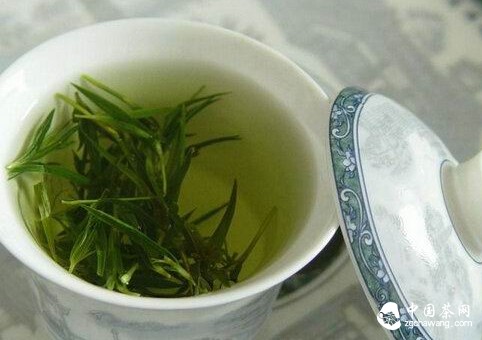
Tea-loving friends often notice a slight bitterness when drinking tea. Consequently, some tea drinkers believe such tea leaves are not of good quality. In fact, bitterness in tea is not necessarily bad; whether it is good tea depends on whether a sweet aftertaste follows the bitterness. The flavor of tea soup is determined by the comprehensive reaction of the taste sensory organs to the flavor substances in the tea leaves. Different teas exhibit different tastes due to variations in the types, contents, and proportions of their flavor components.
1. What is "Sweet Aftertaste"?
Sweet aftertaste is a common natural sensory effect when drinking tea and a positive evaluation of the flavor of high-quality tea. The sweet aftertaste effect is primarily formed by the combined action of bitter and sweet flavors. It is a specific taste that starts with a fresh sweetness and slight bitterness upon entering the mouth, has a long aftertaste in the oral cavity, and gradually transitions to sweetness over time, ultimately ending with a sweet flavor. Its sensory experience is mainly characterized by: "slightly bitter upon entry, with a fresh sweet aftertaste," "bitter with a hint of sweetness upon entry, followed by the bitterness fading and sweetness growing, with the sweet aftertaste lasting longer than the bitterness," and other similar features.
However, not all plants possess both these flavors simultaneously. For example, bitter melon and lotus seeds are only bitter without sweetness, while licorice is sweet without bitterness. The production of a sweet aftertaste in tea soup usually takes bitterness as a prerequisite, with sweetness emerging after the bitter taste. Good tea often carries a "sweet aftertaste," and the intensity and persistence of this aftertaste are also considered indicators of tea quality. Compared to an immediately apparent sweetness upon entry, this "bitterness giving way to sweetness" transformation is more dramatic and is more often associated with the quality of good tea.
2. What are the reasons for the "Sweet Aftertaste" in tea soup?
The first theory suggests it is the result of the transformation of astringency. Professor Wang Yuefei, Deputy Director of the Tea Science Department at Zhejiang University, expressed his view in his edited book "Tea Culture and Tea Health": "Tea contains tea polyphenols, which can bind with proteins to form an impermeable film in the oral cavity. The contraction of local oral muscles caused by this film creates an astringent sensation, making us feel the initial bitterness of the tea. If the tea polyphenol content is appropriate, forming a film of only one or two molecular layers, this film is of moderate thickness. Initially, there is an astringent feeling in the mouth; later, after the film ruptures, the local oral muscles begin to recover, the astringency transforms, presenting a feeling of sweet aftertaste and saliva production." Therefore, Professor Wang Yuefei believes that "sweet aftertaste" is the result of the combination of tea polyphenols and proteins.
Another theory suggests that "sweet aftertaste" is an illusion in the oral cavity, namely the "contrast effect." In their 1979 paper "Interrelationships Between Different Taste Qualities and Stimuli," Professors McBurney and Bartoshuk proposed: "Sweetness and bitterness are relative concepts. After tasting sweeteners like sucrose, you will find water somewhat bitter, and after tasting bitter substances like caffeine and quinine, you will feel water is sweet." This phenomenon is a contrast effect, so many also believe this illusion could be one factor contributing to the sweet aftertaste. However, a stronger bitterness in the tea soup does not necessarily mean a stronger sweet aftertaste. Some teas present bitterness without a subsequent sweet aftertaste. Some teas are not very bitter upon entry but have a pronounced and lasting sweet aftertaste. Regarding the mechanism of "sweet aftertaste," systematic and in-depth research is ongoing in academia, and there is no absolute conclusion yet, but some scholars' studies and viewpoints can serve as references.
3. Which components might cause "Sweet Aftertaste"?
1. Tea Polyphenols and Total Sugar: Xu Yongquan et al. used an electronic tongue (an intelligent recognition electronic system mimicking the human taste mechanism) to analyze the taste of tea soup. Research indicates a significant positive correlation between the bitterness and sweet aftertaste of tea soup, with the two complementing each other; there is a significant positive correlation between the content of tea polyphenols and total sugar and the intensity of the sweet aftertaste in tea soup, suggesting that within a certain concentration range, both tea polyphenols and total sugar help enhance the intensity of the sweet aftertaste. For example, raw Pu-erh tea generally has a high tea polyphenol content and a noticeable sweet aftertaste, which also corroborates this.
2. Flavonoids: Although there are no reports in the tea industry that flavonoids can produce a "sweet aftertaste," there are reports that flavonoids are the substances causing the sweet aftertaste in olives. The bitterness of olives comes from its special chemical components, such as oleuropein, flavonoids, and polyphenolic compounds, with flavonoid content higher than in other foods. The bitter substances in bitter melon are momordicosides and charantin; the bitter substances in bitter tea are also glycosides and a small amount of flavonoids. Glycoside substances only exhibit bitterness, so when eating bitter melon, one only feels bitterness with almost no sensation of sweet aftertaste. The taste manifestation of flavonoids is very special: initially presenting a bitter and astringent taste, but after a period, a natural sweetness can be felt. The flavonoids contained in olives are the main reason for their sweet aftertaste, and the higher the flavonoid content, the more obvious the sweet aftertaste and the mellower the aroma. The flavonoid content in tea leaves is about 3%-4% of the dry matter. However, the mechanism of flavonoids causing sweet aftertaste is still under study and not entirely clear.
3. Organic Acids: Organic acids in tea stimulate the salivary glands to secrete, producing a feeling of "saliva production and sweet aftertaste." There are many types of organic acids in tea, accounting for about 3% of the total dry matter. Most organic acids in tea are free organic acids, such as malic acid, citric acid, succinic acid, oxalic acid, etc. Other organic acids are also formed during the tea processing. During the withering and green-making processes of tea leaves, the content of organic acids increases. Therefore, it is easier to feel a lasting sweet aftertaste when drinking Oolong tea, and properly spread green tea also exhibits a certain degree of sweet aftertaste.
4. Sugars: Tea soup contains polysaccharides, which themselves are not sweet but have a certain viscosity, causing them to linger in the oral cavity. Saliva contains salivary amylase, which can catalyze the hydrolysis of starch into maltose, and maltose is sweet. The enzymatic breakdown of polysaccharides requires some time, and this reaction time difference creates a perception of "sweet aftertaste."