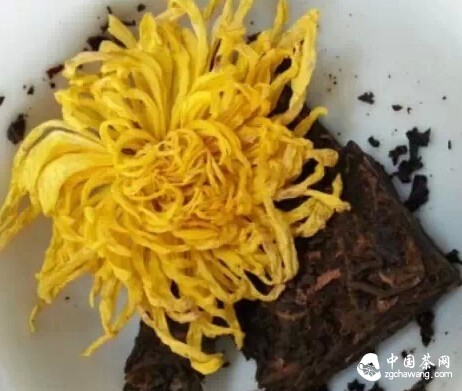
Since chrysanthemum has a very sweet and pleasant taste, "Chrysanthemum Tea" has existed since ancient times. Although it contains no tea leaves, it is a traditional Chinese medicinal tea, said to cleanse impurities from the body, nourish the lungs and stomach, and promote longevity with regular consumption.
Combining chrysanthemum with Pu-erh is not only a perfect match in character but also in taste and visual appeal, embodying a balanced and elegant beauty. Pu-erh is rich and deep, while chrysanthemum is light and fresh. Pu-erh is含蓄 and restrained, whereas chrysanthemum's aroma is clear and uplifting. Pu-erh resembles the thick walls and high tiles of a grand household, while chrysanthemum is the ever-changing garden scenery within the walls.
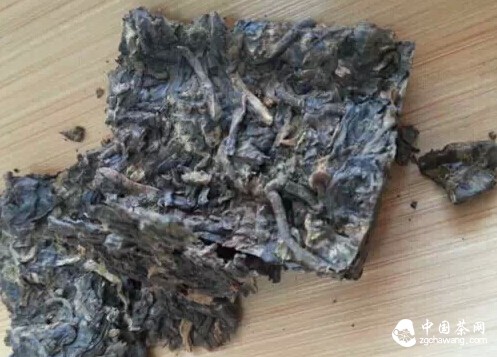
On a cold winter day when a cold front hits, brew yourself a cup of chrysanthemum Pu-erh tea. Savoring its balanced and harmonious flavor, one feels life should be the same. In times of bitterness, add a touch of the cooling chrysanthemum; in moments of excitement, add a hint of the profound Pu-erh. Maintain an upwardly soaring heart amidst hardship, and a keen, profound attitude within joy. This way, the tea of life can become mellower with age and more fragrant with each infusion.
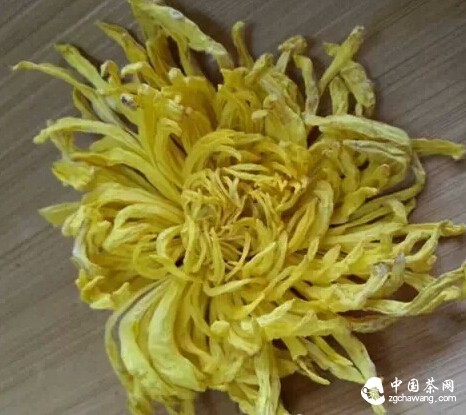
One golden silk chrysanthemum flower, 8-9 grams of ripe Pu-erh.
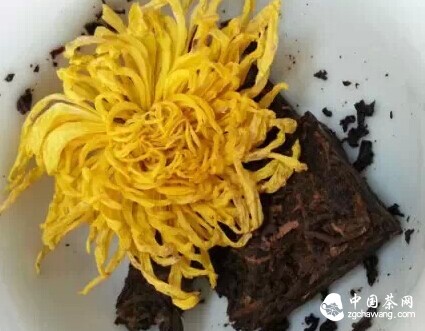
One yellow, one brown; one blossom, one wood; one uplifting, one deep; one light, one strong; one sweet, one bitter; one cooling, one warm. Neither too cold nor too dry, neither biased nor extreme—perfectly balanced and harmonious. This also aligns with the tea connoisseur's consideration of "neutral harmony."
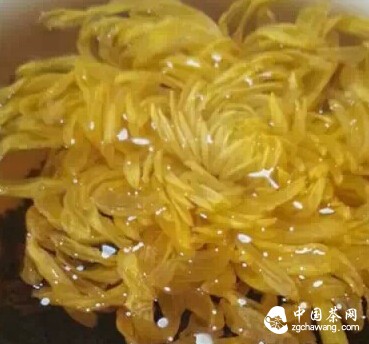
The aroma first brings the aged scent of the ripe Pu-erh, followed by the fragrance of chrysanthemum.
Upon sipping, the initial taste is the sweet chrysanthemum on the tip of the tongue, followed by the slight bitterness of Pu-erh at the back. If the tea fills the mouth, after swallowing, the entire palate is left with a soft, blended, and balanced sensation.
Then, a friend suggested, "What if we add honey when the tea is slightly warm?"
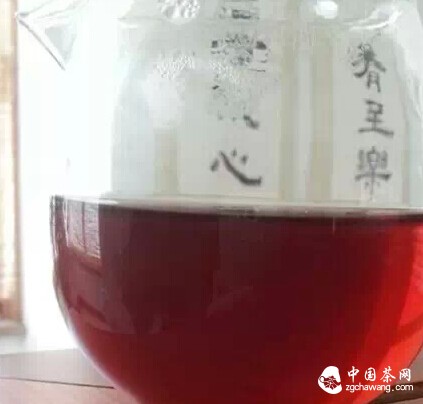
It suited my thoughts perfectly. After adding honey and tasting the tea again, the first note was the sweetness of honey, then the chrysanthemum's fragrance within the liquid, followed by the rich mellowness of Pu-erh. The mouth was filled with a sweet, refreshing chrysanthemum aroma, while the taste of ripe Pu-erh faded considerably, lingering only in the aftertaste after the tea slid down the throat.