Recently, there has been all kinds of willfulness in social media circles, but one character has remained silent. It has been willfully low-key for five thousand years, not driven by wealth or fame, but stubbornly persisting through the dust of history!
It can cure a hundred poisons—how willful!
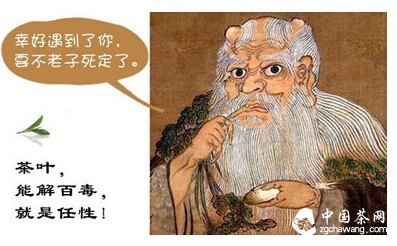
"Shennong tasted hundreds of herbs and encountered seventy-two poisons in a single day, but was saved by tea." Tea had never met Shennong; it remained just a plant, an evergreen shrub or small tree, unnoticed.
But Shennong, with his sharp eye, picked it out from the rest, put it in his mouth to taste, and in doing so, neutralized the seventy-two poisons within him.
Loved and hated by emperors—how willful!
Tea culture flourished during the Tang and Song dynasties, especially the trend of tea competitions in the Song Dynasty, which gave rise to the famous dragon and phoenix tea cakes.
But Emperor Zhu Yuanzhang of the Ming Dynasty was furious and issued an edict to abolish pressed tea cakes in favor of loose leaf tea. The reason: "The emperor, considering the heavy burden on the people, ordered the cessation of dragon and phoenix tea cakes and only allowed tender tea leaves as tribute."
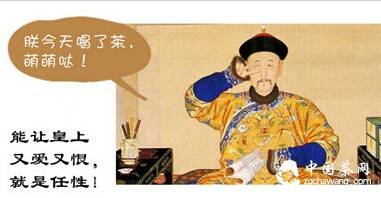
Emperor Qianlong, who lived to 88 and was the longest-reigning emperor, was a lifelong tea lover. When he abdicated in favor of Jiaqing at age 85, an old minister lamented, "The country cannot be without its emperor for a single day." Qianlong laughed and replied, "The emperor cannot be without tea for a single day." This remark revealed his deep addiction to tea.
It is the world's healthiest beverage—how willful!
Tea has no alcohol, no sugar, no fat, but contains protein, amino acids, caffeine, minerals, plant pigments, vitamins, and other substances.
With such rich content, drinking tea helps slow aging, provides antioxidant and anti-radiation effects, refreshes the mind, reduces fat, aids digestion, and beautifies the skin—functions that other beverages cannot replicate.
Imitated but never surpassed—how willful!
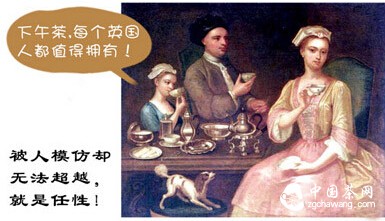
Chinese tea has been transported to Turkey since the 5th century. After the Sui and Tang dynasties, trade with Western countries flourished. The British queen fell in love with Chinese tea and created afternoon tea, sparking a tea craze in England. Eventually, Britain went to great lengths to introduce tea plants and produce black tea.
Foreigners rely on it as a necessity—how willful!
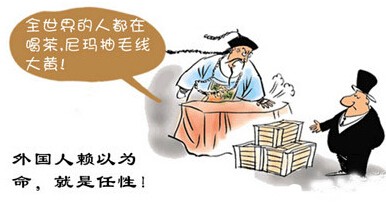
Where did the opium destroyed in the "Humen Opium Destruction" during the late Qing Dynasty come from? Lin Zexu exchanged tea for opium: for every chest of opium surrendered by foreign traders, they were rewarded with five catties of tea. Over a hundred thousand catties of tea were used to obtain 1,150 chests of opium. Because foreigners relied on tea as a necessity, the "Humen Opium Destruction" became a grandiose and historically significant event.
Closely tied to daily life—how willful!
According to The Times, nearly 80% of British people drink tea. In China, tea is not just a beverage but also a medium for communication between people. China is the birthplace of tea.
Chinese people are so familiar with tea that it is cherished by emperors, scholars, poets, philosophers, as well as commoners and street vendors.
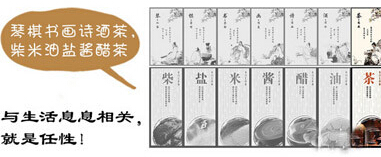
People often say: "Music, chess, calligraphy, painting, poetry, wine, and tea" or "The seven daily necessities: firewood, rice, oil, salt, sauce, vinegar, and tea." This shows how important tea is in people's hearts.
America gained independence because of you—how willful!
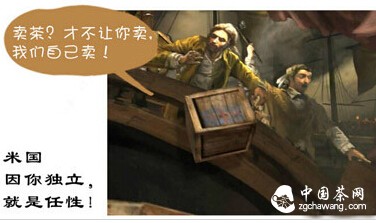
In the 16th century, Britain monopolized the tea trade with America and instilled in Americans the habit of drinking tea.
On the cold night of December 16, 1773, to protest the British tax increase on tea, a group of radical anti-British Boston Tea Party activists dumped 342 chests of tea into the sea, sparking the famous "Boston Tea Party." This angered the British government, leading to war, and the American Revolutionary War broke out two years later.
It has fans who wrote its biography—how willful!
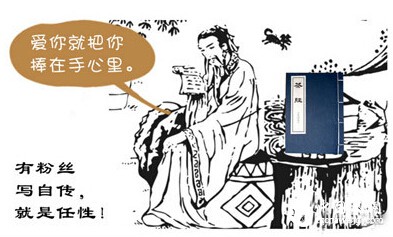
The Classic of Tea is a monograph dedicated to tea. It is not only the first of its kind but also the earliest, most complete, and most comprehensive work. This book covers the history, origins, current state, production techniques, tea-drinking skills, and principles of tea ceremony. It is hailed as the "Encyclopedia of Tea."
In short, whether you drink it or not, love it or not, tea is always there—so willful!