Recently, many friends have been leaving messages for the editor, saying they are unsure whether the products they bought are authentic or of good quality. To address this, the editor will organize some experience on how to purchase high-quality herbal tea products and share it with everyone, hoping it will be helpful! Thank you for following us!!
Today, we will talk about how to distinguish the authenticity of the currently popular black wolfberry.
1. Look at the appearance:
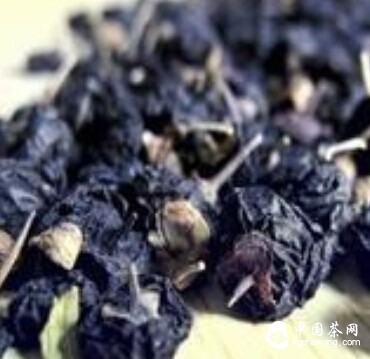
Black wolfberry fruit is dry and wrinkled. When soaked in water, it becomes oval and slightly flat, 5–8 mm long, and 3–5 mm in diameter. The surface is purple-black with irregular wrinkles and a slight luster. The fruit retains the remnant style, fruit stalk scar, and persistent calyx. The texture is soft and moist. There is one seed, long-ovate, 3.5–5 mm long and 2–3 mm wide, reddish-brown or brownish-brown, slightly pointed at the top, triangular-cylindrical, with six shallow longitudinal grooves extending to the middle, and a blunt round base with more than ten circular pits. The odor is slight, and the taste is sweet and slightly sour. When dried, the stem end of the black wolfberry can stand upright, and after removing the stem, there is a round, very white circle. When completely dry, it crumbles easily into powder when pinched—these are characteristics that other fake fruits do not have.
2. Look at the tea color:
Black wolfberry has a very deep color and contains a large amount of anthocyanins. When soaked in acidic water (mineral water), it turns purple; when soaked in alkaline water (mountain spring water, tap water, etc.), it turns blue.
3. Multiple seeds:
The seeds of black wolfberry are individual and grain-like, similar to those of red wolfberry. Other counterfeit products, such as Tangut white thorn fruit or small blueberries, have a single seed.