White tea is one of the six major types of Chinese tea, mainly produced in areas such as Fuding, Zhenghe, and Songxi in Fujian Province. Due to its unique processing method—no pan-firing, no rolling—high-grade white teas like Silver Needle and White Peony are covered in white down, giving them a silvery appearance. The liquor is clear and bright, with a fresh and mellow taste, which makes it deeply beloved. As people's understanding of white tea deepens, the popularity of aged white tea continues to rise. Similar to Pu'er tea, white tea is also believed to “improve with age,” and many people have a special fondness for aged white tea, often referred to as “old white tea.”
Why does aged white tea “improve with age”? How should we understand this affection for aged white tea? Based on relevant information and personal observations, I have broadly categorized the reasons for people’s fondness for “aged white tea” into three types: the sentimental type, the pragmatic type, and the collector type.
1. The Sentimental Type
Appreciating the transformation of white tea over time
Like Pu'er tea, during years of storage, the internal components of the tea slowly oxidize, and the quality characteristics of white tea change subtly over time. In terms of aroma, new white tea typically has a unique “downy fragrance and honeyed charm” due to its processing. As it ages, it develops an aged aroma, often described as a “lotus leaf fragrance,” which may further evolve into a “date fragrance” or “herbal fragrance.” The liquor color shifts from bright yellow to apricot yellow, and may even turn reddish-orange. The taste becomes richer and more mellow, smoother on the palate, and the tea’s nature gradually changes from cool to warm.
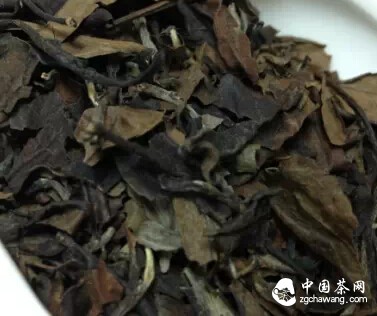
Some people are particularly drawn to this transformation over time. Most aged white teas over ten years old are of the Shoumei or Gongmei grade, which appear rustic and coarse in appearance. Aged white tea starts with a fresh, sunny flavor and gradually becomes a cup of red, rich liquor with a sweet, smooth taste and a distinctive herbal aroma. This mirrors the journey of life—starting fresh and simple, drifting through the ups and downs of the world, tasting all kinds of experiences, and ultimately finding sweetness after hardship, gaining insight into the true meaning of life. Drinking aged white tea is also like savoring life itself.
2. The Pragmatic Type
Focusing on the health benefits of aged white tea
There is a saying about white tea: “One year as tea, three years as medicine, seven years as treasure.” In the northeastern rural areas of Fujian Province, white tea is traditionally stewed with rock sugar to reduce internal heat, relieve dryness, treat toothache, constipation, and adjust to new environments. In white tea-producing areas like Fuding, there is a custom of using aged white tea to treat childhood measles and fever. A local proverb goes: “If you don’t have saiga horn or antelope horn, use white downy tips.”
Although these are folk sayings, they are not entirely without basis. While the overall content of internal components in white tea tends to decrease with age, the flavonoid content actually increases. Studies on white tea aged for 1, 5, and 20 years have shown that aged white tea has better effects than new white tea in terms of anti-inflammatory, antiviral, blood sugar-lowering, uric acid-lowering, and alcoholic liver damage repair properties.
Flavonoids are a class of phenolic compounds based on a benzopyrone ring. Their benefits include being strong antioxidants that effectively eliminate oxygen free radicals in the body, preventing cell degeneration and aging, and even inhibiting cancer development. They can also improve blood circulation, lower cholesterol, and alleviate symptoms of cardiovascular and cerebrovascular diseases. Additionally, they inhibit the exudation of inflammatory enzymes, promote wound healing, relieve pain, and are useful for various sensitivities. As shown in the table below, the flavonoid content in white tea increases during storage.
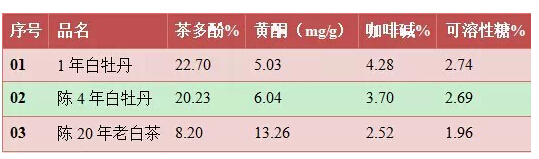
(Analysis of main biochemical components in different years, Zhou Qiongqiong, 2014)
3. The Collector Type
Focusing on the collectible value of white tea
Over time, white tea undergoes two major changes. First, the taste becomes more mellow and rich. Second, the internal components change, such as the increase in flavonoid content compared to new tea, enhancing its health benefits. Generally, white tea aged five to six years or more is commonly referred to as “aged white tea,” and white tea aged ten to twenty years is already quite rare. This gives aged white tea a certain collectible value.
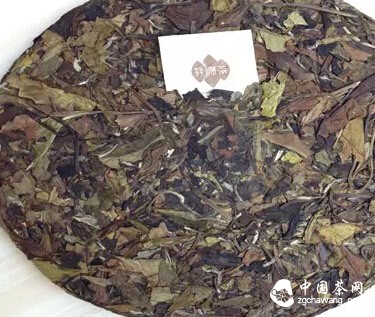
White tea collection can be roughly divided into two types: hobbyist collection and investment collection. For hobbyist collectors, storing a small amount of tea under suitable conditions, to share with friends and family or to enjoy the pleasure of observing the tea’s transformation over time, is common. For investment collectors, careful consideration of factors such as brand, variety, price, quantity, storage conditions, and future sales is necessary, and blind collection is discouraged. I do not encourage blind collecting and suggest that everyone collect within their means.
These are the three reasons I have summarized for people’s special fondness for “aged white tea.” I welcome your comments and corrections.
Do you also like “aged white tea”? What is your reason for being so fond of it?