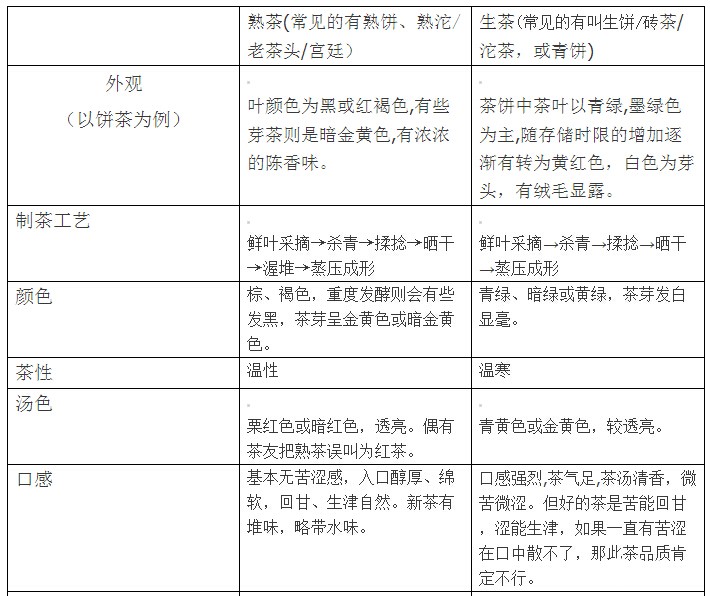
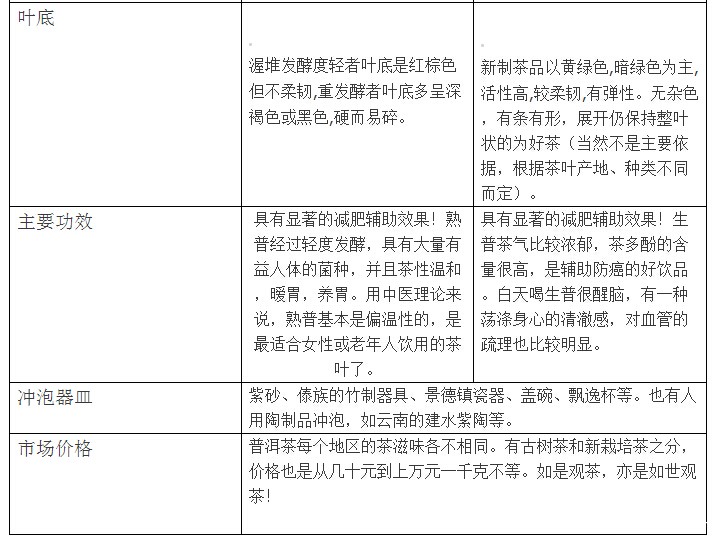
Raw tea production process involves wilting, fixing, rolling, and sun-drying fresh leaves to produce raw loose tea (sun-dried green tea). The sun-dried green tea is then softened by high-temperature steam, placed into a mold to shape it into bricks, cakes, or bowls, and then dried by baking or air-drying to form compressed tea. The ripe tea production process involves artificially sprinkling water on sun-dried green tea for pile fermentation (wo dui) to produce ripe loose tea; the other steps are the same as for raw tea.
(2) The Biggest Difference Between Raw and Ripe Tea: Whether It Has Undergone "Wodui" Fermentation
Wodui is a unique process in ripe tea production and a key factor determining its quality. It involves piling sun-dried green tea to a certain height (usually about 70 cm), sprinkling it with water, covering it with hemp cloth, and allowing it to ferment under heat and moisture for about 24 hours.Pu'er tea is divided into raw and ripe tea. Raw tea has not undergone wodui fermentation and is more stimulating; ripe tea has undergone wodui fermentation and is neither cold nor hot in nature.
(3) The Difference Between Raw and Ripe Tea: "Appearance"
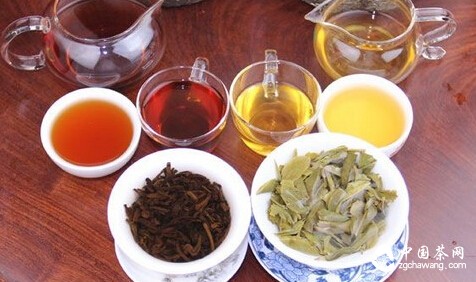
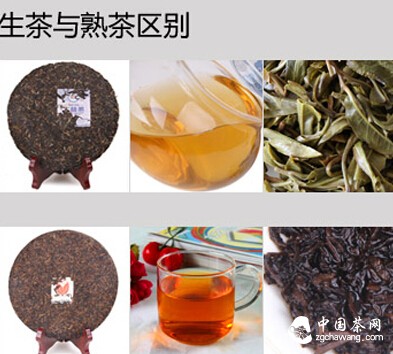
Raw tea leaves are mainly greenish, dark green, with some turning yellowish-red. New tea cakes usually have a faint scent, but if subjected to high heat, they can have a baked sweet aroma. Ripe tea leaves are black or reddish-brown, with some bud teas being a dark golden yellow. They have a strong wodui smell, similar to mildew; lightly fermented ones have a flavor similar to longan, while heavily fermented ones have a musty, grassy mat smell.
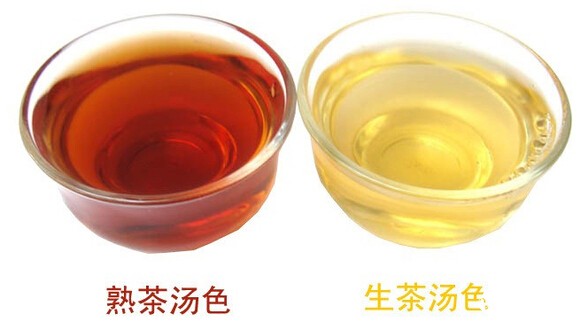
(4) The Difference Between Raw and Ripe Tea: "Liquor Color"
Raw tea liquor is mainly yellow-green, greenish-yellow, or golden. Good aged raw tea generally has a bright orange-yellow liquor. Ripe tea with light fermentation is mostly chestnut red, while heavily fermented ones are mainly dark red.
(5) The Difference Between Raw and Ripe Tea: "Taste"
Raw tea has a strong taste, robust tea energy, and high astringency. If brewed with high-temperature water, the tea soup is aromatic, sweet but thin, with a slight bitterness and astringency (good raw tea offers a returning sweetness from bitterness and salivation from astringency). Ripe tea is thick, sweet, mellow, and soft in the mouth, with natural returning sweetness and salivation, and almost no bitterness or astringency. New ripe tea has a wodui smell or a slight water taste.
(6) The Difference Between Raw and Ripe Tea: "Infused Leaves"
The infused leaves of new raw tea are mainly green, yellow-green, or dark green, highly active, relatively supple, and elastic. If you twist a leaf like a rubber band, a good tea leaf will generally spring back. Ripe tea with light wodui fermentation has reddish-brown infused leaves that are not supple; heavily fermented leaves are mostly dark brown or black, hard, and easily broken.
(7) The Difference Between Raw and Ripe Tea: "Health Benefits"
Both raw and ripe tea share benefits such as reducing fat and grease, clearing heat, relieving summer heat, detoxifying, aiding digestion, removing grease, promoting urination, relieving constipation, expelling phlegm, dispelling wind and relieving exterior symptoms, stopping coughing and promoting fluid production, boosting energy, and prolonging life.
Ripe tea: Ripe tea is mild in nature and can reduce fat, lower blood pressure, prevent arteriosclerosis, prevent constipation, promote urination, and nourish the stomach. It is suitable for most people, especially the middle-aged, elderly, and those with a cold stomach.
Raw tea: Raw tea is rich in tea polyphenols and is cool in nature. It has the effects of clearing heat, relieving summer heat, detoxifying, quenching thirst, promoting fluid production, aiding digestion, and relieving constipation. Raw tea is rich in tea polyphenols and is cool in nature, with benefits including reducing fat, clearing heat, relieving summer heat, detoxifying, quenching thirst, promoting fluid production, aiding digestion, and relieving constipation. It is suitable for young people, but because raw tea contains many active components, it is not recommended for those who easily suffer from insomnia, those with colds and fevers, patients with gastric ulcers, or pregnant women.