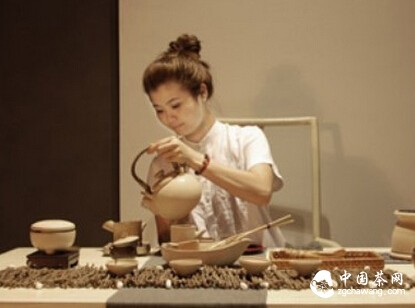
China is an ancient civilization known for its rituals and courtesy. No matter rich or poor, when a guest arrives, the etiquette of offering tea is indispensable.
In China, there is a saying of "shallow tea and full wine." Generally, tea is poured to two-thirds or three-quarters of the cup. If the cup is filled to the brim, it is not only scalding but also implies a wish for the guest to leave. The water temperature for brewing tea also varies depending on the tea. Oolong tea requires boiling water and pre-warming the cup with boiling water; the brewing temperature for other tea leaves is 80–90°C, and for fine tea powder, the temperature can be even lower.
Serving tea should be done politely. Tea utensils must be washed clean, and hands must not be used to grab the tea. There should be no floating foam, scorched black or yellow-green tea dregs, or coarse twigs in the tea. Whether the teacup has a handle or not, a saucer must be placed underneath when serving. When offering tea, one should be gentle, smiling, and amiable, holding the tray with both hands, approaching the guest, bowing slightly, and saying softly, "Please have some tea." The guest should stand up and say, "Thank you," and take the saucer with both hands.
When drinking tea as a guest, one should sip slowly and savor it, chatting while drinking, and repeatedly praise the tea's freshness and the host's skill. One should not wave arms wildly or gulp down the tea. When the host accompanies the guest in drinking tea, they should add hot water when the guest has drunk half the cup, so that the concentration and temperature of the tea remain roughly consistent. During tea drinking, it is also appropriate to have tea snacks, candies, or dishes to adjust the palate.
In short, the principle behind offering tea to guests is "courtesy," and the principle behind interacting with others is "sincerity." Let genuine human warmth permeate every cup of tea and every heart...