The Past and Present of Green Tea
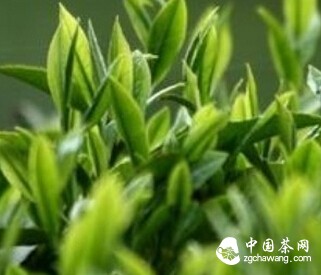
As the foremost of the six major categories of tea, green tea has the longest history in China. Through continuous innovation and development, it has become a product made from fresh leaves or buds of the tea plant, unfermented, and processed through typical techniques such as pan-firing, shaping, and drying.
[The Legend and History of Green Tea]
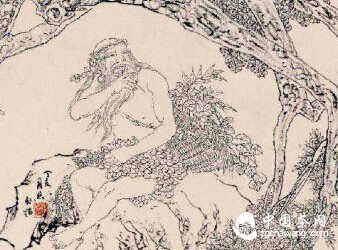
Legend has it that in 2737 BC, Shen Nong went up the mountain to gather herbs. That day, our medicinal ancestor tasted plants as he picked them, and before he knew it, he had tasted nearly 72 types of Chinese herbs. The toxicity of the herbs left him dry-mouthed and feeling very unwell throughout his body, so he sat down to rest under a tree. At that moment, a few leaves drifted down in front of him. By habit, he picked up a leaf and put it into his mouth to taste. To his astonishment, after a while, Shen Nong began to feel his body relax, his thirst was quenched, and he felt as if he had suddenly become light and comfortable. The leaf in his mouth also left him with a refreshing fragrance.
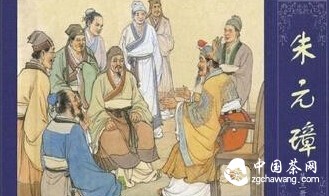
At the end of the Yuan Dynasty, Zhu Hongwu led a peasant uprising, and tea farmers from Yangloudong joined the army and marched to the border cities of Xinjiang and Mongolia. In the army, they saw people suffering from abdominal pain after meals and gave them the Puqi green tea they had brought. After taking it, the patients recovered one after another. When Zhu Hongwu learned of this, he kept it in mind. After becoming emperor, Zhu Hongwu and Prime Minister Liu Ji went to Puqi to look for the hermit Liu Tiande, where they met Liu Xuanyi, the eldest son of Liu Tiande, who was planting tea there. Liu Xuanyi asked Emperor Zhu to name the tea. Seeing that the tea was emerald green, shaped like pine peaks, and had an excellent aroma and taste, Zhu Hongwu named it "Songfeng Tea" and named the mountain where the tea grew Songfeng Mountain. In the 24th year of Hongwu (1391), because Emperor Zhu Yuanzhang had developed a habit of drinking Yangloudong Songfeng tea, he issued an imperial decree: "Stop making dragon balls, only pick tea buds for tribute." Therefore, Liu Xuanyi became the first person to make green tea in the world, Zhu Yuanzhang became the first to promote green tea, and Yangloudong became the earliest place to make green tea.
[The Production Process of Green Tea]
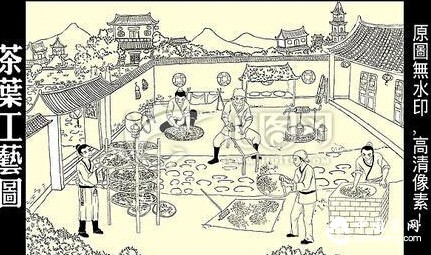
Green tea is unfermented tea. Due to its characteristics, it retains more natural substances from the fresh leaves. Among them, tea polyphenols and caffeine retain over 85% of the fresh leaf content, chlorophyll retains about 50%, and vitamin loss is also minimal, thus forming the characteristics of green tea: "clear soup and green leaves, with a strong astringent taste."
The processing technique of green tea is simply divided into three steps: pan-firing, rolling, and drying. There may be variations for specific types.
[Varieties and Benefits of Green Tea]
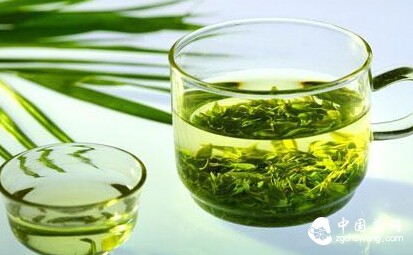
Green tea is the main category of tea in China. It has the highest yield among the six major categories of primary tea, with an annual production of about 400,000 tons. Green tea has the widest production area, distributed across various tea regions including Zhejiang, Anhui, Jiangxi, Jiangsu, Sichuan, Hunan, Hubei, Guangxi, Fujian, Guizhou, and others.
Shandong: Rizhao Green Tea
Jiangsu:
Anhui: Huoshan Huangya, Huangshan Maofeng,
Henan: Xinyang Maojian
Zhejiang: Anji White Tea
Fujian: Shiting Green
Jiangxi: Lushan Cloud Mist, Gougunao
Guangdong: Gulao Tea
Hunan: Anhua Pine Needle, Guanzhuang Maojian
Guangxi: Lingyun Baihao, Xishan Tea
Guizhou: Fanjing Cuifeng, Guiding Yunwu Tea
Sichuan: Zhuyeqing
There are too many varieties of Chinese tea, so I won't list them all here. Please forgive any omissions from famous teas.
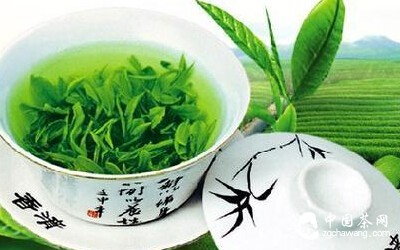
Green tea is hailed as the "national drink" in China. Modern scientific research has extensively confirmed that tea indeed contains biochemical components closely related to human health. Tea not only has pharmacological effects such as refreshing the mind, clearing heat and relieving summer heat, digesting food and resolving phlegm, reducing greasiness and aiding weight loss, clearing the heart and relieving irritability, detoxifying and sobering up, promoting body fluids and quenching thirst, reducing fire and brightening the eyes, stopping dysentery and eliminating dampness, but also has certain pharmacological effects on modern diseases such as radiation sickness, cardiovascular and cerebrovascular diseases, and cancer. The main components responsible for the pharmacological effects of tea are tea polyphenols, caffeine, lipopolysaccharides, theanine, and others. Specific effects include: 1. Anti-aging 2. Disease suppression 3. Anti-cancer 4. Radiation protection 5. Anti-viral and antibacterial 6. Beauty and skincare 7. Refreshing and mind-awakening 8. Diuretic and fatigue-relieving 9. Fatigue alleviation 10. Teeth protection and eyesight improvement 11. Fat reduction