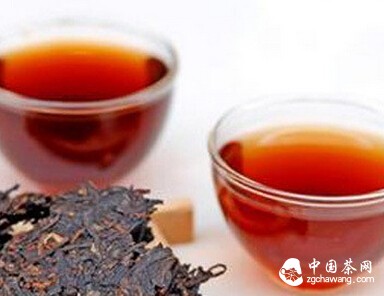
Does new tea have to be aged for several years before drinking?
For new tea, some believe that raw Pu'er should be stored for about ten years before drinking, and ripe tea for one to two years. This view is somewhat one-sided. In fact, for daily consumption, new raw or ripe Pu'er does not necessarily need to be aged for ten years or one to two years. The key to Pu'er tea is the quality of the raw material. If the raw material is good, why can't the newly made tea, just taken off the stone press, be drunk? And why wouldn't it taste good? It carries a rich, refreshing flavor of wild mountains and sunshine. Additionally, freshly pressed ripe tea may have some new taste to varying degrees, but if the quality is good, after two to three months, the flavor becomes quite pleasant. For example, ripe tea made with excellent fermentation techniques, only two to three months out of the factory, often makes drinkers think it is two to three years old.
Suggestion: When drinking tea, listen more to your own tongue and body. Whether it is new or aged, as long as it feels comfortable to drink, don't worry too much. Good tea is not defined by age alone.
Is it unsuitable to store Pu'er tea at home?
Pu'er tea storage includes so-called dry storage, wet storage, and natural storage, with strict control over temperature and humidity. So, is it impossible to store Pu'er tea in an ordinary home? In fact, the storage requirements for Pu'er tea are not harsh. As long as the environment is comfortable for people to live in, it is generally suitable for storing tea. No refrigerator or special equipment is needed; just place it in a well-ventilated room. It is worth noting that the transformation of Pu'er tea varies depending on the specific environment. The same batch of tea stored at different homes may show slight differences, and sometimes even significant ones—this is also part of Pu'er tea's charm.
Suggestion: Tea absorbs odors. When storing Pu'er tea at home, never place it near areas with strong or mixed smells, such as bathrooms, kitchens, or newly purchased cabinets.
Is older always better?
Do not simply assume that the older the tea, the better. Only when the product is of qualified quality and stored under suitable conditions will its quality improve in a certain time range. If a tea fails to meet quality standards initially or is improperly stored later, no amount of aging can transform its quality. Moreover, in the Pu'er tea market, some unscrupulous merchants counterfeit and artificially age tea. The main method is wet storage to accelerate the aging of raw tea, creating so-called "aged tea," or aging the packaging to give an appearance of antiquity. Given the extreme difficulty for ordinary consumers to verify the authenticity and quality of aged Pu'er tea, caution is advised.
Suggestion: Beginners in Pu'er tea should avoid purchasing aged tea to prevent being deceived.
Should you repeatedly boil water to maintain temperature?
Generally, to brew Pu'er tea, water temperature should be above 90°C for the aroma and flavor to be more pronounced. Therefore, many people repeatedly boil the water for each infusion, or even keep the kettle boiling continuously with steam rising. This is not advisable. Repeatedly boiling water causes a large amount of salts to precipitate, forming white floating residues. As water evaporates during boiling, the concentration of salts increases each time. These insoluble salts have a poor taste and may even react with tea components, affecting the flavor. Some trace metals, such as copper and iron, increase in repeatedly boiled water and react with tea polyphenols, destroying the aroma. Moreover, repeatedly boiled water contains nitrites, which can form carcinogenic nitrosamines in the human body.
Suggestion: Boil only the amount of water needed for the number of people drinking tea. After finishing one round of brewing, add cold water and boil again.
Can drinking tea replace water?
Since Pu'er tea has health benefits, can one drink only tea every day and skip water? The answer is definitely no. Tea contains many other substances; excessive intake of trace elements is not absorbed by the body and may even cause adverse effects. It's like eating eggs—the human body can only absorb the nutrients from one egg per day; eating more can lead to high blood pressure, high cholesterol, etc. The same applies to Pu'er tea. Moreover, raw Pu'er tea has a high caffeine content, which can affect sleep if consumed in excess.
Suggestion: The proper habit of drinking Pu'er tea is 1-2 times a day, with half the fluid intake from tea and half from water. Consuming 12-15 grams of tea leaves per day is sufficient.
Love Pu'er, only drink Pu'er?
Loving Pu'er tea is fine, but from a health perspective, we do not recommend sticking to only Pu'er tea all year round without variation. According to traditional Chinese medicine, different types of tea have different properties and effects, offering varying health benefits. Therefore, the choice of tea should vary with the season to align with the body's needs. In spring, when the weather is still changeable, it is good to drink floral tea with rich aroma to dispel the cold accumulated in the body during winter and promote the growth of yang energy. In summer, when the climate is hot, unfermented teas like green tea and raw Pu'er are suitable, as their bitter and cold nature can relieve heat, quench thirst, and aid digestion. In autumn, semi-fermented teas such as oolong and rock tea are ideal, as they are neither cold nor hot, helping to remove residual heat and restore body fluids. In winter, fermented teas with sweet and warm properties, such as black tea and ripe Pu'er, are recommended to nourish yang energy.
Suggestion: Keep several types of tea at home and choose according to your current needs at different times.
Can drinking Pu'er tea definitely help with weight loss?
Pu'er tea is known for its weight loss, health, and medicinal benefits. Its fat-reducing effects mainly come from two factors: the combined action of tea polyphenols, chlorophyll, vitamin C, and other effective components (tea polyphenol content in Yunnan large-leaf tea trees reaches 30-34%, and catechin content 18-24%, with high extractables of 46-50%); and the beneficial bacterial communities formed during fermentation (which reduce the absorption of triglycerides and sugar in the small intestine and enhance the breakdown of abdominal fat by enzymes). However, Pu'er tea is not a medicine; it is only a beverage with certain health benefits. Weight loss is influenced by multiple factors, the most critical of which is diet. If you consume large amounts of greasy food daily, no amount of Pu'er tea will help.
Suggestion: Do not rely on Pu'er tea as the sole solution for weight loss. The key to losing weight is consistent dietary control and exercise; Pu'er tea can only play a supporting role.