
Modern scientific research has confirmed that tea contains over 450 organic compounds and more than 15 inorganic minerals. Although more health functions and pharmacological effects of tea will continue to be discovered, we should not arbitrarily exaggerate tea’s “status.” I strongly agree with Academician Chen Zongmao’s view that “tea is after all tea, not medicine.” From the perspective of medical principles for the human body, tea has auxiliary functions. With the advancement of science, certain components of tea, such as EGCG (epigallocatechin gallate) in tea polyphenols and theanine, can be extracted and developed into medicines for treating diseases. However, tea itself is not a medicine, let alone a “panacea.” Some people in the tea industry habitually cite the Tang Dynasty saying by Chen Cangqi, “Tea is a cure for all diseases,” without proper analysis. Some tea companies even prefer to use this phrase to gain commercial benefits from selling tea. In fact, excessive and inappropriate promotion may backfire.
Xiaobo Chongyang, President of the Japanese Tea Science Society and former director of the Shizuoka Prefecture Tea Industry Experimental Station, highly praised tea’s health functions in his paper “Tea Cannot Replace Medicine,” but also pointed out: “Tea is not a pharmaceutical product, and its efficacy has certain limits. We must fully recognize that tea is not a universal medicine... For example, many people report that despite drinking tea every day, they see no improvement in common symptoms such as high blood pressure, diabetes, cholesterol, triglycerides, obesity, and so on. Where is the problem?” I believe Mr. Xiaobo’s remarks are worth referencing. Inappropriate promotion may cause consumers to develop a “rebellious attitude,” which is undesirable. I also believe that the health effects of tea vary from person to person. For example, the amount of tea consumed may be a key factor in answering Mr. Xiaobo’s question about “where the problem lies.” Xiaobo wrote: “In recent experiments on weight and body fat reduction using high concentrations of catechins, only daily intake of more than 500mg of catechins showed some effects.” Zhang Tianfu, a leading tea expert in China, drinks more than ten cups of tea daily, consuming half a kilogram of tea per month and 12 kilograms per year. Mr. Zhang’s daily intake of catechins should exceed 500mg, which makes him a living example of the health benefits of tea drinking. Of course, human health depends on a combination of factors and cannot be generalized. When analyzing any issue, we must consider time, place, and conditions; we cannot draw conclusions based on partial evidence.
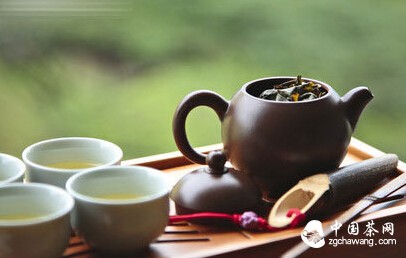
Regarding the “nature of tea,” some people often conclude that “tea is cold in nature,” which has gradually formed many cultural phenomena. This is inaccurate. The idea that “tea is cold in nature” originates from Lu Yu’s Classic of Tea. In the Tang Dynasty, only green tea existed, not other types of tea. Green tea is unfermented and retains the original characteristics of the leaves—green liquor and green leaves. Thus, Lu Yu’s assertion that “tea is cold in nature” was limited by the era and was not wrong at the time. However, with the passage of time and the development of science, people have adopted different processing methods to produce a variety of products that meet different human needs. The nature of tea is not limited to cold green tea; there are also cooler white tea and yellow tea, neutral oolong tea, and mild pu’er tea and black tea. Restricting the nature of tea to “cold” is neither scientific nor conducive to promoting tea consumption.
We must adopt a scientific outlook on development and avoid blindly following what others say. Regarding ancient sayings, those that are exemplary should be inherited and promoted; those that are inappropriate should be supplemented and improved; and those that are unscientific or incorrect should be discarded. This is consistent with the scientific and pragmatic approach of seeking truth from facts.