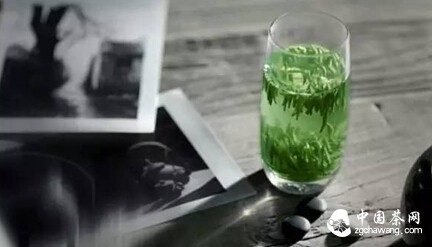
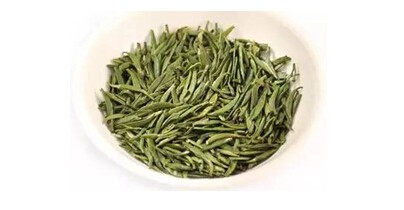
Emei Zhuyeqing belongs to the green tea category. Modern Emei Zhuyeqing is a famous tea created in the 1960s, and its name was given by Marshal Chen Yi. Zhuyeqing leaves are flat and straight like bamboo leaves, with a high, fresh, and lasting aroma, a yellow-green and bright liquor, a fresh, strong, and refreshing taste, and a tender, yellow, and bright brewed leaf base.
The famous tea Zhuyeqing is as well-known as the famous liquor Zhuyeqing. "Zhuyeqing" is both a tea variety and its trademark and company name.
Even before drinking, Zhuyeqing tea has a distinct identity within the green tea system. When a cup is brewed, as the water moistens them, the tea leaves stand up one by one, either upright at the bottom of the cup or floating up and down in the water, like a dance of tea, also reminiscent of bamboo forests gently swaying in the breeze on Mount Emei.
The Name "Zhuyeqing"
Zhuyeqing was developed based on summarizing the long-term tea planting and making practices of the monks at Wannian Temple on Mount Emei. It was named by Chen Yi in 1964, after which batch production began. In 1985, Zhuyeqing tea won the gold medal at the 24th International Food Quality Fair.
It is said that in 1964, after accompanying Premier Zhou Enlai on a visit to Asia and Africa, Chen Yi stole a moment of leisure to vacation on Mount Emei with comrades like Qiao Guanhua and Huang Zhen. At Wannian Temple, the presiding monk entertained Chen Yi's group with fragrant tea. After tasting it, Marshal Chen asked: "What tea is this? It's quite good!" He was told it was an unnamed tea produced by the temple itself. Someone seized the moment to suggest that Marshal Chen give it a name. After pondering for a moment, Marshal Chen said: "This tea, after brewing, looks like bamboo leaves, the liquor color is as green as bamboo, and the taste is as fresh, sweet, and fragrant as bitter bamboo leaves. I think we can call it 'Zhuyeqing'?" From then on, the name "Zhuyeqing" spread far and wide.
Zhuyeqing Origin
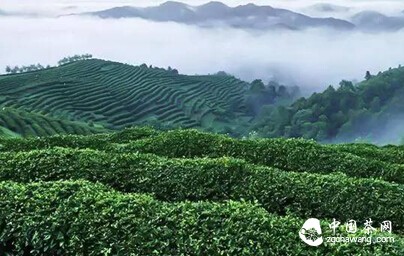
Mount Emei's status as a historically famous tea-producing area is related to its geographical location. Particularly, the mid-levels of Mount Emei have abundant rainfall and are humid and foggy, described by UN experts as one of the best-preserved areas for biology and vegetation at the same latitude in the world. This environment is especially suitable for tea tree growth.
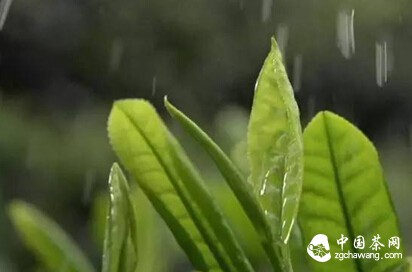
Famous mountains produce good tea. The main production area for Zhuyeqing is the specific high-mountain tea region of Mount Emei at an altitude of 800~1500 meters. Surrounded by mountains and perennially shrouded in clouds and mist, with lush forests, the tea trees receive short duration and low intensity of light, with more diffuse light, which is conducive to increasing the content of chlorophyll, amino acids, etc., in the tea leaves. This results in tea with high aroma, rich, fresh, and refreshing taste, and good quality.
The ancients spoke of "harmony between man and nature" and "following the way of nature." Zhuyeqing, from Mount Emei, absorbs the spiritual energy of the immortal mountain and enjoys the essence of heaven and earth. It has always been deeply loved by tea enthusiasts for its natural charm and unique clear, mellow, and elegant character.
Zhuyeqing Characteristics
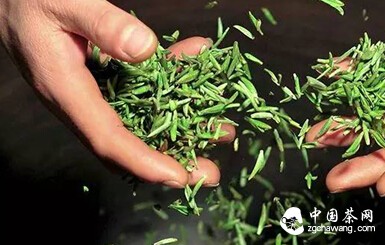
The fresh leaves used to make Zhuyeqing are very tender, and the processing technique is refined. Picking generally begins 3-5 days before Qingming Festival, with the standard being one bud with one leaf or one bud with two initial leaves. The fresh leaves are tender, even, and uniform in size.
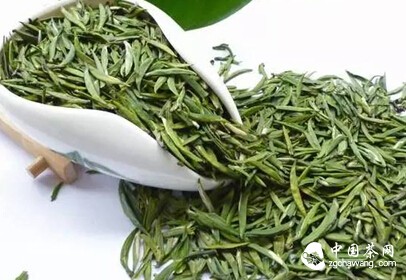
The finished Zhuyeqing tea has a flat and smooth appearance, showing emerald green with pekoe, pointed at both ends, resembling bamboo leaves; after brewing, the aroma is high and fresh, the liquor is clear and bright, the taste is rich and mellow, and it withstands multiple infusions well.
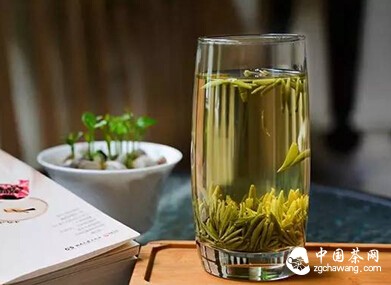
To observe the color of Zhuyeqing tea, it is best to brew it in crystal-clear tea ware. The green water and silvery waves make the layer of clear green ideal for appreciating the beauty of Zhuyeqing;
To smell the aroma of Zhuyeqing, it's best done one or two minutes after the leaves have been fully steeped and opened up. The leaves unfurl freely, elegantly and灵动ly, with hints of golden yellow appearing between them. Only then will the fragrant breeze caress your face, permeate your breath, and overflow your senses;
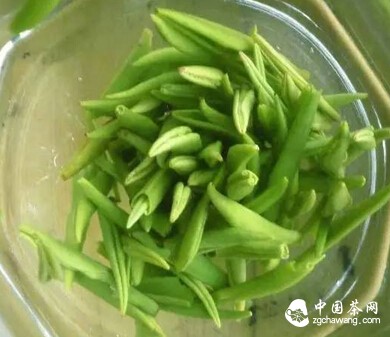
To taste the true flavor of Zhuyeqing, it is best brewed with natural mineral water. The sweet and pleasant water best preserves its fragrance on your tongue.
Zhuyeqing Brewing
It is suitable to brew in a transparent glass cup. The water temperature should not exceed 80 degrees Celsius, and it should not be steeped for too long. The amount of Zhuyeqing can be adjusted according to personal taste; it can be适量ly increased.
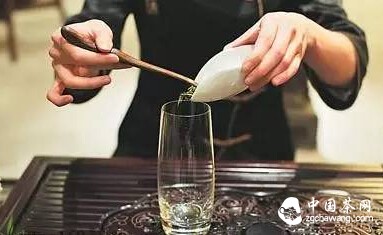
Placing the Tea:
Generally, the amount of Zhuyeqing tea leaves is one-fifth of the container's volume. Use a tea spoon to evenly distribute the leaves into each cup.
Initial Infusion:
The initial infusion can be done using the "top-drop method" or "middle-drop method." Generally, these two methods can be used for brewing some high-quality Zhuyeqing tea.
Number of Infusions:
Zhuyeqing tea can be infused about three times. Pay attention to etiquette during the brewing process. The posture while brewing should be graceful, showing welcome to the guests.
Appreciating the Tea:
After brewing is complete, you can first observe the posture of the tea leaves and appreciate their natural grace, but this is mainly for high-grade, famous, and excellent Zhuyeqing tea.
Tasting the Tea:
Before tasting the tea, smell its aroma first. Then take a small sip, press the tip of your tongue against the roof of your mouth and inhale slightly, savoring the sweetness of the tea.