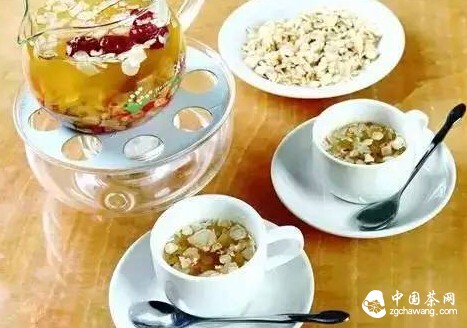
Tea drinking is a cultural tradition in China, with intricacies in both selecting quality tea leaves and brewing. How can one choose high-quality tea, and what are the water temperature requirements for brewing? Here, we will introduce how to select tea leaves and the appropriate water temperatures for brewing—don’t miss it.
Key Points for Selecting Tea Leaves
Tenderness: Tenderness is a fundamental factor determining quality, often summarized as “assess the dry leaves by appearance, the wet leaves by the brewed base.” Generally, tender tea leaves meet the shape standards of their type (e.g., Longjing’s “smooth, flat, straight”). Additionally, check for sharp buds and visible pekoe, indicating good tenderness and processing. Poor raw material cannot be compensated by good processing. However, pekoe alone isn’t a universal indicator—exquisite Lion Peak Longjing has no pekoe. Also, pekoe can be faked. Bud and leaf tenderness based on pekoe applies mainly to “pekoe-type” teas like Maofeng, Maojian, and Yinzhen. Note that the tenderest plucking should have at least one bud and one leaf, as bud-only plucking is incomplete and lacks full components like chlorophyll.
Strip Shape: Each tea type has a characteristic shape—e.g., strip-shaped for roasted green, round for pearl tea, flat for Longjing, granular for broken black tea. For strip-shaped tea, assess tightness, straightness, fullness, roundness/flatness, and weight; for round tea, check tightness, uniformity, weight, and solidity; for flat tea, examine smoothness and conformity. Generally, tightly wound, heavy, straight (excluding flat teas) leaves indicate tender raw material and good processing. Loose, flat (excluding flat teas), broken leaves with smoky or burnt odors suggest old material and poor quality. Using Hangzhou green tea standards as an example: Grade 1: fine and tight with sharp buds; Grade 2: tight and fine with some buds; Grade 3: fairly tight; Grade 4: fairly compact; Grade 5: slightly loose; Grade 6: coarse and loose. Thus, tight, solid, and bud-bearing are superior.
Color: Tea color relates closely to raw material tenderness and processing. Each tea has specific color requirements—e.g., black tea should be black and glossy, green tea emerald, oolong tea bluish-brown, dark tea black and oily. High-quality tea exhibits uniform, bright, lively color. Irregular color, dullness, or lackluster appearance indicates uneven tenderness and poor quality.
Integrity: Integrity refers to the wholeness of leaves; evenness is preferred over brokenness. In standard evaluation, leaves are placed on a wooden tray and rotated, allowing stratification by size, weight, thickness, and integrity. The top layer has coarse leaves, the middle layer tight and heavy leaves, and the bottom layer broken bits. The middle layer should dominate. Upper-layer leaves brew lighter in taste and color; lower-layer bits brew stronger and darker.
Next, let’s explore water temperature requirements for brewing.
Brewing Water Temperatures for Different Teas
Green Tea: Brew with 80°C–85°C water, serve immediately. Green tea is non-fermented, e.g., West Lake Longjing, Biluochun. Delicate leaves shouldn’t be brewed with boiling water. Use 80°C–85°C, 1:50 tea-to-water ratio, 2–3 minutes brewing. Avoid high temperature or prolonged brewing to prevent destroying polyphenols and volatilizing aromas, which yellows the liquor. Use a porcelain cup. First, moisten leaves with 1/4 water, wait 20–30 seconds, then add water. Do not cover to avoid yellowing.
Black Tea: Rinse cup with hot water, brew with boiling water. Black tea is fully fermented, including high-grade Gongfu strip tea and broken tea. Unlike green tea, high temperature promotes extraction of beneficial compounds. Use freshly boiled water, same ratio as green tea, brew 3–5 minutes. Gongfu strip tea can brew 3–4 times, broken tea 1–2 times. Use a glass cup to observe leaves unfurling. Employ the middle-drop method: pour 1/10 hot water to warm cup, add 3–5g leaves, then pour water along the cup wall. Cover to enhance aroma.
Oolong Tea: Brew multiple times with boiling water. Oolong is semi-fermented, e.g., Tieguanyin, Dahongpao. Use a professional Yixing teapot or lidded bowl with 100°C water. Use a large leaf quantity—half or more of the vessel—and cover after adding water. Keep a kettle boiling nearby. Discard the first rinse, using it to warm cups, then brew. Oolong can brew 7–8 times if high-quality, with steeping time increasing from 2 to 5 minutes.
Dark Tea: Rinse first, then brew with boiling water. Dark tea is post-fermented, like Pu-erh, and can age naturally, improving over time. Use 100°C water. For the first brew, rinse quickly for 10–20 seconds: add leaves, pour boiling water, discard after a moment, then re-brew and cover. This removes impurities and enhances flavor. Subsequent brews take 2–3 minutes. Use professional teaware like Yixing pots or lidded bowls, with leaf quantity double that of green tea.
Finally, note some essential tea-drinking details.
Precautions for Tea Drinking
Pros and cons of overnight tea: Overnight tea loses most vitamins, and proteins/sugars can breed bacteria/mold, so it’s generally not for drinking. However, unspoiled overnight tea has medicinal uses: rich in acid, it can stop capillary bleeding. It can treat oral inflammation, tongue pain, eczema, gum bleeding, and sores. Rinsing eyes with overnight tea helps with tears or bloodshot eyes; rinsing mouth before/after brushing or after meals freshens breath and strengthens teeth.
Avoid tea before sleep, after medication, before/after meals, and after alcohol.
Those prone to insomnia, with fever, stomach ulcers, or pregnant women should avoid tea.
Different teas have different benefits; choose according to your needs.