
To become a tea tasting expert, the most important point is to try more and accumulate enough experience. Before becoming a tea tasting expert, you need to know which aspects to focus on when tasting a cup of tea, and how to describe the color, smell, and taste of the tea. Evaluating Pu-erh tea can be divided into four steps: appreciating the soup color — smelling the aroma — tasting the flavor — evaluating the brewed leaves.
Observe the Tea Soup
The most critical part of tea appreciation is brewing and tasting, which means first brewing the tea leaves and then evaluating them.
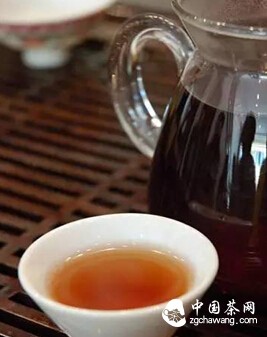
Since the tea polyphenols in the tea soup will oxidize quickly when exposed to air, causing the tea soup to change color easily, it is important to appreciate the soup color promptly, mainly from the aspects of hue, brightness, and clarity, to distinguish the depth of the tea soup color, whether it is normal, the brightness or darkness of the tea soup, and the degree of clarity or turbidity.
1 Tea Soup Color
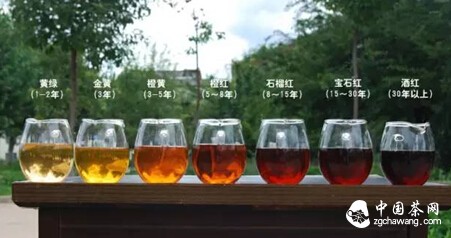
New Tea Stage: Yellow-green (1-2 years), Golden yellow (3 years), Orange-yellow (3-5 years).
Aging Stage: Orange-red (5~8 years), Pomegranate red (8~15 years), Ruby red (15~30 years).
Aged Tea Stage: Wine red (30 years and above).
As the soup color is closely related to the storage environment's temperature, humidity, and microorganism types, the above division is for reference only.
2 Transparency
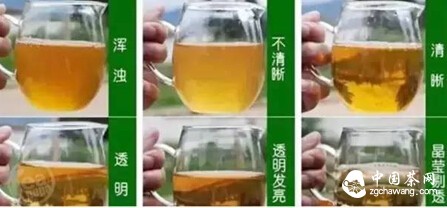
Turbid, unclear, clear, transparent, transparent and bright, crystal clear.
3 Viscosity
Watery, flowing, dense, thick, oily, sticky.
Smell the Aroma
1. Immature
Grassy smell — The smell similar to grass produced when tea leaves are under-fired.
Raw green smell — The raw, astringent smell left when tea leaves are under-fired.
Fresh scent — The fresh, natural fragrance of high-quality sun-dried raw tea before it enters the natural fermentation stage.
Floral fragrance — The flower-like aroma produced when the oxidation degree of tea polyphenols is between 10%-25%.
Fruity fragrance — The fruit-like aroma produced when the oxidation degree of tea polyphenols is between 25%-40%.
2. Mature
Honey fragrance — The sweet honey-like aroma produced by raw Pu-erh tea with a certain degree of natural post-fermentation.
Woody fragrance — The aroma produced by a large amount of wood lipids in raw tea made from ancient tea trees over two hundred years old with good ecological environment and few picking times, similar to the aroma of face powder, also known as old wood fragrance, wood lipid fragrance, or pine resin fragrance. It is a rare aroma of ancient tree tea.
Aged fragrance — The old wood-like aroma produced by raw Pu-erh tea after long-term storage.
Camphor fragrance — The linalool aroma produced after the oxidation of wood lipids.
Medicinal fragrance — The Chinese medicine-like aroma produced when wood lipids are fully oxidized and mixed with the aged fragrance.

3. Special Aromas
Dry mushroom fragrance — Aroma produced by yeast.
Pectin fragrance — The light sweet aroma similar to boiled tender corn produced by pectin in tea leaves after being dissolved at high temperature. It is one of the characteristic aromas of high-quality ancient tree tea. Pectin also makes the tea soup thick and bright, but pectin only dissolves大量 in water above 95°C.
4. Off-odors
Smoky smell — The smell retained when smoke is absorbed by the tea leaves.
Burnt smell — The smell of partially burnt tea leaves.
Roasted green smell — The smell similar to green soybeans or roasted chestnuts produced when tea leaves are not sun-dried but directly roasted dry after killing the green.
Baked green smell — The smell similar to roasted chestnuts produced when tea leaves are not sun-dried but directly baked dry after killing the green.
Black tea taste — The smell similar to orange blossoms produced when tea fresh leaves are not spread out in time after picking, causing some red leaves and red stems.
Stuffy smell — The stale, stuffy smell produced when tea fresh leaves are not sun-dried in time after killing the green.
Musty smell — The smell produced when tea is poorly stored and becomes moldy.
Foreign odors — Other non-tea odors absorbed by tea leaves placed in places with odors.
5. Aroma Layering
Single — The tea soup has only one very thin aroma.
Rich — The tea soup has multiple aromas mixed together.
Layered — The same brew of tea soup will have noticeably different aromas from hot to cold.
Changing — The aroma changes noticeably between each brew of the same tea.
6. Aroma Quality
High and sharp — Sharp and lasting aroma.
Subdued — A non-showy aroma.
Restrained — Rich, harmonious, and lasting aroma.

Taste the Flavor
When evaluating Pu-erh tea, pay attention to three issues: first, use the tongue reasonably; second, grasp the 'tasting temperature' of the tea soup; third, avoid eating stimulating foods before tasting tea.
The human taste organ — the tongue — has taste buds in different parts that have different sensitivities to various tastes.
The tip of the tongue mainly evaluates the 'sweetness' of the tea; the front sides of the tongue mainly evaluate the mellowness of the tea; the back sides of the tongue mainly judge whether the Pu-erh tea is 'sour'; the center of the tongue mainly感受 the 'astringency' of Pu-erh tea; the base of the tongue focuses on experiencing the 'bitterness' of Pu-erh tea.
Because different parts of the tongue sense tastes differently, when tasting Pu-erh tea, after the tea soup enters the mouth, it should circulate and roll on the tongue to fully感受 the condition of various taste substances. This way, you can correctly and more comprehensively distinguish the taste of Pu-erh tea.
Evaluating Pu-erh tea is generally most suitable at around 50°C. If the tea soup is too hot, the taste buds become numb due to high temperature stimulation, affecting normal tasting; if the tea soup temperature is too low, the taste may change from possibly harmonious to discordant, affecting the accuracy of the evaluation.
Before tasting Pu-erh, it is best not to consume foods with strong stimulating tastes, such as chili peppers, onions, garlic, tobacco, alcohol, candy, etc., to maintain the sensitivity of taste and smell.
1 Basic Tastes
Sweetness — The subtle sweetness in tea is so elegant, harmless to health, and can satisfy the temporary craving for sweetness in the heart. At the same time, because of its subtle sweetness, it elevates Pu-erh tea appreciation to an artistic realm. Pu-erh tea belongs to the large-leaf species, and its components are relatively saturated and strong. After long-term aging, the bitter and astringent tastes slowly weaken due to oxidation, or even disappear completely, while the sugar content remains in the tea leaves. After brewing, it is slowly released into the Pu-erh tea, resulting in a sweet taste.
Bitterness — Bitterness is the original taste of tea. Ancient people called tea 'bitter tea', which has long been confirmed. The earliest wild tea had a tea soup so bitter it was hard to drink. After long-term cultivation by our ancestors, it evolved from 'wild type' tea trees to 'transitional type' tea trees, and then to today's 'cultivated type' tea trees. Although this is a series of plant physiological evolution processes, from the perspective of tea appreciation, we are more concerned about the transition from an unpalatable bitterness to a gradually faint bitterness, and even to a point where ordinary people can drink it and regard it as a delicious treasure.
Astringency — It is often said that 'tea without bitterness and astringency is not tea'. In fact, for aged Pu-erh tea over sixty or seventy years, bitterness and astringency are no longer found. Tea that can still express other tea flavors without bitterness and astringency is generally called good tea. Pu-erh tea includes those with a stronger taste, known as 'masculine' Pu-erh, and those with a milder taste, known as 'feminine' Pu-erh.
Sourness, Watery taste — Both sourness and watery taste are undesirable flavors in Pu-erh tea. Of course, when appreciating Pu-erh tea, one does not希望 the appearance of sour or watery tastes. Poor tea production or storage may lead to sourness. For these sour-tasting Pu-erh teas, the sourness often gradually decreases after three to five brews. Sourness is a taste that tea appreciators are unwilling to accept. It represents the inferior quality of the tea. Generally, for fresh tea production, if the 'water removal' process is not handled well, the tea can also develop a watery taste.
Tasteless — Most Pu-erh tea connoisseurs agree that the taste of 'tastelessness' is the highest grade of Pu-erh tea. This may be related to the storage and aging years. The evaluation for a 100 to 200-year aged Golden Melon Tribute Tea is 'the soup has color, but the tea taste is aged and faint'. The taste of tastelessness has a full Zen state. This kind of extremely noble realm is probably unique to Pu-erh tea among hundreds of tea varieties.
2. Soup Sensation: Poor, thin, thick, full.
3. Waterway (Mouthfeel): Rough, smooth, silky.
4. Throat Sensation: Dry, drying, sweet, moist.
5. Aftertaste: Lasting, medium, short, none.
Examine the Brewed Leaves (Ye Di)
The brewed tea leaves (ye di) can truly reflect the actual quality of the tea. Evaluating the brewed leaves relies on the sense of smell to distinguish the aroma, and on the eyes to judge the tenderness, evenness, color, and whether the leaves have unfurled, while also observing whether any other foreign matter is mixed in.
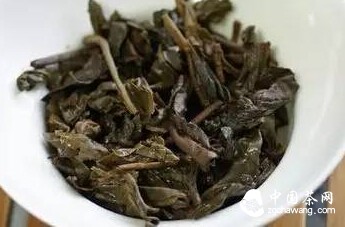
The method is to pour the brewed tea leaves into a dedicated leaf evaluation tray (or a flat object like a cup lid). When pouring, be careful to pour out all the fine, broken leaves stuck to the cup wall, bottom, and lid. Pay attention to mix evenly, spread out, and press flat, observe the tenderness of the leaves, whether they are uniform and neat, the color condition, and feel the softness or hardness of the leaves when pressed.