During these years of studying tea, while navigating the world of tea, I often hear and see various mispronunciations and incorrect characters. Today, let's expose these common mistakes to the light.
窨 — Is it "yin" or "xun"?
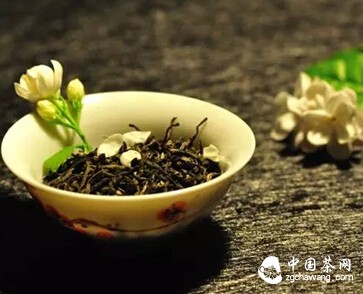
First, the most common mispronunciation: the character "窨" in the Jasmine tea scenting process. How do you read it? The most common pronunciation is 'yin'. If I said you were wrong, you might scoff, because teachers in school taught 'yin', and you hear 'yin' in tea factories and gardens.
Actually, this character should be pronounced 'xun', meaning the same as "熏" (to scent). Why? Jasmine flowers and other fragrant flowers release aromatic substances, and tea leaves easily absorb these scents, similar to how we use mosquito repellent incense in summer or the traditional practice of scenting with incense. Nobody usually says 'yin' for incense, right? Using fragrant flowers to scent tea is the most logical explanation. So why did the pronunciation 'yin' appear? While "窨" does have the pronunciation 'yin', it specifically refers to a basement or sewer – hardly appropriate for the tea scenting process!

The character "窨" means the same as "熏". Why not just use "熏" directly? I believe it's because making Jasmine tea requires a cool, shaded environment, similar to a basement (the second meaning of "窨"). Therefore, combining both meanings into the character "窨" more直观ly represents the environment for making Jasmine tea.
Phoenix Dan "Cong" or "Cong"?
Second, the most common incorrect character: the "枞" in Phoenix Dan Cong. The correct character should be "丛". You might be surprised, because tea textbooks like "Tea Manufacturing" and "Tea Evaluation and Inspection" use "枞", and it's ubiquitous in publications and web pages. So why is it wrong?
The ancient dictionary "Er Ya · Shi Mu" states that "丛" refers to shrubs, bushy trees. "枞" refers to a tree with pine-like leaves and cypress-like trunk. Judging by the attributes of the tea plant, whether small tree or shrub, it fits the meaning of "丛". Although some organizations have advocated replacing "单枞" with "单丛", old habits seem to die hard.
The confusion between "丛" and "枞" stems from the promotion of simplified characters. The traditional form of "丛" is "叢". From the character's form, you can see its meaning; the component "丵" (zhuo) originally meant clumps of wild grass growing together. When simplified to "丛", this meaning is no longer visually apparent in the character.
Thus, it should be understood that the Chinese way of thinking, inferring meaning from the form of the character, led people to instinctively seek the "wood" radical nature of the tea bush in the character "枞", also seeking the fundamental nature of Chinese characters. Rather than simply replacing "单枞" with "单丛", perhaps reverting simplified characters to their traditional forms would restore the true essence of Chinese characters.
Gong Fu Tea vs. Kung Fu Tea
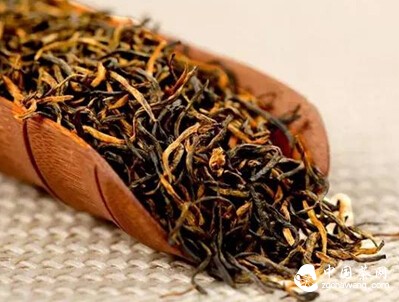
Third, the most frequently confused terms: Gong Fu Cha (工夫茶) and Kung Fu Cha (功夫茶). These are misused extremely often. Generally speaking, "工夫茶" refers to a type of tea name, while "功夫茶" refers to a tea art name. Congou black tea (Gong Fu Hong Cha) is so named because its picking is meticulous, and its processing is particularly elaborate, requiring skill and time ('Gong Fu' implying effort/workmanship). It usually appears as part of a name, e.g., Tan Yang Gong Fu black tea, Qi Men Gong Fu black tea, etc., and not alone.
"Kung Fu Cha" (功夫茶) is a term for the Oolong tea ceremony. Because the brewing and tasting of Oolong tea are very particular and require skill/time ('Kung Fu'), it is named accordingly.
Text/Chang Yuxi