
The post-fermentation aging of Pu-erh tea (including both raw tea and ripe tea) primarily comes from microbial activity. During this process, "white frost" forms as a remnant of microorganisms, which is the result of Pu-erh tea fermentation. This white frost phenomenon is regarded as a treasure by experienced tea drinkers, sometimes called "white strips." When the crystalline remnants are particularly noticeable, it's called "Dragon Pearl tea" (similar to the principle of "civet coffee"), considered exceptionally precious and highly valued by veteran tea connoisseurs.
What exactly is "white frost"?
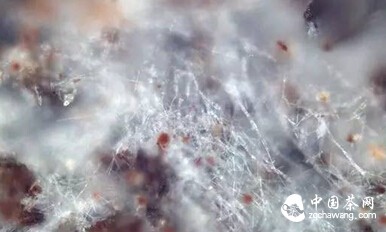
Under the microscope
"White frost" is caused by the oxidation enzymes in Pu-erh tea itself, commonly known as 'tannins.' It tastes bitter and has anti-inflammatory properties. It is the result of the gradual oxidation of tea substances, academically referred to as natural oxidation.
Therefore, white frost is not external mold but a normal part of the fermentation process. As white frost develops, the tannic acid in the tea leaves slowly ferments and oxidizes, causing the bitter and astringent flavors in the tea to be gradually replaced by beneficial substances. The tea liquor also changes from green to yellow-orange, and within three to five years, turns from yellow to red, eventually becoming a delicious and sweet high-quality Pu-erh tea!
Distinguishing White Frost from Mold
It's important to note that mold on Pu-erh tea can also appear as white foam or green hairs. How to distinguish between the two? Generally, it's not difficult to tell by mastering the following two points:
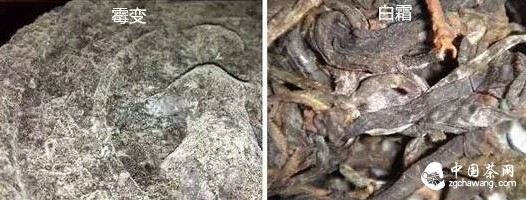
First: Look
Normal "white frost" appears on Pu-erh tea under proper storage conditions as a thin layer of "white substance" on the surface (Note: It must be evenly distributed, with the white particles uniform in size, not clustered or clumped).
If the white spots are localized, uneven, clumped, varying in size, and also found inside when the tea cake is broken apart (in severe cases, accompanied by white smoke and a pungent odor), it is the result of mold due to excessive humidity. Mold only occurs after severe damp storage or mistakes during the drying stage of production.

Mold
Second: Smell
Normal "white frost" has no moldy smell when sniffed, let alone any pungent, unpleasant odors. Pu-erh tea in this condition is usually somewhat aged and is safe to drink.
Moldy tea has a sharp, musty odor. Based on common sense, it's easy to distinguish from the dry tea itself. Pu-erh tea in this condition must not be drunk.
Beware of "Moldy" Tea
Tea that has molded may appear black or green. The color looks very unpleasant, and some may even be furry. This type is severely deteriorated tea; it is recommended to discard it, as it is no longer safe for consumption.

Impurities in Pu-erh tea. In moldy tea, whether cake tea, brick tea, or tuo tea, the moldy areas are typically patchy. Sometimes, ripe tea might be fine elsewhere but have sporadic white spots. This is due to other impurities mixed in during the processing of Pu-erh tea, often seen in broken tuo cha or teas with finer, more fragmented leaves. Regarding Pu-erh cakes, bricks, and tuos, moldy products are less hard and can be pried apart without much effort, whereas non-moldy tea is very firm.
When carefully felt by hand, moldy products show signs of dampness; the tea leaves are not sufficiently dry or brittle. Moldy tea, because it has absorbed moisture, feels somewhat flexible and is not easily crumbled. In contrast, tea with white attachments that is not moldy is dry and brittle, easily crushed by rubbing and pinching with fingers.
In summary, we can use these signs to judge whether the tea has molded. If mold is confirmed, take immediate action. For stored tea, promptly adjust the storage method to ensure better preservation quality for other teas.
Related link: Efficacy of Golden Flower Pu-erh Tea Golden Flower Fu Brick Tea