When selecting a tea cup, we usually decide whether it is worth buying based on its appearance, feel, and price, and generally do not consider the impact of the teacup on the tea. The first reaction to a thin cup is that it is hot to the touch, so naturally, this type of thin cup is not included in the purchase list. But have you ever thought that besides not being hot to the touch, a thick cup has such good heat retention that the temperature of the cup wall and the temperature inside the cup differ greatly? You think it's not hot, but then it burns your tongue when you drink. But is this the only difference between thick and thin cups? Clearly, it's not that simple. Read on.
Some tea friends ask, does the thickness of the tasting cup wall affect the quality of the tea soup? What are the effects of warming the cups before tasting tea on these two types of cups?
To explore this issue, some conditions need to be set in advance:
Due to factors such as the material, shape, glaze, and firing temperature of the tasting cup, all of which have an impact on the tea soup effect, we assume that the material and other factors of cups of different thicknesses are exactly the same.
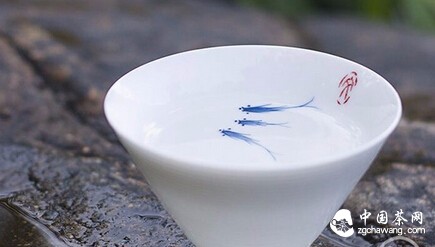
General principle—the thinner the cup wall, the more it helps to express the aroma. Therefore, the Ruo Chen Ou, one of the four treasures of Chaozhou Kung Fu tea, should be a small porcelain cup with very thin walls. Drinking a small cup of Oolong tea ensures a high and vibrant aroma, a rich taste, and does not become a burden by drinking too much water.
Conversely, teacups with thicker walls are not conducive to expressing aroma but are beneficial for presenting a thick soup texture, suitable for tasting teas such as ripe Pu-erh and Black tea, which do not rely on aroma as their strong point. Therefore, during the tea tasting process, we should pair different teas with different cups to better present the best effect of the tea soup (just like Zu Qianqiu in "The Smiling, Proud Wanderer," who used different cups for different wines).
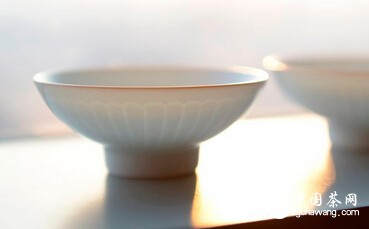
Regarding warming the cups with boiling water before tasting tea, regardless of the thickness of the cup wall, I think it has the same effect—high temperature not only helps to express the aroma and aids in the volatilization of the fragrance but also helps to bring out the charm of the tea soup.
Injecting 100°C boiling water into a room-temperature teacup will lower the temperature of the boiling water inside the cup to 80°C-90°C. At this point, pour out the boiling water, then pour in the tea soup brewed with boiling water, and taste it while hot. Its charm will be better than the effect of pouring hot soup into a cold cup. Interested friends might as well give it a try.
As for whether warming the cup with boiling water has a sterilizing effect from a health and safety perspective? Considering the very short time of warming the cup, it should not have much effect. Instead, the custom of "when guests come, serve new tea, people should be enthusiastic, and tea should be hot" is a good explanation.