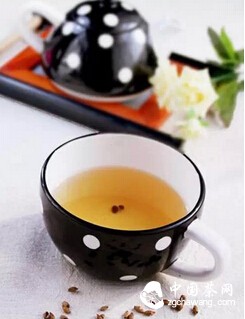
Whether brewing, steeping, or infusing tea, it always seems like without hot water, tea cannot be properly enjoyed. Actually, there is a cold brewing method that is not only convenient and simple but also preserves the aroma of the tea leaves, making it especially suitable for the current scorching summer season—refreshing and thirst-quenching.
Cold brew tea does not affect sleep
"Cold brewing is not about letting hot tea cool down nor adding ice to hot tea. As the name implies, it involves directly steeping tea leaves in cold water," said Mr. Xie, an experienced tea enthusiast from Nanning. Mr. Xie came across an introduction to cold brew tea in a tea book and decided to try it. He carries simple tea bags daily and keeps a case of mineral water in his car. Before driving to work, he adds tea leaves to a bottle of mineral water. After a half-hour commute to the office, a bottle of naturally sweet and cool tea beverage is "freshly made."
After multiple comparisons, Mr. Xie found that both hot and cold brewing have their pros and cons. Hot brewing helps extract the full flavor of the tea, especially for high-quality teas where subtle nuances must be appreciated with hot water. To admire the color and shape of new tea leaves, hot brewing is also preferable, as the leaves may not unfurl properly otherwise.
However, cold brewing has its own advantages. It is not only cooling and refreshing but also, in terms of taste, involves steeping the tea leaves in cold water for a long time, resulting in less bitterness and a sweeter, smoother flavor. More importantly, when tea is brewed with cold water, theophylline and caffeine do not dissolve as easily, resulting in lower concentrations in the tea. This is particularly beneficial for those prone to insomnia, as even drinking cold brew tea in the evening won't likely affect sleep. Additionally, cold water brewing is less likely to破坏 the nutritional components in tea leaves. Tea polyphenols, catechins, and other essential elements are well preserved in the tea, making them easier to absorb.
Green tea is especially suitable for cold brewing
Tea enthusiast Ms. Ye from Nanning also enjoys drinking cold brew tea in summer. She has tried cold brewing with various teas, including Zhaoping Green Tea, Tieguanyin, Phoenix Dan Cong, Anji White Tea, Turkish Black Tea, and Taiwanese Dongding Oolong. She found that Zhaoping Green Tea, Anji White Tea, and Taiwanese Dongding Oolong worked best. Considering time efficiency, taste, and color, she recommends using low-fermentation teas for cold brewing: green tea, white tea, yellow tea, and oolong tea are all suitable. Highly fermented teas like black tea, Tieguanyin, and Pu-erh tea are not ideal for cold brewing.
Tea ceremony master Xiao Lin agrees with Ms. Ye. He believes that among all tea types, green tea is the most suitable for cold brewing. Green tea is unfermented, so it retains more of its original nutrients, containing over 500 beneficial compounds for the body. With its clear broth and green leaves, green tea offers better visual appeal, a sweeter taste, and higher nutritional value when cold-brewed.
Three-step method for cold brew tea
Making cold brew tea yourself is not difficult; the method is simple and convenient, suitable for everyone. Mr. Xie says that cold brewing requires almost no skill—the only thing needed is patience. Place tea leaves at the bottom of a pot, pour in cold boiled water, and let it sit at room temperature for at least half an hour before drinking. The best flavor is achieved between 1 to 3 hours. Cold brewing can fully release the essence of the tea, distinctly presenting its character, aroma, style, taste, and nature, making the drinking experience particularly enjoyable.
Ms. Ye breaks down the cold brew process into three steps: First, prepare tea leaves, cold boiled water (mineral water tastes better), a cup or water bottle, and a tea strainer. Note the ratio of cold water to tea leaves is about 50ml water per 1g of tea, adjustable based on personal taste preference. Second, add the tea leaves to the water bottle or cup, add water for brewing, and let it sit at room temperature for about 3 hours. Third, strain the tea leaves using the strainer, then place it in the refrigerator to chill for about an hour before pouring and drinking. The tea will be mellow and delicious. She reminds that any unfinished tea can be stored in the refrigerator, but not for more than 24 hours. If left at room temperature, it should be consumed within two to three hours.