We often see descriptions like "mellow and thick," "thick and substantial," or "heavy and thick" in books introducing Pu-erh tea. Many new tea enthusiasts can intuitively sense the strength of tea, but they are often puzzled by its thickness. In fact, the thickness, heaviness, and smoothness of Pu-erh tea are very comfortable sensations. When the tea liquor slides into the mouth and stimulates the taste buds, you fully experience its fullness and richness.
Deng Shihai, in his book "Pu-erh Tea," provides a detailed explanation of the "thickness," "thinness," and "sharpness" of Pu-erh tea's liquor body. He says: Before Pu-erh tea's liquor quality reaches the state of transformation, it has distinctions of thick, thin, and sharp. These sensations of thick, thin, and sharp in the mouth give the drinker a feeling of heavy substance, light frivolity, or a knife-like sharpness.
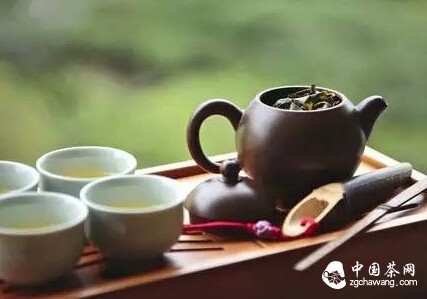
Thickness of the liquor body is not the same as the concentration of the tea soup. Thickness is related to the substance of the Pu-erh tea itself. When the tea soup has a certain intensity and contains a relatively high amount of dissolved substances, it feels more viscous and dense in the mouth. The denser it is, the thicker it is said to be.
Concentration is influenced by brewing technique. For the same portion of tea leaves, the longer the leaves steep in hot water, the more concentrated the tea soup becomes, meaning its intensity increases. Conversely, a very short steeping time results in a light-tasting tea soup, which is unrelated to the thickness or thinness of the liquor body. Often, thickness, heaviness, and substantiality coexist. Thus, when we say the tea liquor is very heavy and thick or very thick and substantial, it means the liquor body has a feeling of thickness. A thick tea liquor feels full and solid, bringing the drinker a relatively peaceful and stable mood.
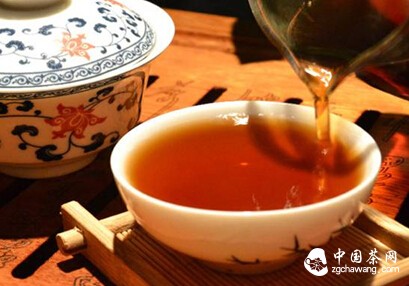
Thin liquor body is the opposite of thick. When thin tea liquor is drunk, it lacks a broad, expansive presence in the mouth, and the water quality feels light and sparse. This thinness creates a petty style, giving the drinker a sense of frivolity, weakness, and instability, leading to resistance. Pu-erh tea products made from terrace tea leaves, and some border-region Pu-erh teas, often have a thin liquor body. This is why many people prefer ancient tree tea, as its tea soup is thick and substantial, rich in inherent quality.
Sharpness is caused by an excessively thin liquor body, creating a sensation in the mouth as if touching a sharp blade. It evokes feelings of meagerness, harshness, and discomfort, forming a sense of rejection and refusal. Generally, border-region Pu-erh teas or fresh raw Pu-erh cakes made from new bush tea leaves often exhibit this sharp characteristic in their liquor body.

It is important to note that if compressed Pu-erh tea has been stored long-term in a tightly sealed and very dry state, and is brewed immediately after opening, the liquor body often appears thin, or even sharp. However, if after opening, the tea is placed in a larger container to allow it to 're-acclimate' for a period, about ten days to a month, the tea soup will naturally be able to express its proper water characteristic.