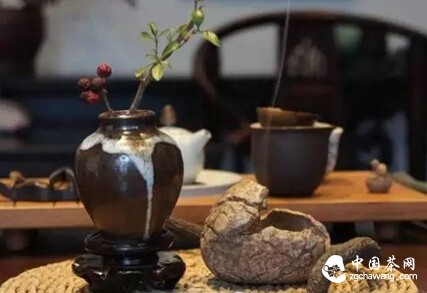
Often, when holding a cup of warm black tea, the sweet aroma overflowing from the cup fully stimulates the olfactory nerves and further tantalizes the eager taste buds. When the lips and tongue touch the warm, mellow tea soup, a feeling of exhilarating satisfaction arises in the chest. Closing the eyes and focusing the mind, quietly enjoying its fragrance, sweetness, and richness, time and space seem to transform. The curling tea smoke rises, drifting and floating... In a hazy, blurred state, the heart begins to travel, seeming to return to the Wuyi Mountains of over four centuries ago, where a familiar, refreshing aroma wafts from a quiet mountain village. This is a fragrance that once captivated countless people, a fragrance that wrote history and even changed history, both Chinese and world history.
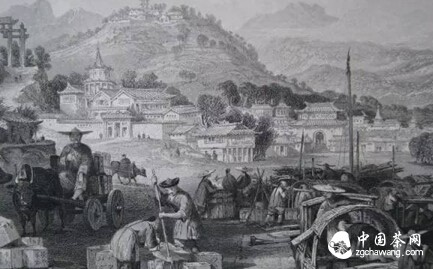
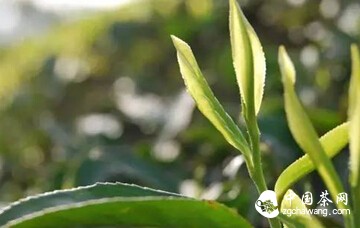
This small, fragrant leaf seems ordinary, yet it is extraordinary. Legend has it that its birth stemmed from a beautiful mistake. The villagers of Wuyi Mountain picked it from the tea plant intending to make green tea, but for some reason, it was not processed in time. The buds and leaves all heated up and turned red, they had 'spoiled'! This greatly distressed the villagers. With no other choice, they had to make the best of a bad situation and cut pine wood to smoke and roast it. After these 'spoiled' green leaves were made into tea, the black color was not very pleasing to the eye, even somewhat ugly, incomparable to the bright green of green tea. But it emitted a rich pine aroma, and upon tasting, there was a subtle flavor reminiscent of longan soup. This was the world's first brew of black tea – Lapsang Souchong. The villagers, not overthinking it and with uneasy hearts, took the tea to the tea merchant to sell. They originally thought the merchant would refuse to buy it after trying this strange tea, but to their utter surprise, the merchant miraculously accepted the entire lot. Little did they know, behind people's shock and surprise, a glorious era for it was quietly brewing.
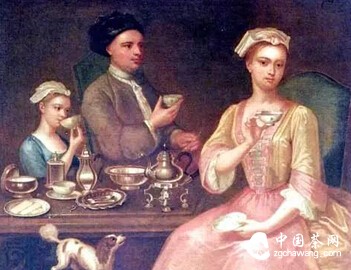
Sure enough, one day in the first decade of the 17th century, Dutch merchant ships with billowing sails carried it from China across the oceans and landed on the European continent for the first time. Europeans called it 'Bohea Tea'. Later, it was placed in the trousseau of the Portuguese Princess Catherine and entered Buckingham Palace, using its innate extraordinary charm to conquer the British, who were then conquering the world with their iron heels. Just as the British were obsessed with expanding their colonies, they found themselves hopelessly in love with this amber liquid from the East. From royalty to commoners, almost everyone looked forward to Big Ben chiming promptly at 4 p.m. each day. Then, they would stop all work, brew a pot of tea, pick up a snack, bask in a ray of sunshine, and while away the afternoon. Furthermore, 'Bohea Tea' was also transported to Moscow and St. Petersburg, Russia via the Ten Thousand Li Tea Route, allowing the Russians to also become enamored with its fragrance. Quickly, drinking Bohea tea became a popular trend across the European continent.
In China, after the black tea production technique originating from Lapsang Souchong matured, it was passed on like a relay baton to tea regions in northern Fujian, eastern Fujian, as well as Jiangxi, Anhui, Hubei, Hunan, Zhejiang, etc. It incorporated the local flavor characteristics and cultural charm. Yet, in the eyes of Europeans, they all shared a common name: 'Black Tea'. Simultaneously, as the British craving for black tea grew stronger and stronger, it led to large amounts of silver flowing into China.
In the mid-19th century, Wuyi Mountain tea seeds were secretly taken to India by a so-called British botanist and sown there. Tea workers were also brought in from China, and from then on, India appeared and became active on the world tea stage. Subsequently, emerging black tea-producing countries like Sri Lanka, Indonesia, and Kenya also stepped onto this grand stage, while Chinese black tea gradually declined.

For nearly a century of turmoil and war, black tea was not spared. The traditional major black tea regions were devastated, tea gardens lay barren, and the industry withered. The shattered landscape and declining tea industry prompted a group of tea scientists filled with patriotic zeal to labor tirelessly, establishing bases and conducting research in the southwestern rear area, thus continuing the soul and lineage of Chinese black tea and creating new black teas like Dian Hong and Qian Hong. After the founding of New China, these tea scientists continued to work diligently, busy with the recovery and development of the black tea industry. They also developed many new black tea products in Sichuan, Zhejiang, Jiangsu, Guangdong, Guangxi, Hainan, and other places, exporting them to the Soviet Union, Eastern European countries, and others. Even during the 1980s and 1990s, when black tea experienced a曲折 (twists and turns - note: the original Chinese term 曲折 implies difficulties and setbacks) development period, it still managed to stride into the new era with tenacious vitality. It gained increasing popularity among Chinese people, sparking a new wave of 'black tea fever' that continues to this day, even prompting some green tea-producing regions to纷纷 'turn red' (switch to black tea production), setting off a movement of 'changing from green to red'. Not only that, the 'black tea trend' that arose in the 19th century, after blowing for over 100 years, has still not ceased. The British 'afternoon tea' and the Russian 'samovar' have become unique flowers in the world's tea culture garden. Black tea from China, India, Sri Lanka, Indonesia, Kenya, and other countries continues to be exported to the world incessantly. Tea, represented by black tea, stands firm alongside cocoa and coffee, collectively known as the 'World's Three Major Beverages'.
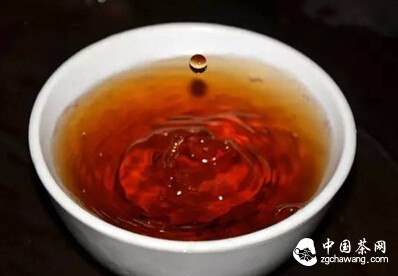
This is the story between a small fragrant leaf and the big wide world.
And so, over 400 years have passed like a white colt's shadow flashing past a crevice, vanishing in an instant. As the black tea in hand is about to be finished, the heart returns to reality, yet the bottom of the cup remains as fragrant as before."