
Among black teas, Dianhong boasts the strongest and most robust flavor. Dianhong, meaning Yunnan black tea, is one of the few teas in China made from large-leaf varieties, combining "strength, potency, and freshness" in one cup.
On a rainy day, a warm pot of black tea is most comforting. The rich, mellow, and lingering taste of Dianhong reminds me of autumn in Yunnan. Unlike the sweetness of Xiaozhong tea, Dianhong is robust and has a certain resilience. Friends who started their tea journey with Dianhong often say that after falling for its intensity, they are reluctant to accept other black teas.
Dianhong: Origins
Dianhong includes Dianhong Gongfu (congou) and Dianhong broken tea. Dianhong Gongfu, a large-leaf congou tea, is a rising star among Chinese congou teas. It stands out with its plump, tight appearance, prominent golden buds, and rich aroma and flavor. It was first successfully trial-produced in 1939 in Fengqing and Menghai counties.
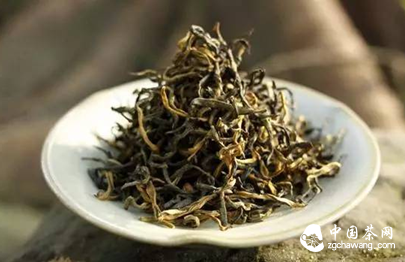
In 1939, the Yunnan China Tea Trading Company used fresh leaves from Yunnan large-leaf tea trees to successfully trial-produce congou tea in Fengqing, initially naming it "Yunhong." In 1940, it was renamed "Dianhong." Upon its introduction, Dianhong gained market acclaim for its "beautiful shape, vibrant color, high aroma, and rich taste." After the founding of the People's Republic of China, Dianhong production resumed and expanded, with quality significantly improving. By 1986, its production and sales reached 10,000 tons.
Dianhong: Origin and Production Process
Dianhong is produced in southern and southwestern Yunnan, including Lincang, Baoshan, Fengqing, Xishuangbanna, Simao, and Dehong. The region features rolling mountains with an average altitude of over 1,000 meters. The subtropical climate brings an average annual temperature of 18–22°C, accumulated temperature exceeding 6,000°C, and significant day-night temperature differences. The average annual rainfall is 1,200–1,700 mm, characterized by a climate where "mists cover the land in the morning and evening on clear days, and clouds shroud the mountains all day on rainy days."
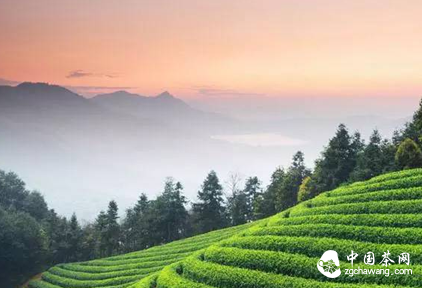
The area has lush forests, with fallen leaves and grass forming a deep humus layer and fertile soil. This results in tall tea trees with strong buds and lush leaves covered in fine white hairs. Even with 5–6 leaves, the tea remains tender and soft. The content of polyphenols and alkaloids in these tea leaves ranks highest among Chinese teas.
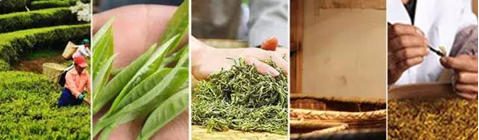
The production of Dianhong involves using high-quality fresh leaves from Yunnan large-leaf tea trees. The process includes withering, rolling or cutting, fermentation, and baking to make the finished tea. It is further processed into Dianhong Gongfu tea or cut into Dianhong broken tea.
Dianhong: Identification
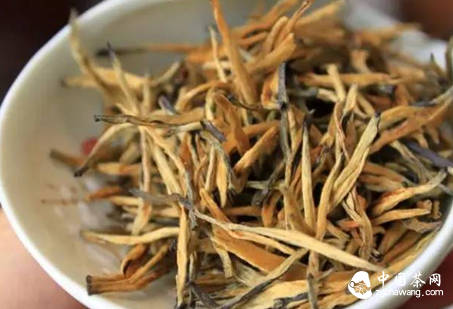
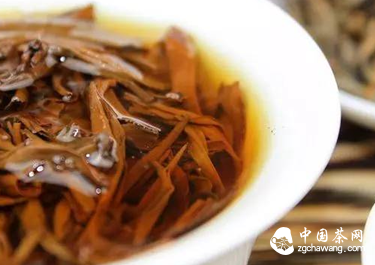
The finished tea has tightly wound, stout, and robust strands with a dark, glossy color. The liquor is bright red with a rich aroma and mellow, astringent taste. The brewed leaves are evenly red and bright, with prominent golden buds. The bud colors range from pale yellow, chrysanthemum yellow, to golden yellow.
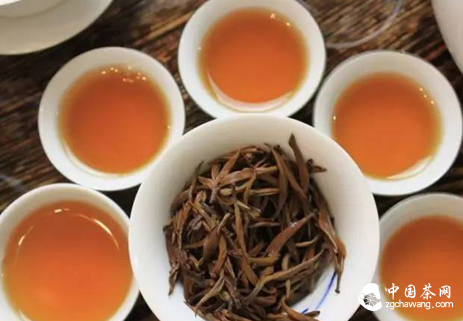
For high-grade Dianhong, a golden ring often appears where the tea liquor meets the cup. After cooling, a creamy "cooling-induced cloudiness" (cold after turbidity) appears immediately. The earlier this phenomenon occurs, the higher the quality.
For Dianhong tea, the color of the fine hairs varies with the harvesting season. Spring tea buds are mostly pale yellow, summer tea buds are chrysanthemum yellow, and autumn tea buds appear golden yellow.
Spring tea has plump, heavy strands with tender, even leaves. Summer tea, harvested during the rainy season, has visible buds but slightly lower purity, with brewed leaves that are somewhat stiff and mixed. Autumn tea, harvested in the dry, cool season, has lighter strands and lower purity due to slower metabolic activity in tea trees, with tenderness inferior to spring and summer tea.
Dianhong: Brewing
Choosing the Vessel
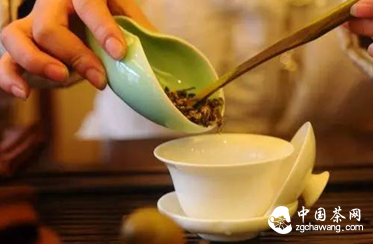
Brewing vessels for Dianhong are typically made of porcelain, purple clay (zisha), or glass.
For plain drinking, glassware is suitable for particularly tender Gongfu black tea, porcelain cups or lidded bowls for medium to high-grade black tea, and porcelain or purple clay teapots for ordinary black tea.
For blended tea (e.g., milk tea), larger porcelain, clay, or purple clay teapots are used. Before brewing, warm the pot and cups with boiling water to maintain the temperature after adding the tea, fully releasing the tea's aroma.
Controlling the Tea Amount
The amount of tea used varies by preference and brewing method. For plain drinking, use less tea, with a tea-to-water ratio of 1:50–60. For blended methods (e.g., milk tea, iced lemon tea), increase the amount, even doubling it for recipes with large volumes of added liquids.
Water Temperature and Steeping Time
Use high water temperature, ideally around 95°C–100°C. Due to the high rolling degree and cell breakage rate of black tea, its contents dissolve quickly, so rinsing is generally not recommended.
The steeping time depends on the fineness, tenderness, and grade of the tea. The principle is shorter time (2–3 minutes) for tender tea and longer time (3–5 minutes) for larger or coarser leaves. When the leaves have unfurled, sunk to the bottom, and stopped tumbling, the tea is ready to serve.
Serving the Tea
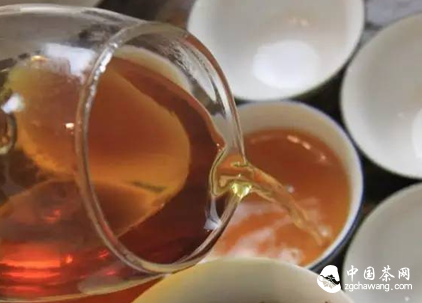
Brewed black tea should generally be filtered first to remove tea residues, then poured into tasting cups to ensure a bright, clear, and impurity-free liquor. Black tea should not be left standing after brewing; drink it promptly. If left too long, the tea polyphenols will oxidize quickly, making the liquor cloudy and the taste astringent.