
Pu-erh Tea is typically divided into two types: loose tea and compressed tea. Compressed tea can be pressed into various shapes after processing. Common forms include tuo tea, brick tea, and cake tea.
Pu-erh Tuo tea is a traditional product of Yunnan tea leaves with a long history, enjoying fame since ancient times. As early as the Wanli period of the Ming Dynasty, the book "Dian Lue" recorded: "Both scholars and common people use Pu tea, steamed and formed into balls." According to historical data, Yunnan Tuo tea with its distinctive inverted bowl shape has been produced in standardized form for over sixty years. Its unique shape and excellent quality have long been well-known, renowned both domestically and internationally.
Origin of Tuo Tea
There are many stories about the name "Tuo tea." Some say it's because the finished product resembles a ball, and Yunnan people habitually call lumpy objects "tuo," with "tuan" (ball) transforming into "tuo," hence the name "Tuo." Others say it's because Yunnan Tuo tea was mainly sold to the Tuo River area in Sichuan in the past, thus named "Tuo tea."
Its appearance differs from ordinary tea, quite distinctive. Viewed from above, it resembles a round bun; from below, it looks like a thick-walled bowl, concave in the middle. Each piece weighs approximately 5 grams, 10 grams, etc.
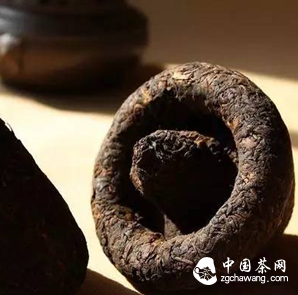
There are various interesting opinions on how Tuo tea came about.
"Selected Yunnan Cultural and Historical Materials" states: "From loose tea to the finalized form of Tuo tea, the intermediate forms included stick tea, brick tea, and cake tea. Stick tea was cylindrical, brick tea was rectangular, and cake tea was disc-shaped, all made by selecting grades, kneading, steaming, heating, and tightly pressing into shape."
One theory suggests that Tuo tea evolved from the Ming Dynasty's "Pu-erh ball tea" and the Qing Dynasty's "daughter tea" (maiden tea), which is widely accepted.
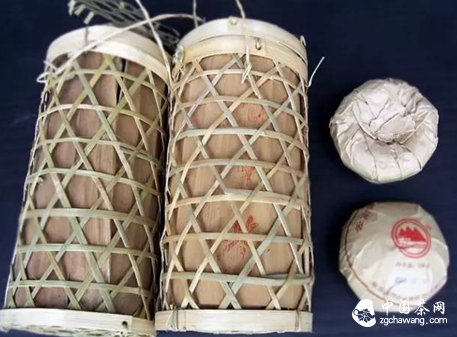
Typically, during packaging, every five finished products are wrapped in bamboo sheath and tied together with bamboo strips into lumps (tuo). "Tuo tea" might have gotten its name from this. In summary, ancient tea merchants invented this uniquely shaped, compact, and sturdy production method for convenient long-distance transportation and long-term storage, which was very creative.
Classification of Tuo Tea
Tuo tea is also divided into raw tuo (sheng tuo) and ripe tuo (shu tuo).
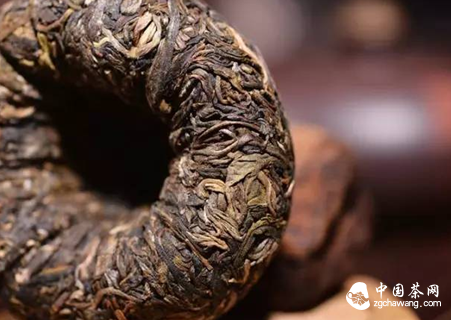
Raw Tuo is made from finer sun-dried green crude tea leaves, steamed and pressed. It is called "Yunnan Tuo Tea." It features dark, moist color, clear liquor, rich and fresh aroma, and a refreshing, sweet aftertaste.
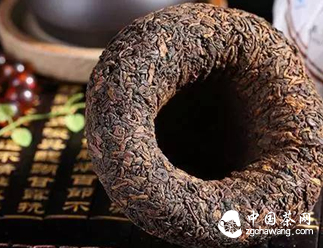
Ripe Tuo is pressed from Pu-erh loose tea that has undergone artificial pile fermentation (wòduī). It is called "Yunnan Pu-erh Tuo Tea" or "Pu-erh Tuo Tea." Its color is reddish-brown, the liquor is bright red, its nature is warm, taste sweet, and the flavor is mellow and thick.
The common characteristics of both types of Tuo tea are: tightly compressed and neat appearance; excellent color, aroma, and taste after brewing that is enduring and intriguing.
How to Break Up Tuo Tea
Below is a method to break up Tuo tea using a tea pick.
1. Tear off the outer packaging of the Tuo tea and place it on a flat, clean surface, such as white paper or a tea box. Be careful not to use newspaper, as the ink can affect the tea's taste.
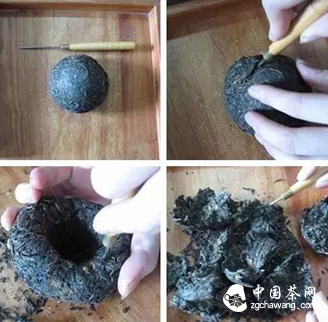
2. Insert the tea pick from the side of the Tuo tea and divide it into four equal parts.
3. Shift the insertion point on the side, and divide the Tuo tea into four equal parts from the bottom, making a total of eight equal parts.
4. Then gently loosen and separate the Tuo tea pieces until they are completely broken apart.
5. Properly store any unused tea leaves.
Precautions:
1. The tea pick is quite sharp, so be careful when using it to avoid injuring yourself.
2. The remaining unused tea leaves must be stored properly, otherwise they can easily absorb moisture and deteriorate.
Brewing Tuo Tea
The water temperature for brewing Pu-erh Tuo tea is best controlled at 100°C. When boiling water for tea, use high heat for a rapid boil, not a slow simmer over low heat. Water that has just reached a rolling boil is ideal. Tea brewed with such water will have excellent aroma and flavor.
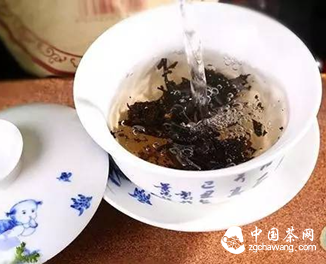
Brewing with a Gaiwan
Brewing Tuo tea in a gaiwan is similar to brewing Pu-erh cake tea in a gaiwan. The amount of tea used is similar to cake tea—about one-fifth of the gaiwan's volume.
The brewing technique and steps are the same as for cake tea, so no further details are provided here.
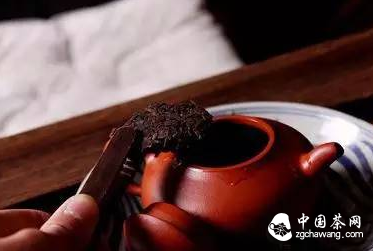
Brewing with a Teapot
When choosing a teapot, it's better to use one with strong heat retention and slightly larger (about two to three times larger than those used for Oolong tea). Choose one with thick walls and where the lid opening is not too large relative to the pot.
Generally, pour out all the water from the first infusion. For the second infusion, leave a little water in the teapot, about one-tenth (this applies if the aroma is extracted in the second infusion; if the aroma only comes out in the third infusion, then start leaving a little water in the pot from the third infusion, don't pour it completely dry).
Leaving a little water in the teapot primarily allows the extracted components to dissolve in the water; control the temperature, as this is the main brewing stage. The stopping time (the time the pot is left before pouring) is the brewing (steeping) time, so controlling this time well is crucial for the tea liquor to display its intended flavor profile.