
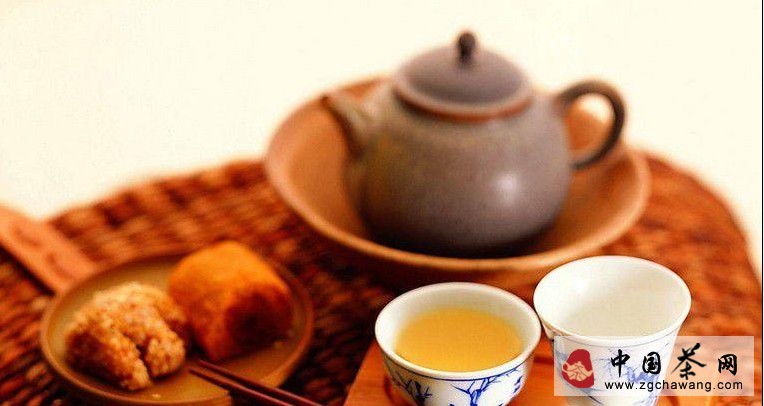
The Han ethnic group's tea consumption methods can generally be divided into tasting tea and drinking tea. Broadly speaking, when the emphasis is on the意境 (artistic conception), with the purpose of discerning aroma and taste, appreciating the appearance of the tea leaves and the tea soup, observing the color and shape of the tea, for self-entertainment and pleasure, it is called tasting tea. Those who taste tea can sip slowly and swallow gently, focusing on spiritual enjoyment. If during labor, sweating profusely, or in the summer heat, the purpose is cooling off, relieving heat, and quenching thirst, holding a large bowl for quick drinking; or continuously brewing and drinking while swallowing, it is called drinking tea.
Expanding Knowledge
【Some Truths About Tea】1. The foam that floats on the surface when brewing tea is harmless and beneficial to humans; 2. 'Washing tea,' where the first infusion is not drunk, is mainly to rinse the leaves, helping the tea quickly release its color, aroma, and flavor; 3. Old Tieguanyin, if stored properly, does not need re-roasting; such old Tieguanyin is rich and has ample charm; 4. Leaving leftover tea leaves at the bottom of the pot does not help 'nurture' the pot; the stale taste of overnight tea soup damages purple clay and is also harmful to the body; 6. Oolong tea is the same as 青茶 (literally 'green tea,' but referring to Oolong category).
【Tea Zen Three Character Classic】Speaking of Zen tea, they are originally one flavor. The tea leaf is the 色蕴 (form aggregate). The tea taste is the 受蕴 (sensation/feeling aggregate), all should be understood. 缘起 (Dependent Origination) is inherently empty. Speaking of the 四大 (Four Great Elements), they are also empty; regarding Zen tea, this is even clearer. The 地大 (Earth element) is the tea set, carrying the tea soup. The 水大 (Water element) is the tea water. The water temperature is the 火大 (Fire element). The 风大 (Wind/Air element) is the 茶艺 (tea art). Speaking of 空 (emptiness) is to break through delusion.
How to elegantly, concisely, and naturally fully express the true flavor of tea is the only thing tea art needs to consider. It is also the benchmark for measuring the standard of tea art, and furthermore, the basis for judging whether tea art connects with the 茶道 (Way of Tea). The seating should be clean, the utensils pure; the breath even, the mind clear; the spirit gathered, the body relaxed; the fingers soft, the arms curved; the pot held suspended, pouring low; smelling carefully, drinking by sipping; pure like an orchid, fragrance wafting far; bitterness and sweetness, the heart naturally understands; the flavors of life, reside within; Tea is Confucian, valuing ritual and elegance; Tea is Buddhist, leading to utmost goodness; Tea is Daoist, emphasizing nurturing life; Cherish the heart of tea, hold gratitude; Savor good tea, blessings are long-lasting.
【Mengding Tea】Mengding tea is the general name for various famous teas from Meng Mountain in Sichuan. There are traditional famous teas and newly created ones. Since ancient times, there has been the saying, 'The water in the Yangtze River, the tea on the top of Meng Mountain.' Among them, the ones with the best quality are 'Mengding Ganlu' and 'Mengding Huangya.'
Mengding tea belongs to the 绿茶 (green tea) category. Refer to 绿茶品牌 (green tea brands)! Mengding tea is produced on Meng Mountain in Sichuan. Meng Mountain spans Mingshan and Ya'an counties. The mountain is majestic, with beautiful ridges and peaks, sheer cliffs and flying waterfalls, layered clouds and accumulated mist. The ancients said of this place, 'Looking up, the sky is high and clear, all things are bleak and silent; looking down, the Qiang River flows around, numerous mountains surround; tea fields and cedar paths, strange rocks and rare flowers, truly worthy of being a scenic spot.' Meng Mountain has five peaks: Shangqing, Lingjiao, Piluo, Jingquan, and Ganlu. It is said that over 2000 years ago, the monk, Chan Master Ganlu Puhui Wu Lizhen, 'carried the seeds of the spiritual tea and planted them among the five peaks.' Among the five peaks of Meng Mountain, the Shangqing Peak in the center is the highest. Wu Lizhen planted seven tea trees on Shangqing Peak. These tea trees were 'not more than a foot tall, neither growing nor perishing, distinctly different from ordinary ones,' 'sweet and clear in taste, yellow and jade-green in color, when placed in a cup, fragrant clouds cover it, lingering for a long time without dispersing.' Long-term drinking of this tea benefits the spleen and stomach and can prolong life, hence it has the reputation of 'immortal tea.'
Musings
The bitterness, astringency, fresh fragrance, elegance, and richness of tea are so similar to the sorrows and joys, partings and reunions, bitterness, spiciness, sourness, and sweetness of life. The bitterness of tea encourages fighting spirit, the mellow fragrance allows enjoyment, the lightness gives one something to回味 (savor/reflect upon). It's often said that drinking tea is about enjoying the ups and downs of sinking and floating, the unfolding sharpness, but I more deeply experience the enchanting fragrance and embodied elegance that tea releases within a glass cup. The process of carefully brewing and slowly savoring tea, isn't it precisely the journey of a human life turning from bitter to rich, from light to memory?
Life is actually like the journey of a tea leaf. When returning fully loaded, choose a quiet place, pour a cup of fragrant tea, and carefully watch a pinch of tea leaves being tempered, tumbling, gradually unfurling in scalding hot water, finally sinking to the bottom of the cup. After repeated infusions, it gradually returns to a state of peace and truth. The twists and turns of human life are like the tea leaves in this cup, silently stretching out,淡然 (calmly/indifferently) concluding, settling down, quiet, bitter, the astringent fragrance on the taste buds is the flavor of life.
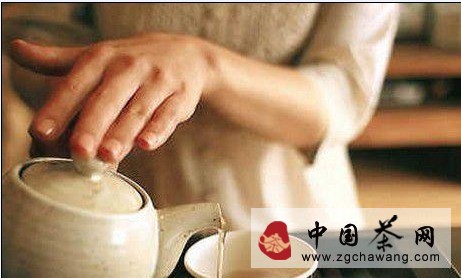
When tea was first becoming popular, being able to brew tea well was a remarkable skill. Chang Boxiong, because he practiced Lu Yu's tea art, made the Imperial Censor look at him with new respect. The involvement of many great talents in the Tang Dynasty successively pushed the elegant culture of tea to its extreme, forming the concept that drinking tea was synonymous with elegance. Famous mountains and great rivers were best, secluded groves and small cottages were also good; even if these were not available, a thatched hut would suffice. As long as the water was excellent, the utensils refined, the tea superior, and with a beautiful companion sitting in attendance, one would also be content and happy.
Tea is like life. A cup of fragrant tea, feeling the Way within tea, leaves behind peace and calm. Making tea requires making the best use of things; the inherent goodness of the material essence cannot be lost for the sake of small details. Making tea is an interaction; it's not about losing oneself because of money, but about finding oneself, establishing oneself, not losing oneself.
Tea Drinking Anecdotes
Mr. G, somewhat famous in the circle, prided himself on being skilled at evaluating and identifying mountain-origin 普洱茶 (Pu-erh tea). Legend had it that just one sip of tea liquor allowed him to identify the source of the raw material, blending ratio, quality of workmanship, etc., almost like a supernatural being, hence called 'Immortal G.' Once, I coincidentally met Immortal G at the Kunming 茶博会 (Tea Expo). Wanting to witness his skills, and恰好 (coincidentally) having brought a cake of premium old-tree pure material tea from Ban Zhang, I removed its wrapper paper and 内飞 (Neifei - embedded ticket), and invited him to be the main brewer. He didn't decline, which was good. After he had tasted it over three infusions, I asked: 'Immortal G, how is this tea?' I saw Immortal G frown tightly, smacking his lips, opening the 盖碗 (gaiwan lid-bowl) to look again and again, his brow still furrowed. Just as he slowly began to speak the words 'The blending technique of this tea...', his phone rang loudly and incessantly. Immortal G smiled apologetically, picked up his phone, and quickly walked out of the exhibition hall. For many years after that, I never heard any news of Immortal G again.
Pu-erh Evening Lesson
Brick Tea and Tea Brick
Zhiqing says: When talking about the Cultural Revolution, most people over forty still remember, but when it comes to Cultural Revolution brick tea, not so many people are familiar with it, or even know what it is. If you find Cultural Revolution brick tea for sale in the tea market, you definitely shouldn't be惊喜 (surprised/overjoyed), because what you see in such places is usually counterfeit. So definitely don't have the impulse to buy. I believe what you see in the market are Cultural Revolution brick teas with large 内飞 (Neifei) or medium 内飞. Those with a Neifei around 8.6×6.3 cm are called large Neifei; Cultural Revolution brick teas with a Neifei around 6.3×5 cm are called medium Neifei. Both of these types of Cultural Revolution brick tea can be considered fakes. They are all printed as 'Produced by the Revolutionary Committee of Yunnan Menghai Tea Factory.' The Neifei paper is thick but of poor quality, and the writing has a blurry, running effect.
Authentic Cultural Revolution brick tea is 对子茶 (paired tea). What is paired tea? It means each has two Neifei. These were uniformly produced by the Yunnan Provincial Tea Company from the late 1960s to the early 1970s. The Neifei were uniform, the packaging was uniform, and the product name was uniform.
During this period, Xiaguan Tea Factory produced brick tea during two time segments. Those marked 'Produced by Yunnan Xiaguan Tea Factory' were called 'Yunnan Jin Cha' (Yunnan Compressed Tea). Those from the later period, marked 'Produced by the Revolutionary Committee of Yunnan Xiaguan Tea Factory,' were called 'Yunnan Zhuan Cha' (Yunnan Brick Tea). The quantity of this brick tea in existence is extremely small, the quality is very poor, but the price is astonishingly high; the price is inversely proportional to the quality. But because it is rare, there are relatively few counterfeits in the market, which is a good thing for now, but who knows about the future. Menghai Tea Factory also produced brick tea during two time segments. Those marked 'Produced by Yunnan Menghai Tea Factory' were called 'Yunnan Jin Cha' (Yunnan Compressed Tea), while those from the slightly later period, marked 'Produced by the Revolutionary Committee of Yunnan Menghai Tea Factory,' were called 'Yunnan Zhuan Cha' (Yunnan Brick Tea)! The quantity of this brick tea in existence is relatively larger, but this is only relative to the brick tea from the same period by the Xiaguan Revolutionary Committee. Regarding how to specifically distinguish them, please let the 砖家 (brick experts / a pun, as 'zhuanjia' also means 'expert') speak.