Sun-drying, oven-drying, and pan-firing in traditional tea classification all belong to the green tea category. Their initial processing steps are the same: fresh leaves, fixation, rolling, and drying. However, the technical requirements for processing sun-dried, oven-dried, and pan-fired teas are different, resulting in completely distinct quality styles.
1. Fixation of Pu-erh Tea: Sun-dried rough tea often uses pan-firing for fixation at lower temperatures, with leaf temperatures mostly below 80°C. This deactivates less polyphenol oxidase, does not completely eliminate low-boiling-point aromatic substances, and the fixed leaves retain a grassy aroma, indicating a lighter fixation degree. Oven-dried and pan-fired rough tea: Pan-firing, drum roasting, steaming, or hot air fixation can all be used. The fixation temperature is high, with leaf temperatures mostly above 90°C. This thoroughly destroys polyphenol oxidase, eliminates low-boiling-point aromatic substances, and the fixed leaves emit a clear fragrance without any grassy odor, indicating a more thorough fixation degree. The low fixation temperature of sun-dried rough tea preserves enzyme activity and retains a grassy aroma. This is beneficial for the later "fermentation" of Pu-erh tea. The high fixation temperature of oven-dried and pan-fired teas thoroughly destroys enzyme activity, which is not conducive to the later "fermentation" of Pu-erh tea.

2. Rolling of Pu-erh Tea: Traditional sun-dried tea uses hand-rolling, resulting in a lower cell breakage rate, often below 40%. Less tea juice exudes, the tea strips are thick and complete, the color is dark green with less gloss, broken buds and leaves are few, and the rough tea is particularly resistant to steeping. Oven-dried and pan-fired rough tea: Except for high-grade, tender famous teas, mechanical rolling in two stages is often used, resulting in a high cell breakage rate, above 45-60%. More tea juice exudes, the leaf strips are tight and stout, broken buds and leaves are more numerous, the color is dark green and glossy, and the rough tea's resistance to steeping is not as good as sun-dried tea. Sun-dried rough tea uses hand-rolling, resulting in low cell breakage rate and loose, porous tea strips. This is beneficial for gas exchange during the storage and "fermentation" of Pu-erh tea, accelerating aging. Oven-dried and pan-fired teas often use mechanical rolling, resulting in tightly rolled strips and slower aging.
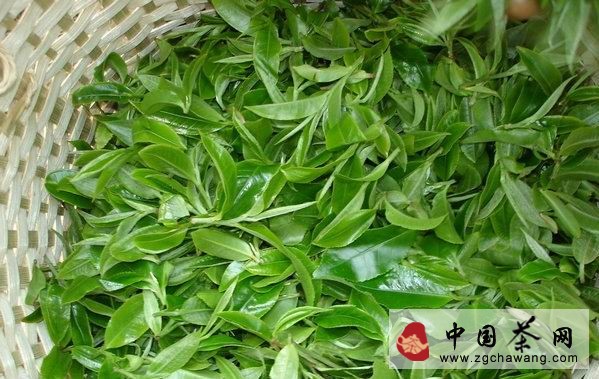
3. Drying of Pu-erh: Sun-dried rough tea is dried directly in the sun after rolling, with a moisture content generally around 8%. The dried tea is dark green with less gloss, slightly dull. Oven-dried rough tea: Avoids sun exposure. Uses baking baskets, drying machines, etc., for drying in two stages: preliminary drying and full drying, with spreading and moisture evaporation in between. Can also use drum roasting or pan-firing first followed by oven-drying. Rough tea moisture content is 4-6%, color is dark green and glossy. Pan-fired rough tea: Avoids sun exposure. Uses drum roasters, pan-firing machines, etc., for firing in two stages: preliminary firing and full firing, with spreading and moisture evaporation in between. Can also use baking baskets or drying machines for oven-drying first followed by pan-firing. Rough tea moisture content is 4-6%. Color is gray-green with a frosty appearance. Sun-dried rough tea is dried by sunlight, the drying speed is slow, the raw tea carries a "sunlight flavor", the tea soup is apricot-yellow and clear, the brewed leaves have a lotus fragrance, with a grassy note. Oven-dried and pan-fired teas undergo high-temperature drying; the rough tea soup is green and possesses floral/fruity aromas.
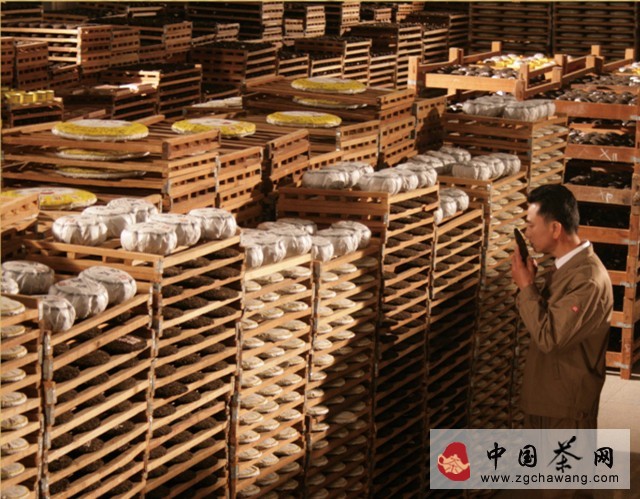
For Pu-erh tea sun-dried raw material, bitterness and astringency are preferred; the yellowish soup color, bitterness, astringency, and miscellaneous flavors will dissipate over time. The soup color and taste of that year's spring buds, spring tips, and spring jade are easily identifiable by consumers. Oven-dried and pan-fired tea has a refreshing taste, jade-green soup color, with a slight glutinous rice or chestnut aroma, but when aged, it becomes bitter without returning sweetness. After years of storage, sun-dried leaves turn reddish-brown, while oven-dried and pan-fired leaves turn black. After brewing, the base of sun-dried tea leaves is slightly wrinkled and dark brown, while the base of oven-dried and pan-fired tea leaves is relatively smooth and bright, with a leaf base color very close to black tea. Oven-dried and pan-fired teas share a common characteristic during oxidation and fermentation: they turn bitter when exposed to moisture, dampness, or water. Oven-dried and pan-fired teas are enemies of dampness, while sun-dried tea is a friend of dampness. Naturally aged raw Pu-erh and artificially fermented ripe Pu-erh both have a connection with heat and humidity. Therefore, to distinguish whether the tea is mixed with non-Pu-erh oven-dried and pan-fired leaves, there are some other methods. Besides observing the leaf base, comparative tasting is very important. Generally speaking, the greater the proportion of oven-dried and pan-fired leaves, the more bitter the taste.