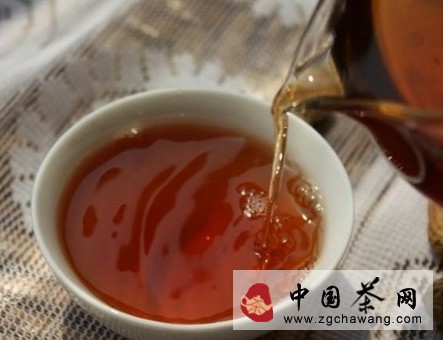
Yunnan Pu-erh tea belongs to the large-leaf variety of tea. The ancient tea gardens are all arborescent in form, with tea leaves that are thick and large, containing particularly high levels of components like catechin and minerals, and are relatively rich in organic germanium. Therefore, Yunnan Pu-erh tea is truly one of the beverages that can supplement the body's Qi. The reason tea can refresh the mind is that the fresher and greener the tea leaves, the more stimulating components like caffeine they contain. If these components stimulate the brain nerves within the human body, they create mental excitement, achieving a refreshing effect. Fresh, green Pu-erh tea and young, raw Pu-erh tea with short aging periods contain more of these stimulating components than other types of tea, resulting in a particularly strong refreshing effect after drinking.
Tea qi holds an extremely important position in the appreciation of Pu-erh tea and is also one of its most main characteristics. Pu-erh tea produced from old arborescent tea trees in Yunnan's large tea mountains contains potent and rich components. After being made into finished tea and undergoing long-term storage and aging, the polysaccharides and organic germanium in the tea undergo certain chemical changes, becoming soluble in water during brewing. After drinking the tea liquor of aged Pu-erh tea, the organic germanium enters the drinker's body, achieving a Qi-tonifying effect. Throughout history, countless people have drunk and appreciated tea, but how many have truly experienced the wonderful state of tea qi? Firstly, few genuinely understand how to taste tea qi, and secondly, obtaining good tea that possesses tea qi is not easy.
For most tea appreciators, tea qi remains a very vague concept. For example, when someone says "the qi of this tea is very strong," it can generally be understood from the following aspects: First, it means the tea aroma is very strong; second, it means the tea soup is very concentrated; third, it means the components contained in the tea leaves are very sufficient, and the taste of the tea soup is very robust; fourth, it means the components in the tea leaves are very potent, and the tea soup has a strong bitter and astringent taste: Fifth, only a very few tea appreciators, based on their perception of the qi sensation, correctly point out that the tea qi is very strong.
"Tea qi enters the interior of the human body and circulates through the meridians. If it reaches a certain intensity of sensation, it prompts the pores to emit slight sweat, and gradually consolidates within the bones, becoming a clear stream that nourishes the muscles and bones of the entire body. Thus, one feels the bones and muscles becoming clear and astringent, and the skin gradually feels refreshed and transformed. If the tea qi is increased at this point, the clear astringency and refreshing transformation gradually become more apparent, converging into a warm and stirring sensation, potentially surging within the body, ultimately bathing one in a feeling of飘然 (floating) and comfort, as if floating and wanting to become immortal!"
For general tea appreciators, after tea qi is absorbed into their meridians, they only feel a surge of heat throughout the body, followed by slight sweat gently emitted from the pores. However, some people mistakenly believe that tea qi is produced after drinking tea soup that is too hot. In fact, drinking tea soup that is too hot, like drinking strong liquor, promotes accelerated blood circulation, which can raise body temperature and cause sweating. Genuine tea qi, when it reaches the body, strengthens the circulation of genuine qi in the meridians, thereby raising body temperature and causing sweating. Of course, it is most common for both overly hot tea soup and tea qi to be present inside the body simultaneously, contributing to internal heat generation and sweating. The sweat elicited by tea qi is light sweat, thin and fine. Whereas the sweat forced out by hot tea soup might be thick and copious hot sweat, even sweating profusely."